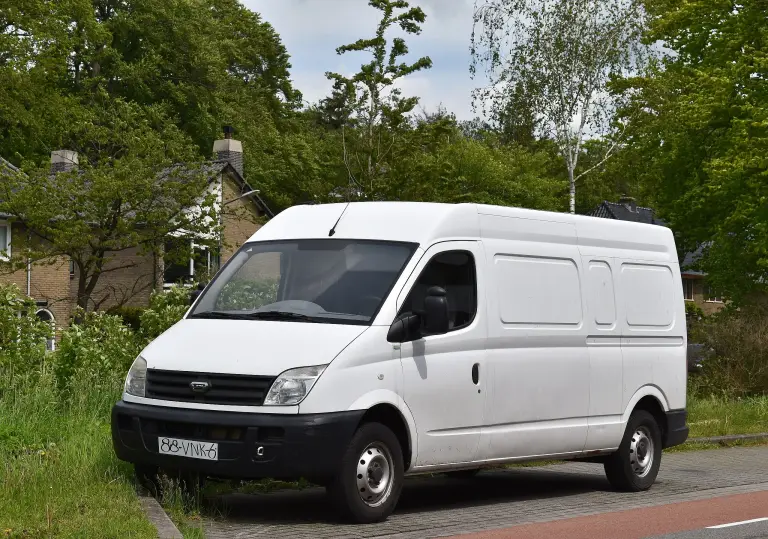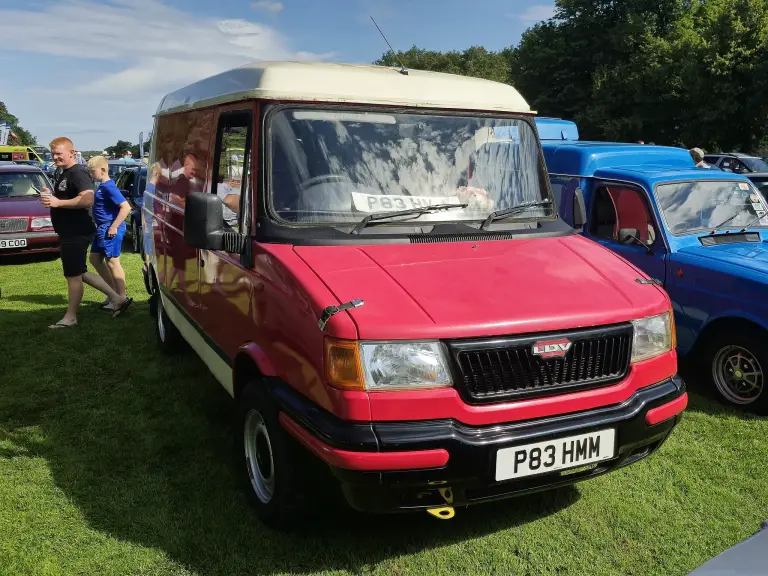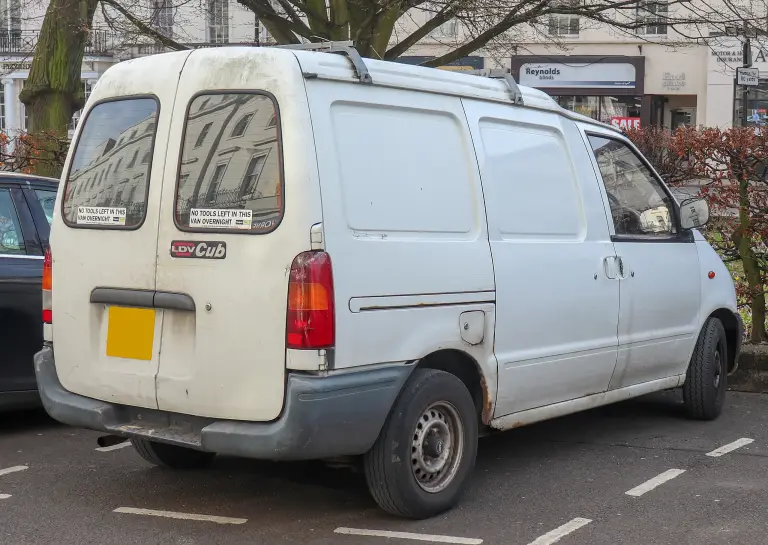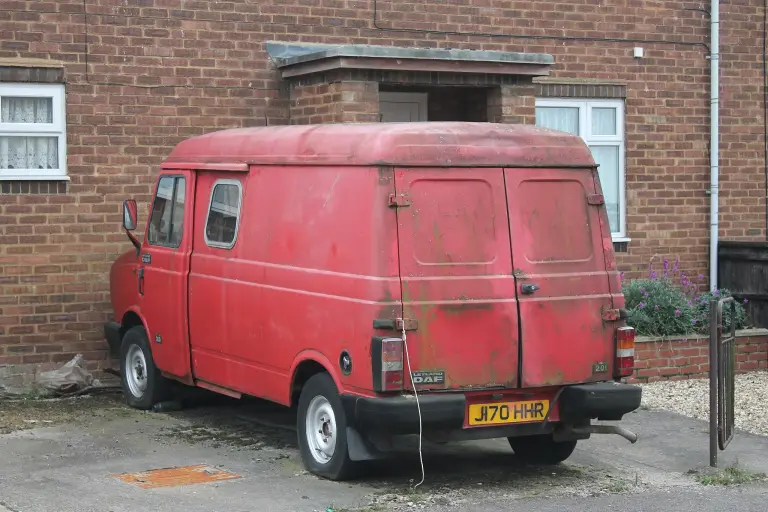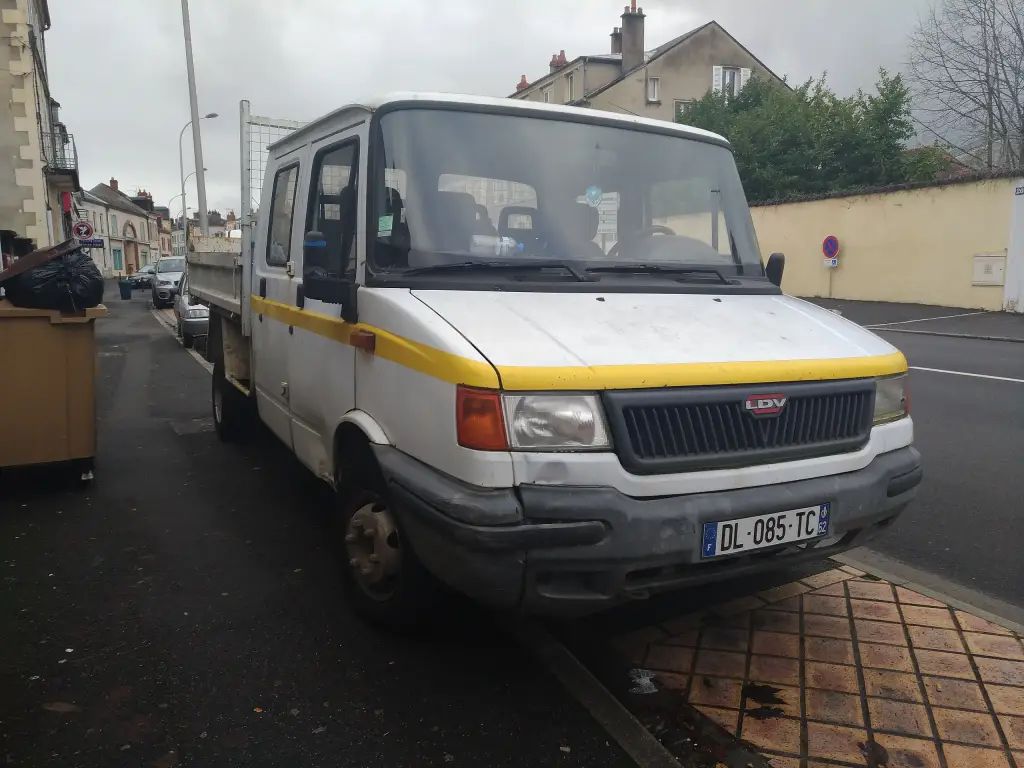
The LDV Convoy was the name given in 1996 to the restyled 400 van, the wide-bodied member of the Sherpa family. Designed by Ogle, it carried the line that had begun in 1983 through to 2006, and it was the last LDV built on the old Leyland tooling before the Maxus took over.
LDV Convoy at a glance
| Maker | LDV Limited, Washwood Heath, Birmingham |
|---|---|
| Production | 1996–2006, on a line that began in 1983 |
| Based on | LDV 400, formerly the Leyland DAF 400 Series |
| Facelift | Ogle Design: new bonnet, bumpers, grille and headlamps |
| Headlamps | 40 per cent brighter than those of the 400 |
| GVW | 2.8, 3.1 and 3.5 tonnes, the 3.5 with twin rear wheels |
| Load volume | up to 12.9 cubic metres |
| Engine | 2.4-litre diesel, 74 hp, or 89 hp with a turbocharger |
| Brakes | front discs, rear drums; ventilated discs optional |
| Rear axle | live axle on leaf springs |
| Service interval | 15,000 miles on most models |
| Market share | 10.5 per cent in 1998 |
The German article dates the launch of the revised Pilot and Convoy to 1997; the English one dates the facelift to 1996.
History of the LDV Convoy
Ogle restyle of 1996
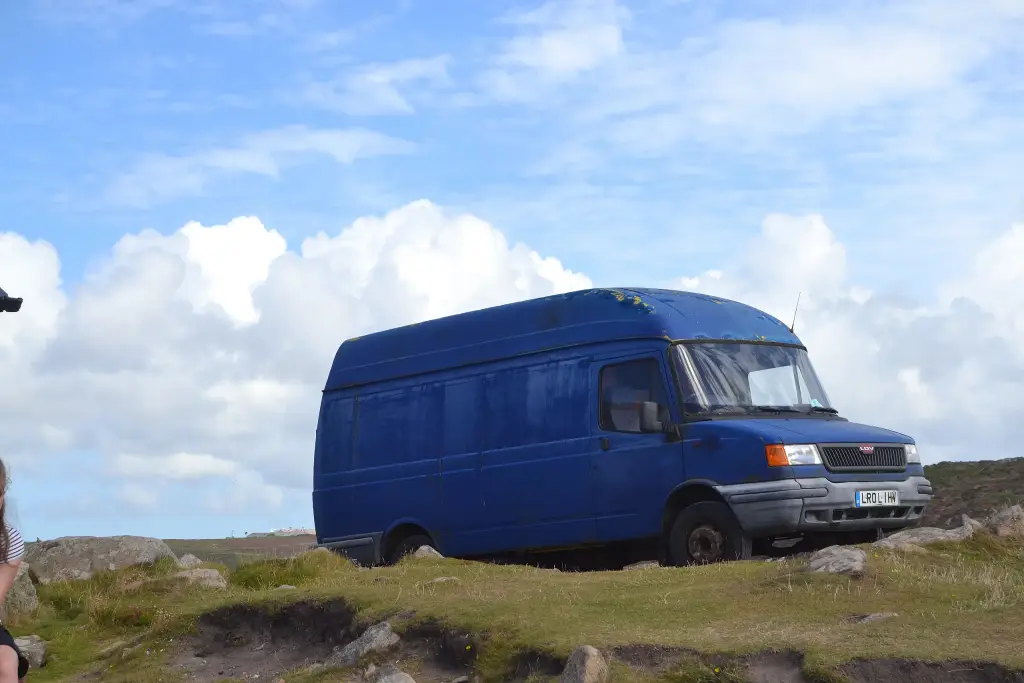
In 1996 the 400 van was facelifted by Ogle Design and renamed the Convoy. The changes were new bumpers, a new bonnet and a redesigned radiator grille, together with headlamps 40 per cent brighter than the ones they replaced and indicators in a new wraparound style. German sources date the launch of the revised Pilot and Convoy to 1997, and the Convoy carried a 2.4-litre diesel of 74 hp, or 89 hp with a turbocharger, in place of the 2.5-litre unit of the 400.
Why operators bought it
The Convoy’s selling points were the ones the Sherpa had always had. It was narrower than a Ford Transit and could therefore use tight alleyways and country lanes; it was simple enough that diagnosis, repairs and maintenance were cheap, with clutch work usually taking just over two hours, a 15,000-mile service interval on most models and tyres that were easy to obtain; and it was built in the United Kingdom. Those qualities won it large orders from the Royal Mail, which had run the line since the original Sherpa, and from local authorities, and they gave the Convoy a market share of 10.5 per cent in 1998. It was also the cheapest full-size van on the British market at the time.
Chassis and bodies
The Convoy came in 2.8, 3.1 and 3.5-tonne versions, the 3.5 having twin rear wheels for stability, with load volumes up to 12.9 cubic metres that reviewers called best in class, and an extra long wheelbase was available. Front discs and rear drums were standard, ventilated front discs optional, and the rear axle was a live unit on leaf springs. LDV’s Specialist Vehicle Options division could coachbuild in the factory at Washwood Heath, which made the van popular with disabled drivers, ice cream sellers, tow truck operators, frozen food carriers and fire brigades; even roof racks could be fitted before delivery. Crew cab pick-ups of up to seven seats, minibuses and fleet vans were also catalogued.
End of the line
Sales fell sharply once the Vauxhall Vivaro and the new Ford Transit of 2000 arrived from other British plants. Only the LDV Maxus, on sale from 2004, brought volume back, and when the Maxus became available in larger versions with more powerful engines the Convoy and the Pilot were dropped in 2006. In 2007 a poll of more than 100,000 readers of a van magazine voted the discontinued range Van of the Year.
Design and features
- Narrow track: the quality that let the Convoy work where a Transit would not fit.
- 12.9 cubic metres: load volume that reviewers rated best in class at the launch.
- Factory coachbuilding: SVO built specialist bodies on the same line at Washwood Heath.
- Cheap upkeep: two-hour clutch jobs, 15,000-mile service intervals and common tyres.
- Cheapest in class: the lowest price of any full-size van in Britain while it was on sale.
LDV Convoy versions
- Panel van: the standard closed body, in short, long and extra long wheelbase.
- 2.8, 3.1 and 3.5-tonne models: the heavier pair with twin rear wheels.
- Minibus: a passenger version for fleets and local authorities.
- Crew cab pick-up: up to seven seats with a dropside body.
- SVO conversions: freezer bodies, tow trucks, fire appliances and wheelchair-accessible vans.
The Convoy was the facelifted LDV 400, and its narrow stablemate was the LDV Pilot. Both were replaced by the LDV Maxus. More vans are in the LDV collection.
Video: Used LDV Convoy Van Overview & Buying Guide
Video by Men and Motors on YouTube.
Sources
- LDV Convoy, English Wikipedia: Ogle facelift, chassis, load volumes, market share, SVO
- LDV Convoy, German Wikipedia: engines, GVW range, end of production, 2007 poll