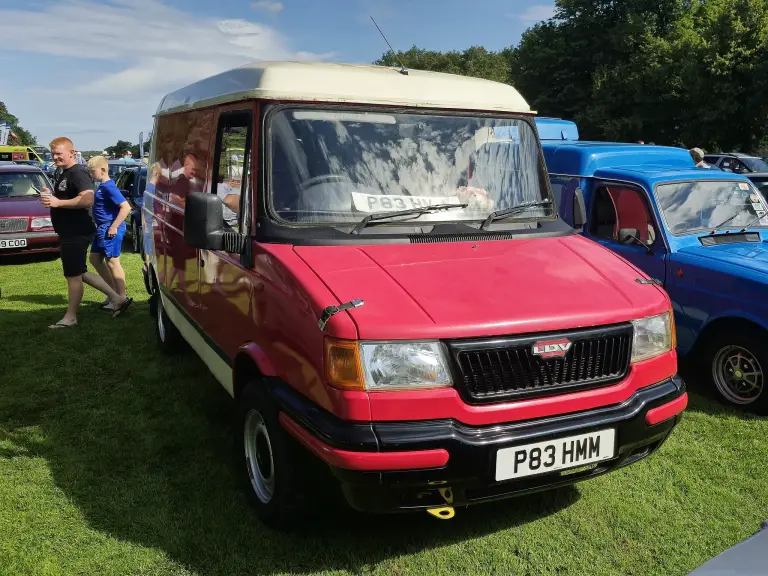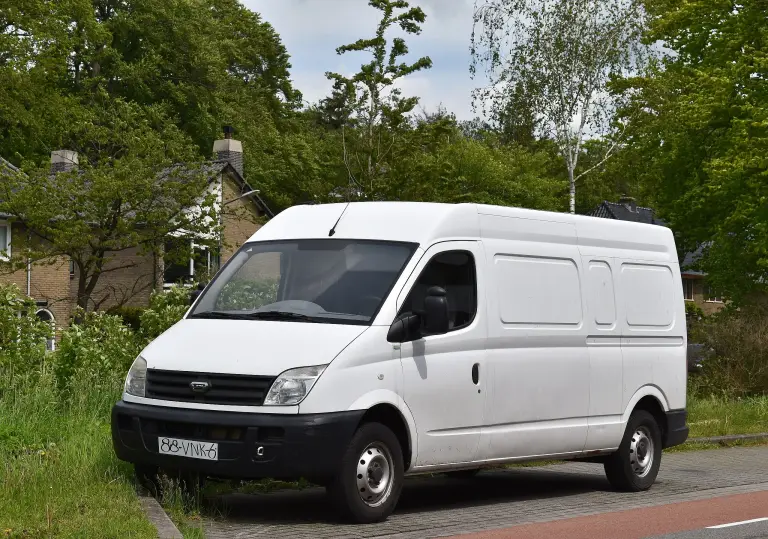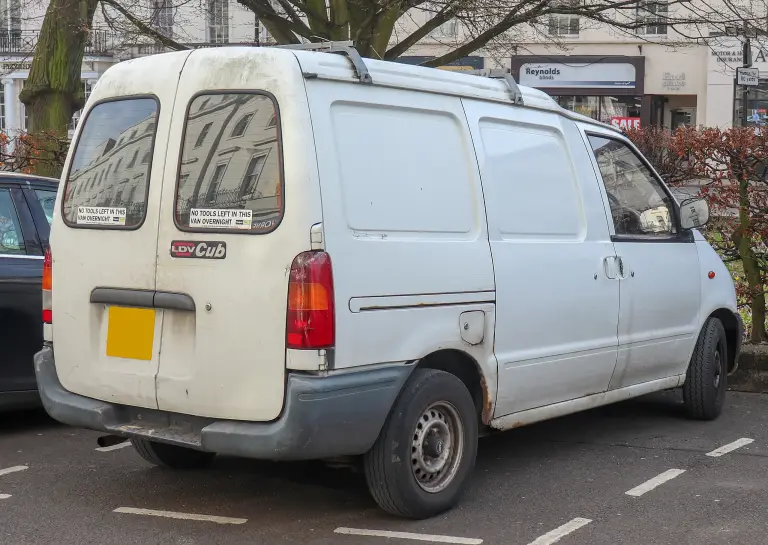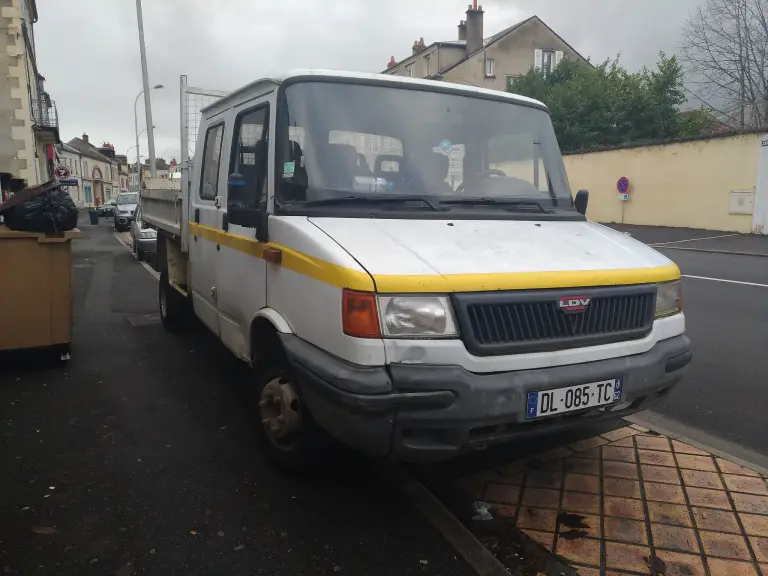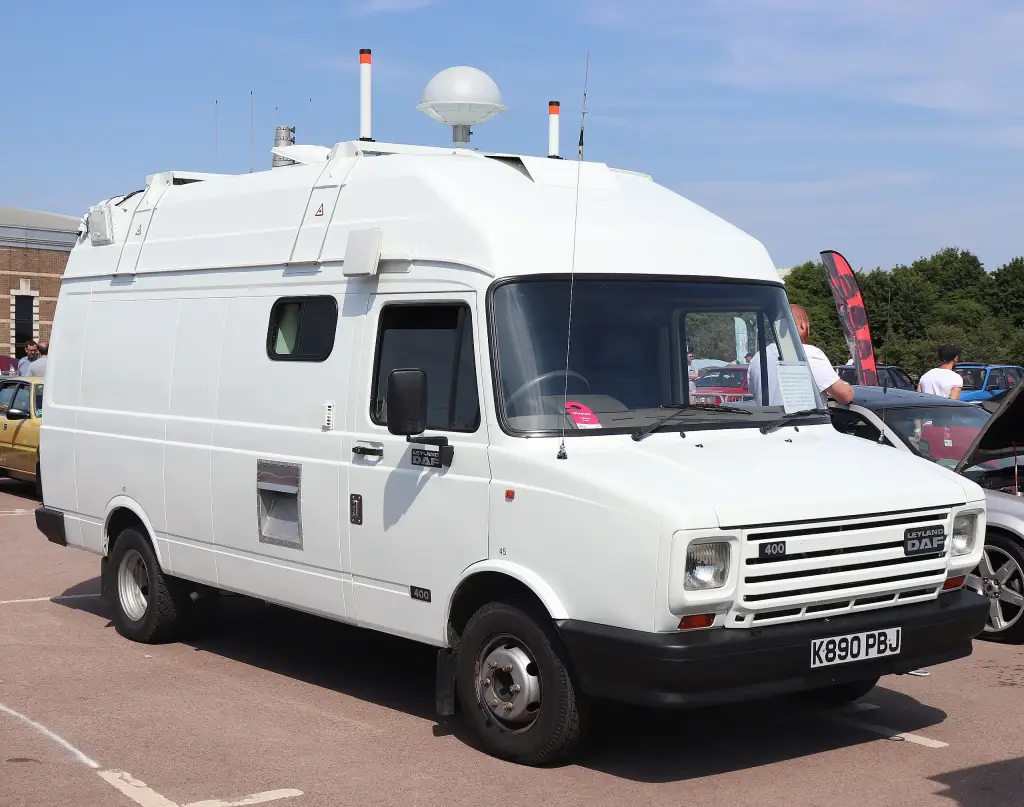
The LDV 400 was the wide-bodied van of the Sherpa family, sold under that name from 1993, when LDV Limited took over the remains of Leyland DAF. It was longer and broader than the 200 series, could carry up to 11.4 cubic metres, and in 1996 it was restyled by Ogle Design and renamed the Convoy.
LDV 400 at a glance
| Maker | Leyland DAF to 1993, then LDV Limited |
|---|---|
| Factory | Washwood Heath, Birmingham |
| Line began | Freight Rover 300 Series, 1984 |
| Leyland DAF 400 Series | 1989–1993 |
| LDV 400 | 1993–1996 |
| Body | wide-body van, longer and broader than the 200 Series |
| Load volume | 7.6 to 11.4 cubic metres in the 300 Series |
| Wheelbases | 285 and 310 single wheel, 300 and 350 twin wheel |
| Engines | 2.5-litre Peugeot diesel; 3.5-litre Rover V8; 2.0-litre O-series petrol to 1991 |
| Suspension option | air suspension |
| Gearbox with the V8 | ZF 4HP22 automatic |
| Successor | LDV Convoy, after the 1996 facelift |
The LDV 400 has no article of its own: it is described in the section on the 400 Series in the English and German Wikipedia articles on the LDV Convoy.
History of the LDV 400
Freight Rover 300 Series (1984–1989)
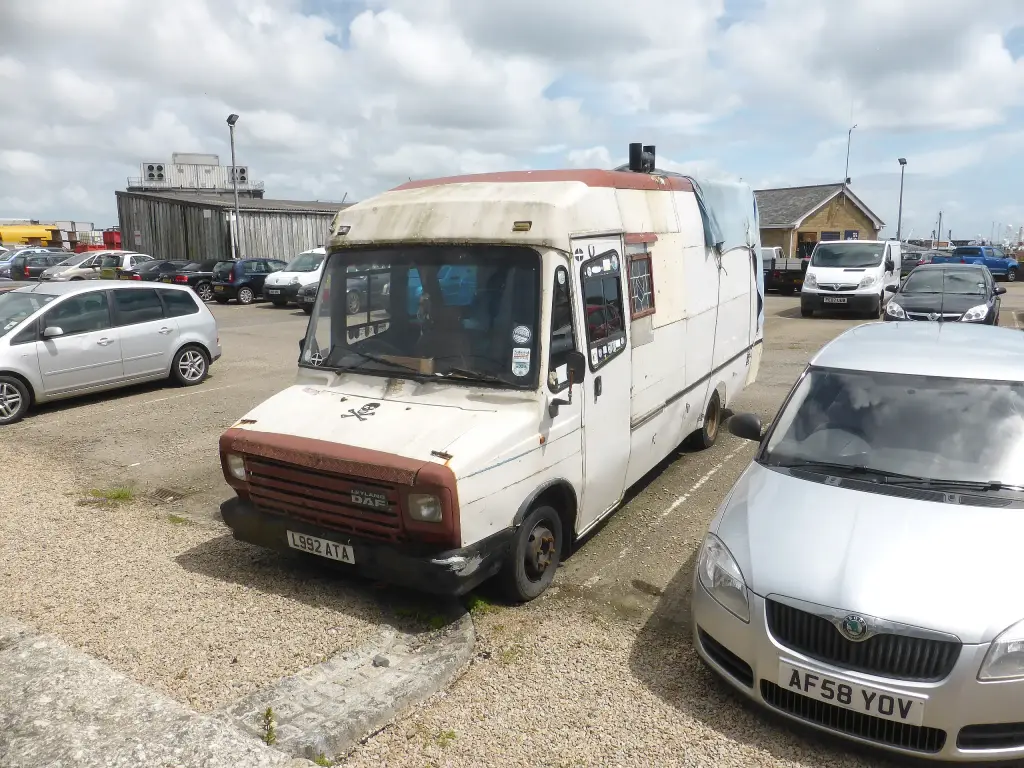
When the Sherpa was facelifted in 1984 and became the Freight Rover 200 Series, a new wide-bodied variant joined it: the 300 Series, offered in three wheelbase lengths. The 285 and 310 models were single-wheel, the 300 and 350 twin-wheel. Load volume ran from 7.6 to 11.4 cubic metres depending on the combination of wheelbase and roof, with a high roof available on the long-wheelbase 310 and 350. A Luton body on the 350 chassis cab gave 15.6 cubic metres and a payload of almost two tonnes, and the chassis cab itself could be ordered in five weights with short or long wheelbase and single or double cab. The 300 Series was also sold as a minicoach seating up to 18. Land Rover’s 2.5-litre 14J diesel was added, and from 1986 the Rover 3.5-litre V8 became available after a police contract and proved popular with emergency services and express delivery operators.
Leyland DAF 400 Series (1989–1993)
Freight Rover was merged into Leyland DAF in 1989, and the 300 Series gave way to the 400 Series. It brought air suspension as an option and a 2.5-litre Peugeot-sourced diesel that contemporary reviewers praised for reliability, although it was later changed for the Ford Di engine from the Transit. The van was given a new radiator grille carrying the Leyland DAF badge. A low-compression version of the 2.0-litre O-series petrol engine remained available until 1991, when it was dropped for lack of demand, and the 3.5-litre Rover V8 stayed on the list; it was popular with police and ambulance services, often with a ZF 4HP22 automatic gearbox.
LDV 400 and the Ogle facelift (1993–1996)
After the sale of the van business from the insolvent Leyland DAF in 1993, the new LDV Limited carried the 400 Series on as the LDV 400. The facelift that ended the name came in 1996 and was the work of Ogle Design: new bumpers, a new bonnet, a redesigned radiator grille and headlamps 40 per cent brighter than those of the 400, with indicators of a new wraparound style. The restyled van was called the Convoy, and it is that name the model carried for the remaining ten years of its life.
Who bought it
The wide-bodied Sherpa was a fleet vehicle first of all. Its narrower track than the Ford Transit let it use tight alleyways and country lanes, and its simplicity kept repairs cheap; the Royal Mail, which had run Sherpas since the original, and local authorities were its largest customers. The same qualities kept the Convoy on the road long after the 400 name had gone, and the line finally ended in 2006 with the arrival of the LDV Maxus.
Design and features
- Wide body: a different shell from the 200 Series, with load volumes from 7.6 to 11.4 cubic metres for the 300 Series.
- Twin-wheel option: the 300 and 350 models ran dual rear wheels.
- Air suspension: offered from the 400 Series of 1989.
- V8 power: the 3.5-litre Rover engine, mostly with a ZF automatic, for police and ambulance work.
- Factory coachwork: Luton bodies, minicoaches and bare chassis cabs came from the same line.
LDV 400 versions
- Freight Rover 300 Series (1984–1989): the first wide-bodied version, in three wheelbases.
- Leyland DAF 400 Series (1989–1993): new Leyland DAF grille, Peugeot diesel and optional air suspension.
- LDV 400 (1993–1996): the same van under the new company, with a 2.0-litre petrol option until 1991 and the Rover V8.
- LDV 400 minicoach: a passenger body seating up to 18.
- Chassis cabs: 255, 280, 285, 310 and 350 versions for outside bodybuilders.
The 400 became the LDV Convoy after the 1996 facelift, while the narrow version of the same family was the LDV 200. The whole line was replaced by the LDV Maxus. More vans are in the LDV collection.
Sources
- LDV Convoy, English Wikipedia: 300 and 400 Series history, engines, load volumes, Ogle facelift
- LDV Convoy, German Wikipedia: origin of LDV Limited and the Bulldog project