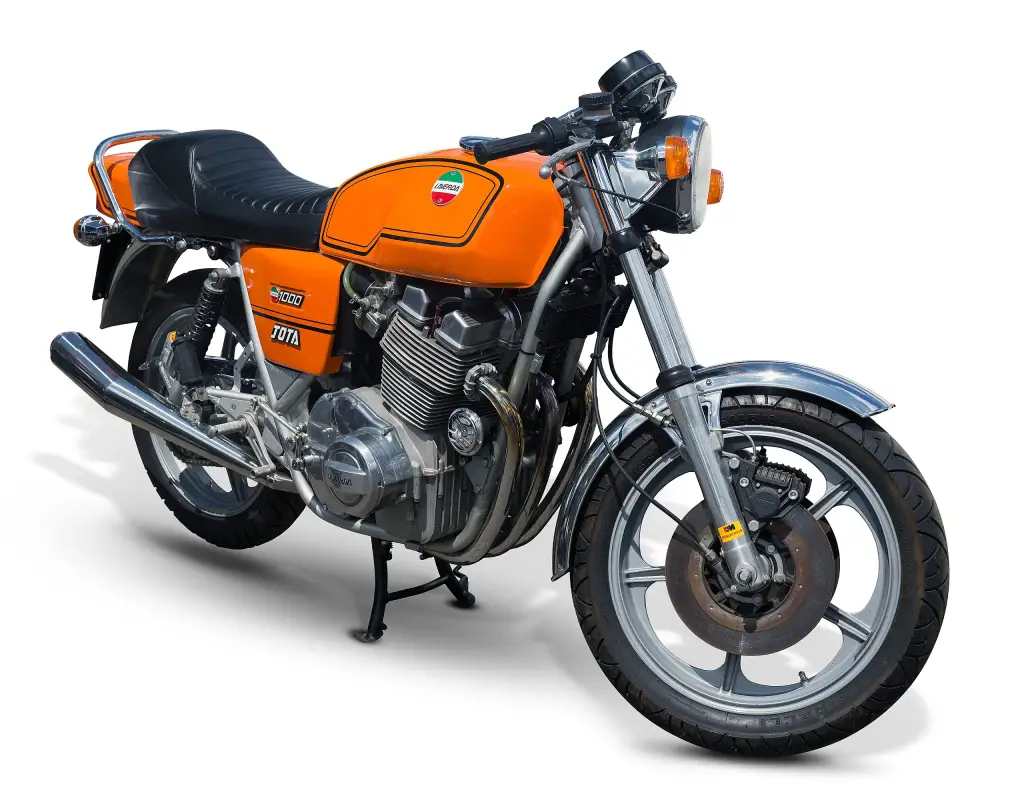
The Laverda 1000 is the family of 981 cc air-cooled double-overhead-camshaft triples that the Italian factory at Breganze built between 1973 and 1988. From it came the 3C, the 3CL, the American Jarama and the Jota — for five years the fastest production motorcycle in the world. Around 7,100 triples of all versions were produced.
Laverda 1000 at a glance
| Engine | 981 cc air-cooled DOHC triple |
|---|---|
| Production | 1973–1988 |
| Models | 1000, 3C, 3CL, Jarama, Jota, Jota 120, RGS |
| Claim to fame | the Jota was the fastest production motorcycle, 1976–1981 |
| Total built | about 7,100 triples of all versions |
| Frame | duplex cradle; new frame with forward-leading shocks from 1978 |
| Brakes | drums at first, then Brembo discs |
| Wheels | Borrani wire wheels, then Laverda cast alloy from 1975 |
| Ignition | Bosch, later BTZ electronic on related models |
| Gearbox | five-speed, chain final drive |
The 1000 range is described on a single English Wikipedia page; this article is based on it alone.
History of the Laverda 1000
From idea to prototype
In 1969 Laverda announced that it would build a 1000 cc triple. General manager Massimo Laverda said the new machine would be lighter and narrower than the Honda CB750 that had just appeared, and a prototype was shown at the Milan Show that year. Chief designer Luciano Zen based it on the single-camshaft 750 twin with an extra cylinder, keeping the 750’s layout with the starter behind the cylinders and the generator in front.
Solving the engine
The first engine did not make enough power, so a second prototype was built in 1970 with twin overhead camshafts driven by a belt on the right-hand side. Casting difficulties meant the two camshafts sat in separate boxes, and the generator was replaced by an alternator on the end of the crankshaft. Testing brought frame and crankshaft failures blamed on the rocking couple of the 120° crankshaft, so the crank was changed to 180°. The belt was disliked both for its durability and for its look, and the final engine drove the camshafts by chain between cylinders two and three under a single cam cover. The definitive prototype appeared at the 1971 Milan Show with a duplex-cradle frame.
The 3C and 3CL
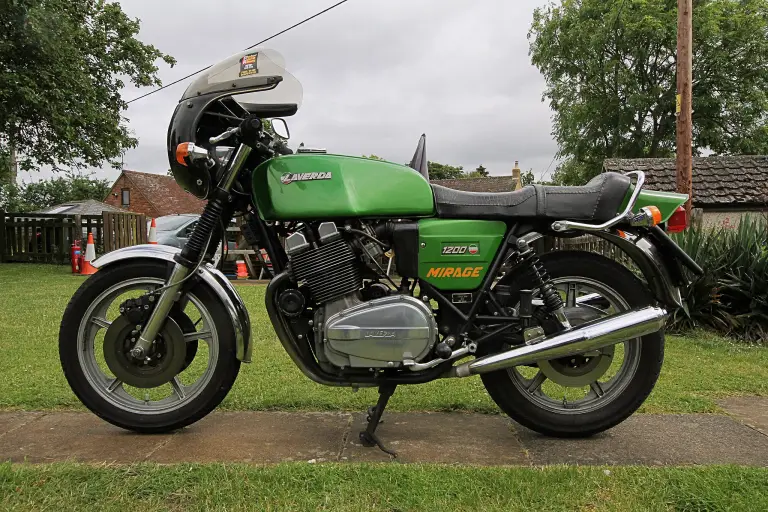
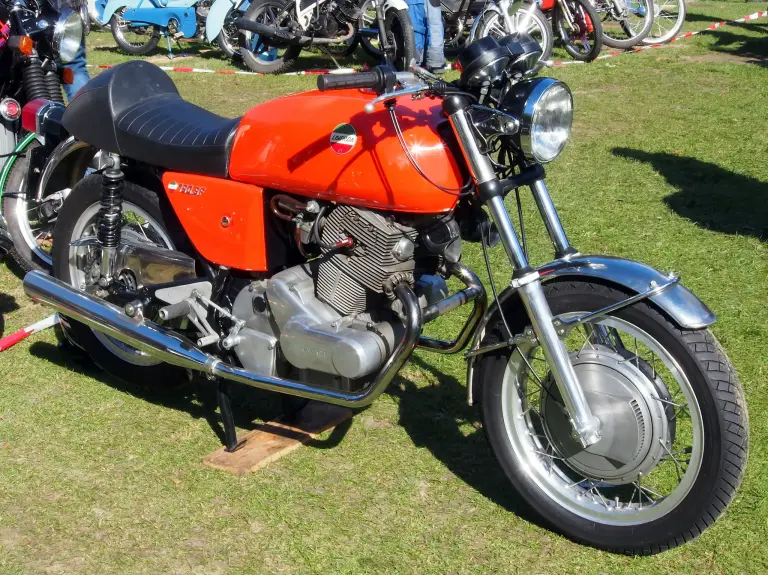
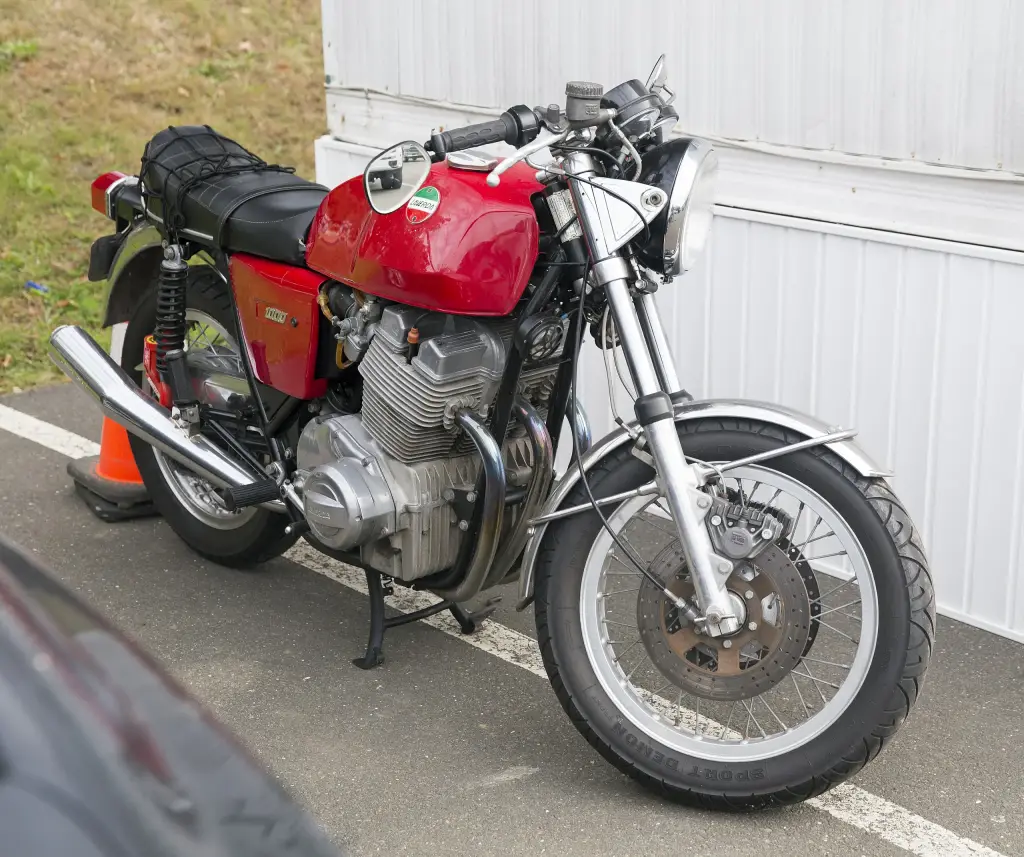
Production began in late 1972 as the plain Laverda 1000, with Laverda’s own drum brakes and Borrani alloy-rimmed wire wheels; the Ceriani forks were soon enlarged from 35 to 38 mm. In 1974 the model became the 3C with a Brembo front disc, soon doubled to two, and a 4C high-lift camshaft with 10:1 pistons offered as extras; about 2,300 were built. The 1975 update brought Laverda cast alloy wheels and a rear disc and the name 3CL, the L standing for lega, alloy. The iron combustion-chamber ‘skull’ insert was dropped in 1976, which led to cracked valve seats on some machines; it returned in 1978 without hardened seats, which caused seat erosion. Bearings changed from rollers to balls in 1979 to quieten the engine, failed, and were changed back the same year; by 1980 the reliability problems were solved.
The Jota
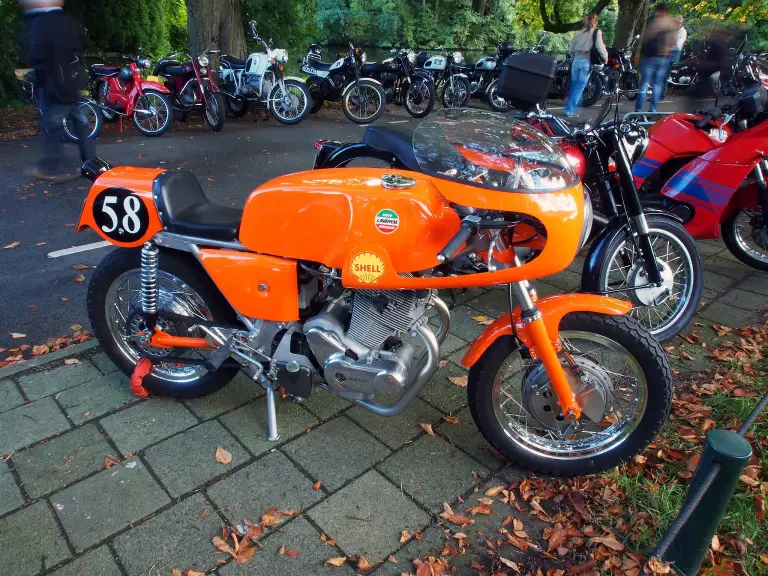
The British importers Slater Brothers had been fitting 3Cs with racing cams, high-compression pistons, steeper fork yokes from the SFC endurance twins and a special exhaust, and called the result the 3CE. In 1976 Massimo Laverda agreed to supply factory-built 3CEs to Britain only, and the model took the name Jota. It was the first production bike timed at more than 140 mph, and Jotas won the British production racing championship in 1976, 1978, 1979 and 1980. The model reached the United States in 1977 with a left-foot gearchange through a crossover linkage; in 1978 it received the new frame with forward-leading rear shocks shared with the 1200, and Marzocchi forks replaced the Ceriani items. A more powerful Nippon Denso alternator arrived in 1981, with the ignition pick-ups moved to the left of the crankshaft, and the 1982 Jota 120 finally used a 120° crankshaft for a more even firing cycle, together with a hydraulic clutch and close-ratio gears.
RGS and the end
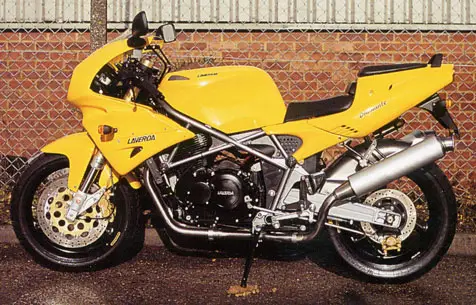
By the early 1980s Laverda could not match the cheap multi-cylinder machines from Japan, so it aimed at the quality market. The triple became the RGS, launched in 1982 after appearing at the 1981 Milan Show: the 120° engine, a new frame, flowing red bodywork with the filler cap in the fairing, and a rubber-mounted engine to keep vibration from the rider. An Executive version added ‘bat wing’ fairing extensions and integrated luggage, and a Corsa version was built for racing customers.
Design and features
- Three cylinders, 981 cc: an air-cooled twin-cam engine with a 180° crankshaft, changed to 120° in 1982.
- The Jota legend: factory-built for Britain in 1976, timed above 140 mph and dominant in British production racing.
- Constant development: drums became discs, wire wheels became cast alloy, and the frame was redesigned in 1978.
- A quality alternative: the RGS of 1982 answered the Japanese makers with finish and comfort rather than price.
Laverda 1000 versions
- 1000 (1972–1974): drum brakes and Borrani wire wheels.
- 3C (1974–1975): Brembo front disc, optional 4C cam and 10:1 pistons; about 2,300 built.
- 3CL (1975–): cast alloy wheels and a rear disc brake.
- Jarama: the US version of the 3CL with left-foot gearchange, reflectors, a quieter exhaust and an upright riding position.
- Jota (1976–): the British high-performance version, later sold in the US.
- Jota 120 (1982): 120° crankshaft, hydraulic clutch, close-ratio gearbox.
- RGS (1982–): rubber-mounted 120° engine, new frame and full red bodywork; Executive and Corsa versions.
The triple grew out of the 750 twin, and its capacity was stretched to make the 1200. The racing version of the twin is described in the Laverda SFC article, and more machines are in the Laverda collection.
Video: Bikers Classics 2010: Laverda 1000 3CL at Spa-Francorchamps
Video on YouTube.
Sources
- Laverda 1000, English Wikipedia: models, development, Jota, RGS, production figures