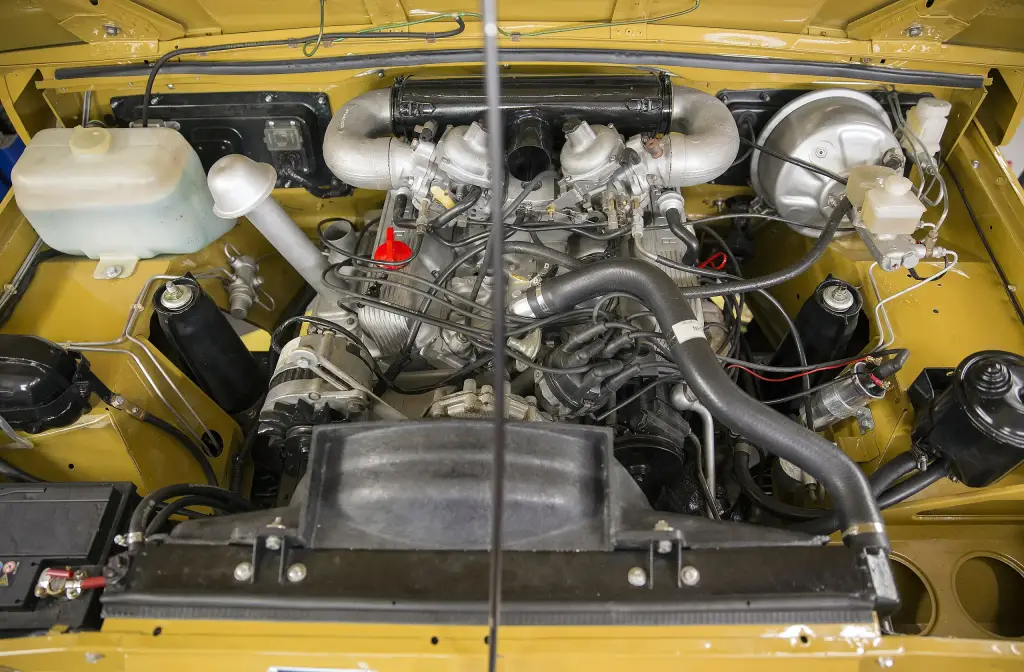
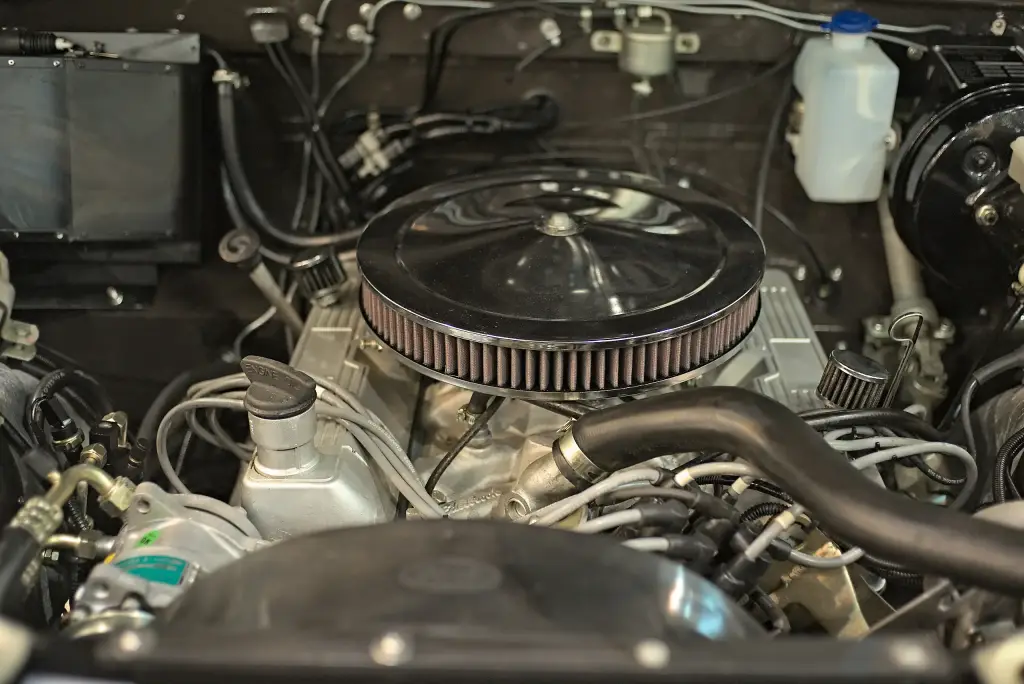
The Rover V8 is a compact overhead-valve V8 with aluminium block and heads, designed and built by Rover in Britain and based on a General Motors engine. It has been used in a wide range of vehicles from its British debut in 1967.
Rover V8 at a glance
| Origin | Buick 215, introduced in 1960 for the 1961 US model year |
|---|---|
| Weight | 144 kg (317 lb) |
| Most powerful Buick version | 200 hp; Oldsmobile Jetfire turbo made 215 hp |
| Bought by Rover | tooling sold by GM in January 1965 |
| British debut | 1967 |
| Layout | OHV V8, aluminium block and aluminium heads |
| Fuel systems | SU carburettors, then Stromberg, Bosch L-Jetronic, Lucas 14CUX, GEMS and Bosch Motronic |
| Last mass-produced engine | May 2004 |
| Production run | 37 years |
| Total built | just under one million |
based on one source (English Wikipedia)
History of the Rover V8
The Rover V8 started life as the Buick 215, an all-aluminium pushrod engine introduced in 1960 for the 1961 US model year. It was light at 144 kg and could make high power: the strongest Buick version rated 200 hp, and the closely related Oldsmobile Jetfire turbocharged unit made 215 hp, both on gross figures. Buick built 376,799 cars with the engine in three years, Oldsmobile made a similar number, and some Pontiacs used it too, earning the nickname BOP 215 for Buick, Oldsmobile and Pontiac. The aluminium engine was expensive to make and suffered oil and coolant sealing problems and radiator clogging from antifreeze that attacked aluminium, so GM ended production of the all-aluminium version after 1963.
In January 1964 Rover let the head of its American operations, J. Bruce McWilliams, investigate buying an American V8. He is said to have first seen the Buick unit at the works of Mercury Marine, where he was discussing sales of Rover gas turbines and diesels and where Land Rover 2.25-litre diesel engines were already used in marine form, though he probably knew of the engine before that. McWilliams reckoned the light Buick V8 would suit smaller British cars, weighing less than many four-cylinders it would replace. He and William Martin-Hurst campaigned to buy the tooling, and GM agreed in January 1965; the retiring Buick engineer Joe Turlay moved to Britain as a consultant.
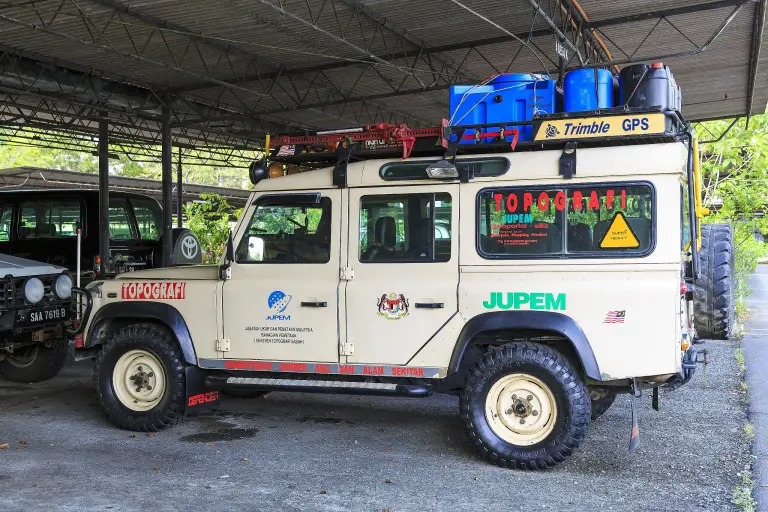
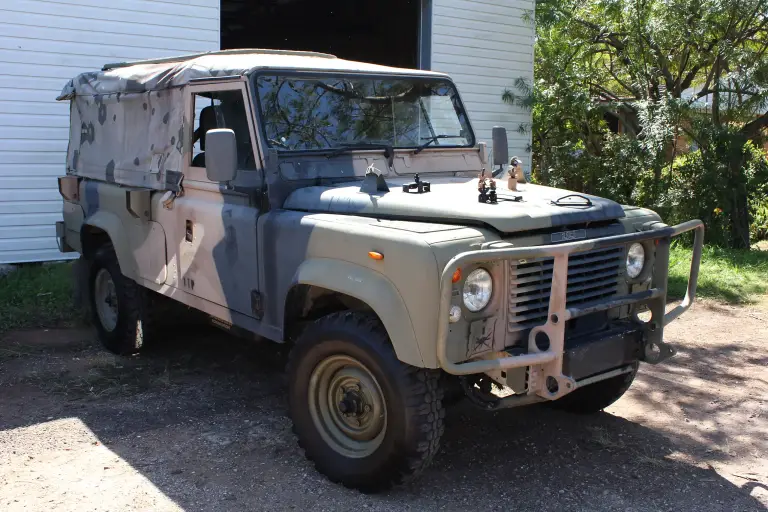
The British-built engines ran on two SU carburettors, first HS6 and then HIF6 and HIF44 for fourteen years, then two CD175 Strombergs for two or three years, Bosch L-Jetronic for seven or eight, Hitachi Hotwire, also known as Lucas 14CUX, for five, then the GEMS system for many years, and finally Bosch Motronic for two years. As late as 2011 an improved version was still being cast by Coscast in Birmingham. Besides Rover cars, the engine was sold to small builders and used by Morgan in the +8, by TVR, in the Triumph TR8, the MGB V8 and of course Land Rover, as well as being a favourite of British kit car makers.
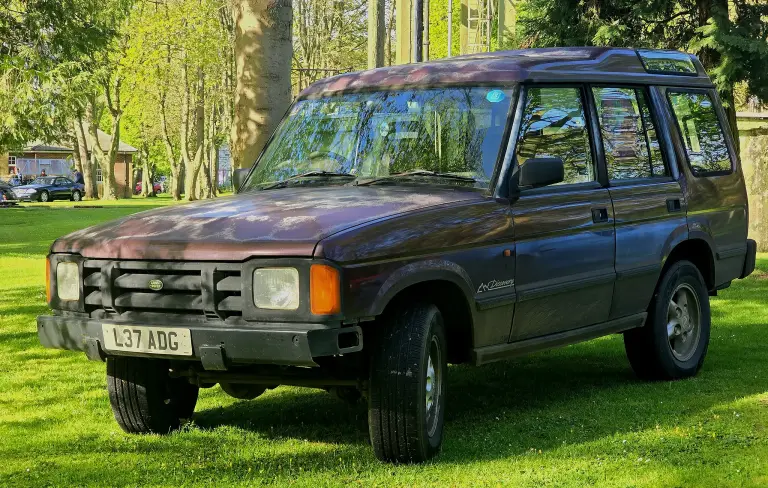
By the late 1990s the Rover V8 was uncompetitive: less power, more fuel and an aged pushrod layout against overhead-cam rivals. After Land Rover moved to the BMW M62 V8 in the 2003 Range Rover and the petrol Discovery 3 adopted the Jaguar AJ-V8, the last mass-produced Rover V8 was built in May 2004, after 37 years and just under a million engines. The 2004 Land Rover Discovery II was the last mass-produced vehicle to use it. Land Rover arranged for limited production to restart at Weston-super-Mare under MCT for aftermarket and replacement supply, and the last Rover-badged car with the engine was the SD1, dropped in 1986.
Design and features
- Aluminium throughout: block and heads, only 144 kg, lighter than many four-cylinders.
- Buick origins: developed in America, bought as tooling by Rover in 1965.
- Long life: carburettors to fuel injection over 37 years of production.
- Wide use: Range Rover, Land Rover, Morgan +8, TVR, Triumph TR8 and MGB V8.
Rover V8 versions
- Buick 215 (1960): the American original.
- Oldsmobile Jetfire (1962): turbocharged version rated 215 hp.
- Rover 3.5-litre (1967): the first British version, on SU carburettors.
- Fuel-injected Rover V8: Bosch L-Jetronic, Lucas 14CUX, GEMS and Motronic eras.
- Last production (2004): the final mass-produced engines, used in the Discovery II.
The engine powered the Range Rover and the 101 Forward Control, and is described in the story of the Land Rover Series. More cars are in the Land Rover collection.
Sources
- Rover V8 engine, English Wikipedia: origins, purchase, fuel systems, end of production