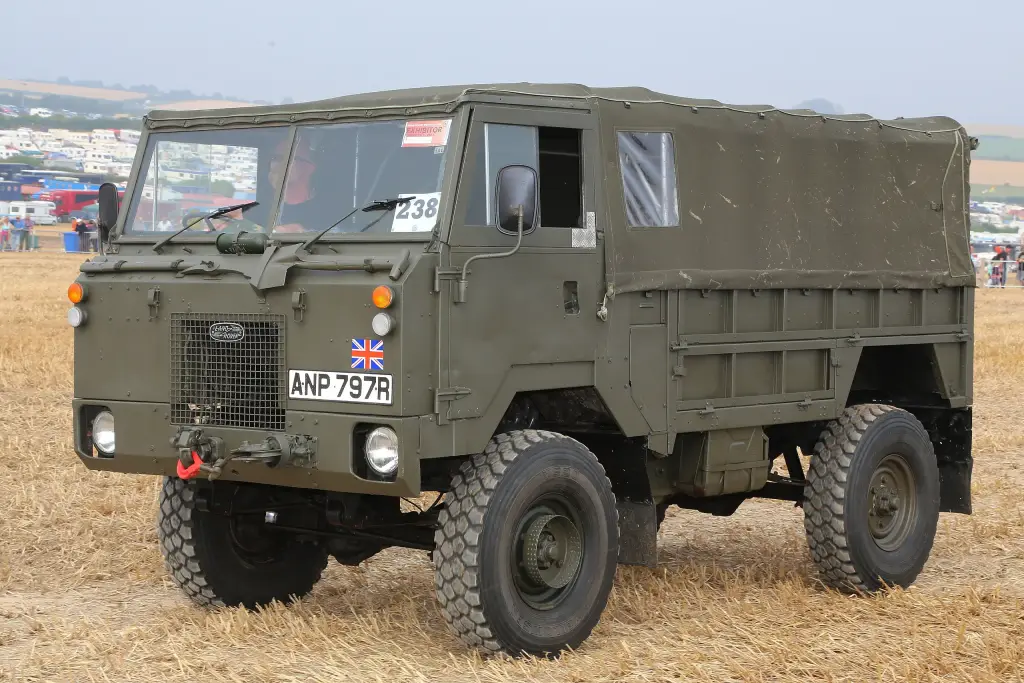
The 101 Forward Control, or Land Rover 101FC, was a light utility vehicle produced by Land Rover for the British Army. It was not offered to the public from the production line, only as military surplus.
Land Rover 101 Forward Control at a glance
| Also known as | Land Rover One Tonne |
|---|---|
| Built for | the British Army |
| Production | 1972–1978 |
| Factory | Lode Lane, Solihull |
| Wheelbase | 101 in (2,565 mm) |
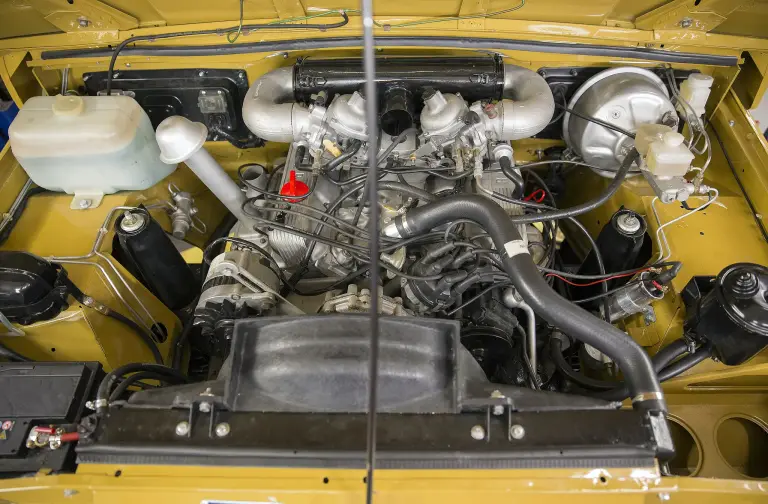
| Engine | 3.5-litre Rover V8, mounted behind and below the cab |
| Tyres | 9.00 × 16 in |
| Main role | towing the L118 Light Gun with a ton of ammunition |
| Body at the factory | soft top General Service gun tractor |
| Development started | 1967, team led by Norman Busby |
based on one source (English Wikipedia)
History of the Land Rover 101 Forward Control
The 101 was built mainly to meet the Army’s requirement for a gun tractor able to tow a field gun, the L118 Light Gun, with a ton of ammunition and other equipment in the rear load space. That load gave it the alternative name Land Rover One Tonne. It was also designed to be easy to carry by air: putting the 3.5-litre Rover V8 behind and below the cab removed the bonnet, so the vehicle became almost cuboid and wasted little space inside a transport aircraft. Payload and limited stability, especially on an incline, were a concern.
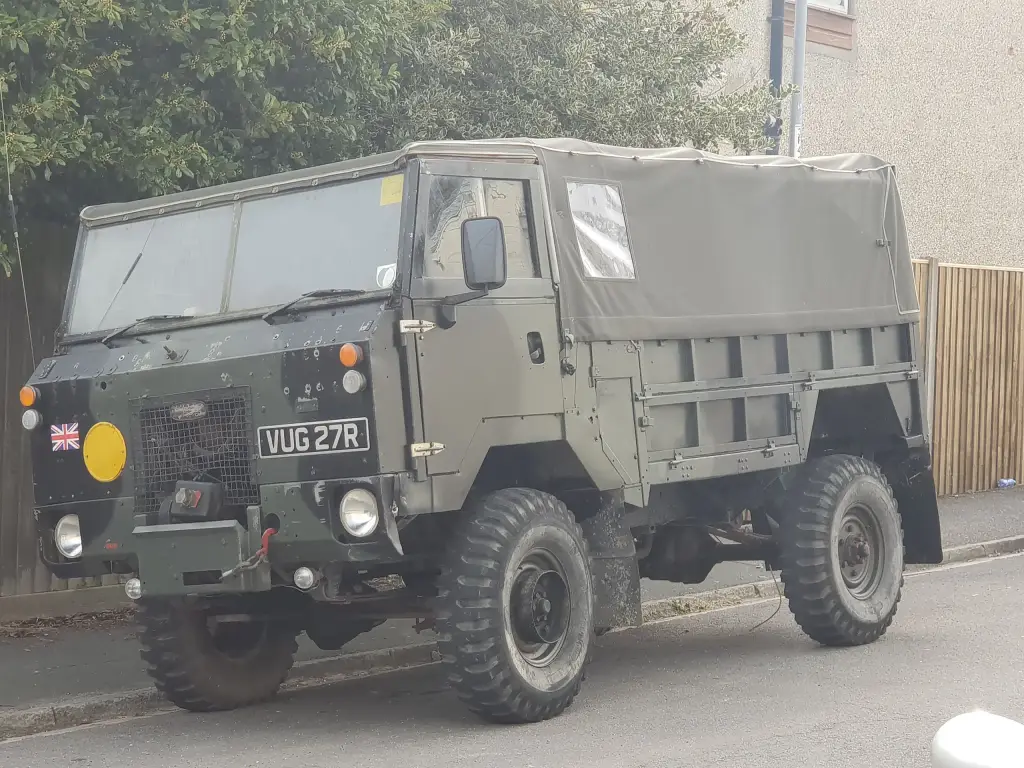
The name comes from the 101-inch wheelbase and from the driving position, above and slightly in front of the front wheels. Those wheels run large 9.00 × 16 tyres, and to help the crew climb into the cab each wheel carries a flange around its centre with an embossed tread pattern that serves as a step, the wheel-step. Development began in 1967 under a team led by Norman Busby, and production ran from 1972 to 1978. Every vehicle built at Solihull was a soft-top General Service gun tractor, though many were later rebuilt with hard-top ambulance bodies or as radio trucks.
The 101 also served with the RAF Regiment, two vehicles being allocated to each Rapier missile set-up. A firing unit tractor towed the launch trailer with four missiles, a tracking radar tractor towed the Blindfire radar trailer, and a 109 towed the reload trailer. Ambulance bodies were built by Marshall of Cambridge. The vehicle was made in left- and right-hand drive with 12 or 24 volt electrics, and some carried a PTO-driven Nokken capstan winch that could pull from either end. A few pre-production 6×6 vehicles with a PTO-driven trailer axle were abandoned when the trailer proved liable to push the vehicle over on rough ground.
By the late 1990s the Ministry of Defence had withdrawn the 101s, replacing them with Defenders and Pinzgauers. Many passed into private hands, supported by an owners club that keeps a register of survivors. The Australian Army bought fifty, used to tow Rapier missile carriers. Thirty-one 101s were also converted by Land Rover with styled bodies for the 1995 film Judge Dredd, where they appear as City CABs; several of those prop vehicles still run.
Design and features
- Cab-over layout: the driver sits above and ahead of the front wheels, and there is no bonnet.
- Rover V8 behind the cab: the 3.5-litre engine sits low and to the rear, keeping the body cuboid for air transport.
- Wheel-steps: flanges with a tread pattern on the wheel centres let the crew climb aboard.
- Military only: never sold new to the public, only as surplus.
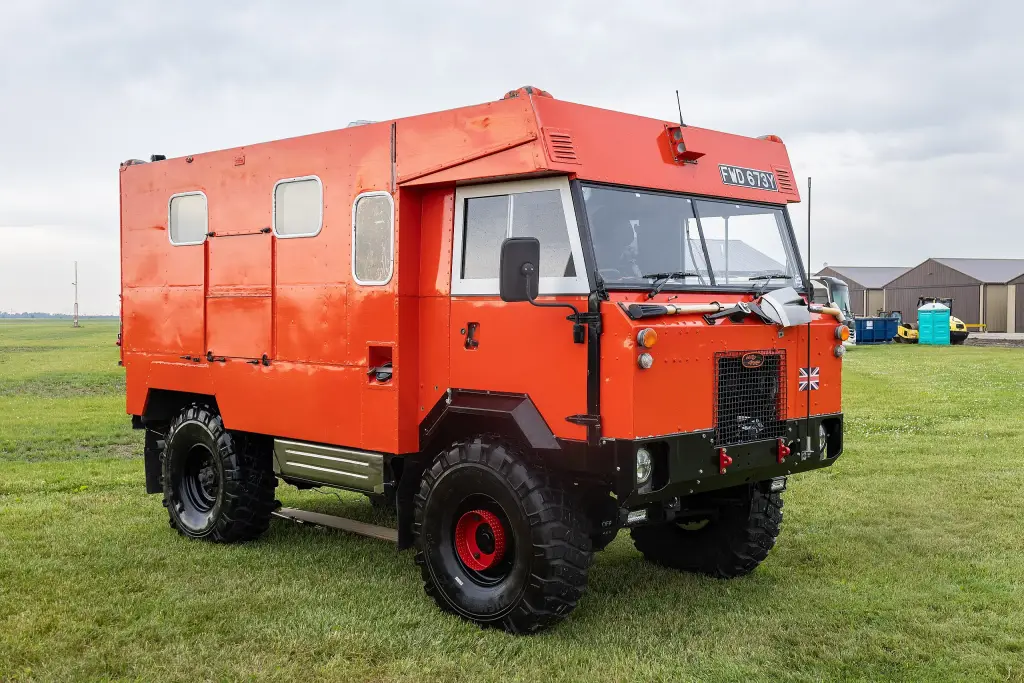
Land Rover 101 Forward Control versions
- General Service gun tractor: the standard soft-top vehicle built at Solihull.
- Ambulance: hard-top bodywork by Marshall of Cambridge.
- Radio truck: rebuilt for communications work.
- Vampire: a rare electronic warfare body, thought to number only 21.
- Rapier tractors: firing unit and tracking radar tractors for the RAF Regiment.
- Judge Dredd City CABs: 31 film props with styled bodyshells.
The 101 was replaced in service by the Land Rover Defender, and its engine is described in the Rover V8 article. More military and civilian models are in the Land Rover collection.
Sources
- Land Rover 101 Forward Control, English Wikipedia: history, design, variants