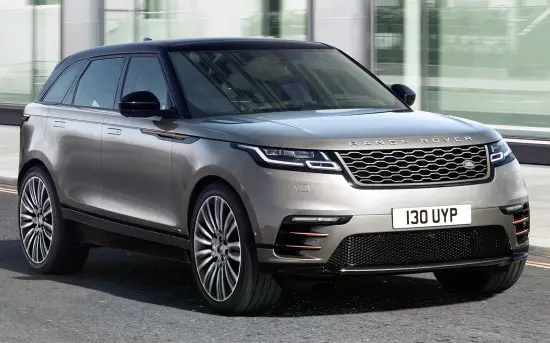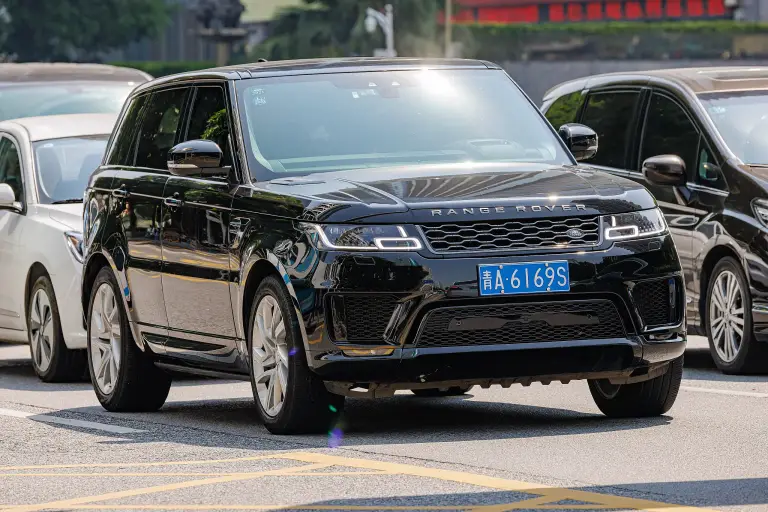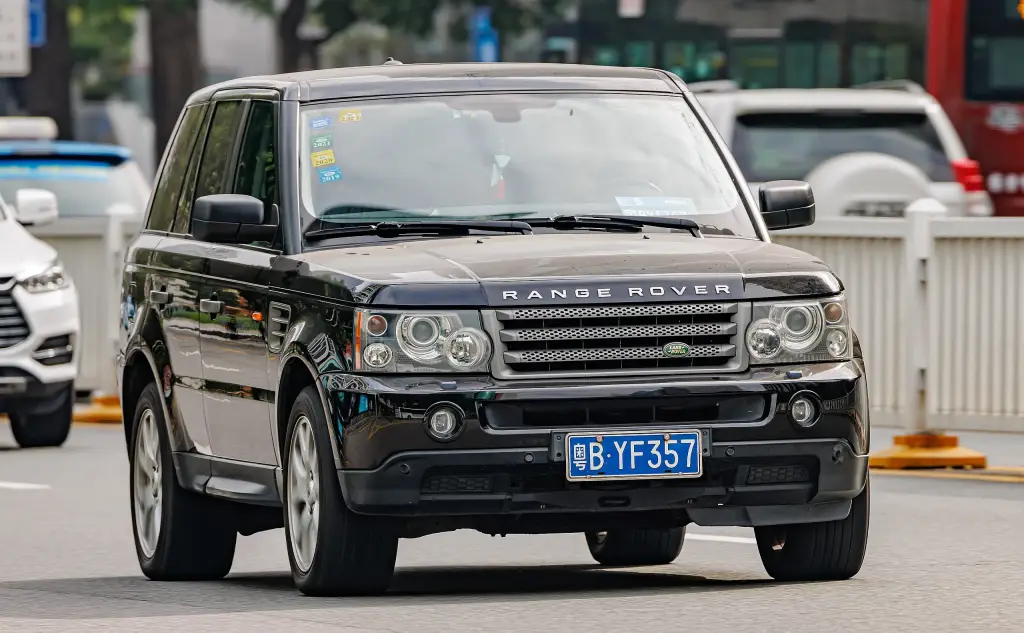
Range Rover is a four-wheel-drive luxury marque and sub-brand of Jaguar Land Rover. The line was launched in 1970 by British Leyland and has been in its fifth generation since 2022. Other models now carry the name, among them the Range Rover Sport, Evoque and Velar.
Range Rover at a glance
| Launched | 1970, by British Leyland |
|---|---|
| First prototype | 1967, registration SYE 157F |
| Design finalised | 1969 |
| Pre-production cars | 26 Velar-badged development vehicles, 1969–1970 |
| First generation | 1970–1996 |
| Bodies | two-door until 1981, four-door from 1981 |
| Chassis | box-section ladder frame |
| Suspension | coil springs |
| Drive | permanent four-wheel drive |
| Brakes | disc brakes on all four wheels |
| Engine at launch | detuned 3.5-litre Rover V8, 127 hp (95 kW) |
based on one source (English Wikipedia)
History of the Range Rover
Rover, the company behind the Land Rover, experimented with a larger model in 1951, when the two-wheel-drive Road Rover project was developed on P4 running gear by Gordon Bashford. It was shelved in 1958 and the idea lay dormant until 1966, when engineers Spen King and Bashford began work on a new model. The first prototype was built in 1967 with the plate SYE 157F, and the design was finalised in 1969.
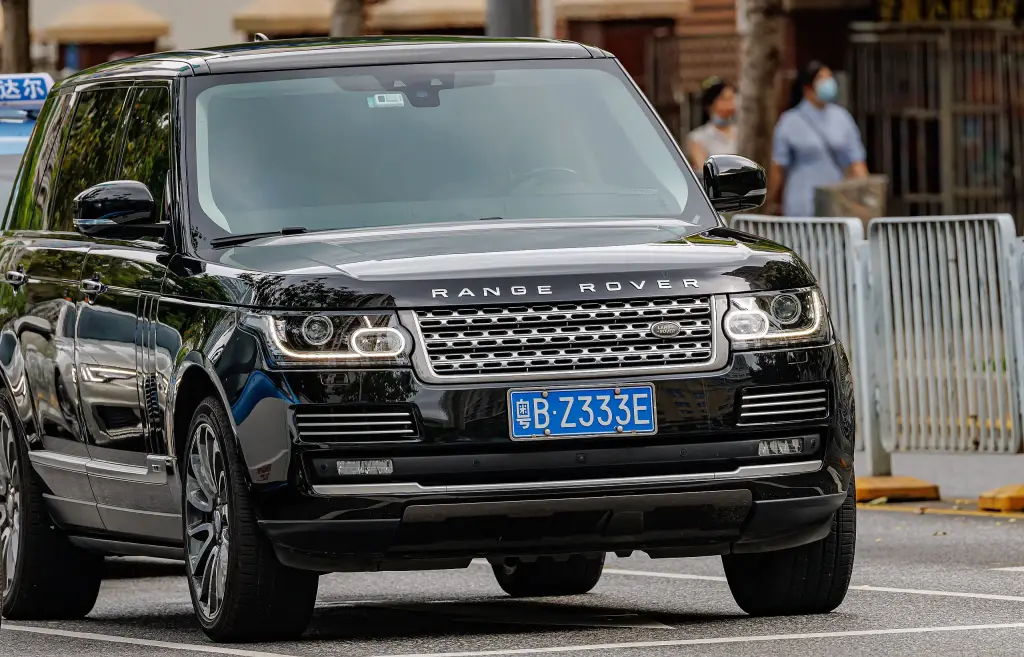
Between 1969 and 1970 twenty-six Velar-badged engineering development vehicles were built and registered from YVB 151H to YVB 177H. The Velar name came from the Italian velare, to veil or cover; development engineer Geof Miller used it as a decoy and a Velar company was registered in London, producing 40 pre-production vehicles between 1967 and 1970. The badging could be made up from letters already used in Land Rover. The Range Rover was launched in 1970, and in the early 1970s the Musée du Louvre in Paris exhibited one as an exemplary work of industrial design.
The first-generation Range Rover was produced from 1970 to 1996 and came only as a two-door until 1981, though specialist firms had built four-door conversions before then. It was not designed as a luxury car: it was upmarket compared with earlier Land Rovers, but early interiors were utilitarian, with vinyl seats and plastic dashboards meant to be hosed down. Power steering, carpets, air conditioning, cloth and leather seats and wood trim came later. The body sat on a box-section ladder chassis like the contemporary Series Land Rovers, but with coil springs instead of leaf springs, permanent four-wheel drive and disc brakes all round.
Originally the engine was a detuned 127 hp (95 kW) version of the Buick-derived Rover V8. Lucas fuel injection arrived in 1984 and raised output to 155 hp. The 3.5-litre unit was bored to 3.9 litres for 1990 and to 4.2 litres in 1992 for the long-wheelbase Vogue LSE. In 1988 came a 2.4-litre turbodiesel from VM Motori, followed in 1990 by a 2.5-litre version and in 1992 by Land Rover’s own 200TDi, with the 300 TDi in 1994. Towards the end of production the car was renamed Range Rover Classic to separate it from its successors, and it provided the basis for the 1989 Discovery and for the second-generation Range Rover.
Design and features
- Coil springs: a smoother ride and more axle travel than the leaf-sprung Series.
- Permanent four-wheel drive: unusual for a 1970 utility vehicle.
- Disc brakes all round: stopping power to match the V8.
- Velar prototypes: 26 development cars carried the decoy badge before launch.
Range Rover versions
- Two-door (1970–1981): the original body style.
- Four-door (1981): the change that turned the Range Rover into a family car.
- Vogue: the trim name used for well-equipped cars, including the long-wheelbase Vogue LSE.
- Vogue Turbo D (1988): the VM Motori 2.4-litre turbodiesel.
- 200TDi and 300TDi (1992–1994): Land Rover’s own diesels.
The Range Rover line grew into the Range Rover Sport and Evoque, and its V8 is described in the Rover V8 article. More cars are in the Land Rover collection.
Sources
- Range Rover, English Wikipedia: prototypes, first generation, engines