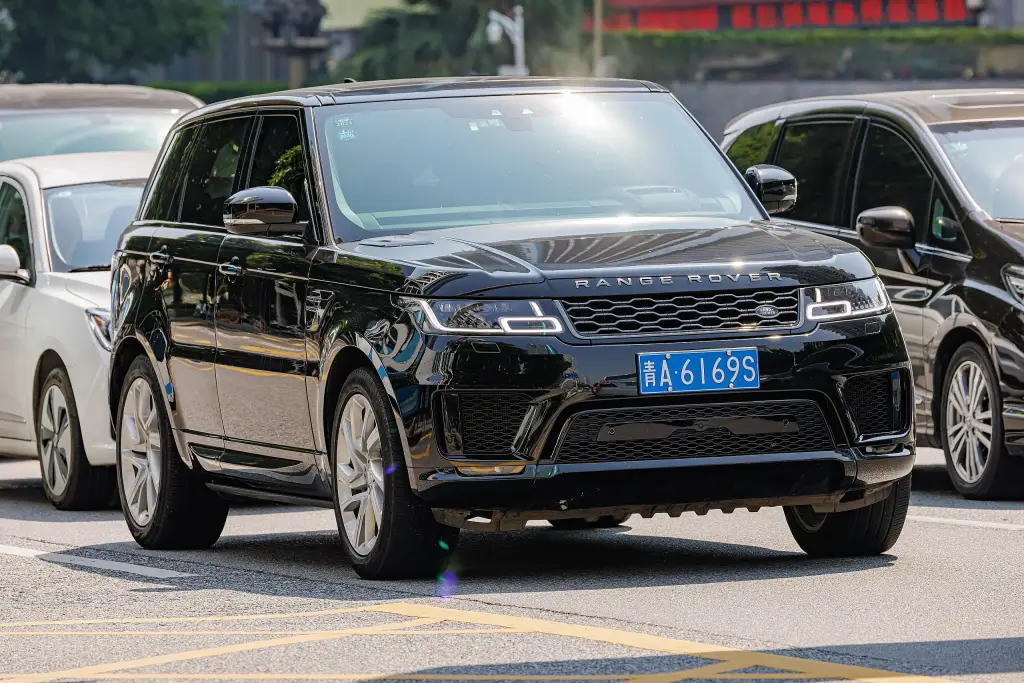
The Range Rover Sport is a mid-size luxury SUV built by Land Rover, part of Jaguar Land Rover, at Solihull. The first-generation L320 arrived in 2005, followed by the L494 in 2013 and the L461 in 2022.
Range Rover Sport at a glance
| Introduced | 2005, as the L320 |
|---|---|
| Second generation | L494, 2013 |
| Third generation | L461, 2022 |
| Previewed by | Range Stormer concept, 2004 North American International Auto Show |
| Chassis | adapted from the Discovery 3 integrated bodyframe |
| Wheelbase | 140 mm shorter than the Discovery 3 |
| Seats | five; no third row |
| Petrol engines, 2005 | 4.4-litre V8 at 300 hp; 4.2-litre supercharged at 385 hp |
| Petrol engines, 2010 | 5.0-litre V8 at 370 hp; supercharged at 510 hp |
| Diesel engines | 2.7-litre TDV6, then 3.6-litre twin-turbo TDV8 |
| Suspension | air suspension with three ride heights as standard |
| Gearbox | six-speed ZF automatic, eight-speed on the SDV6 |
based on one source (English Wikipedia)
History of the Range Rover Sport
The Range Rover Sport was prefigured by the Range Stormer concept car, shown at the 2004 North American International Auto Show. The Stormer was a low, short-wheelbase three-door coupé, unusually sporty for Land Rover, designed by Richard Woolley as the marque’s first complete concept car. It had split-folding gullwing doors, one-piece skeletal seats, a clamshell bonnet, 22-inch alloys, a 250 km/h-plus top speed, four-wheel drive and a weight of 2,500 kg. The production Sport was much more conservative, with five doors and a wheelbase hardly shorter than the Range Rover Vogue’s. The Stormer itself is on display at the Heritage Motor Centre in Gaydon.
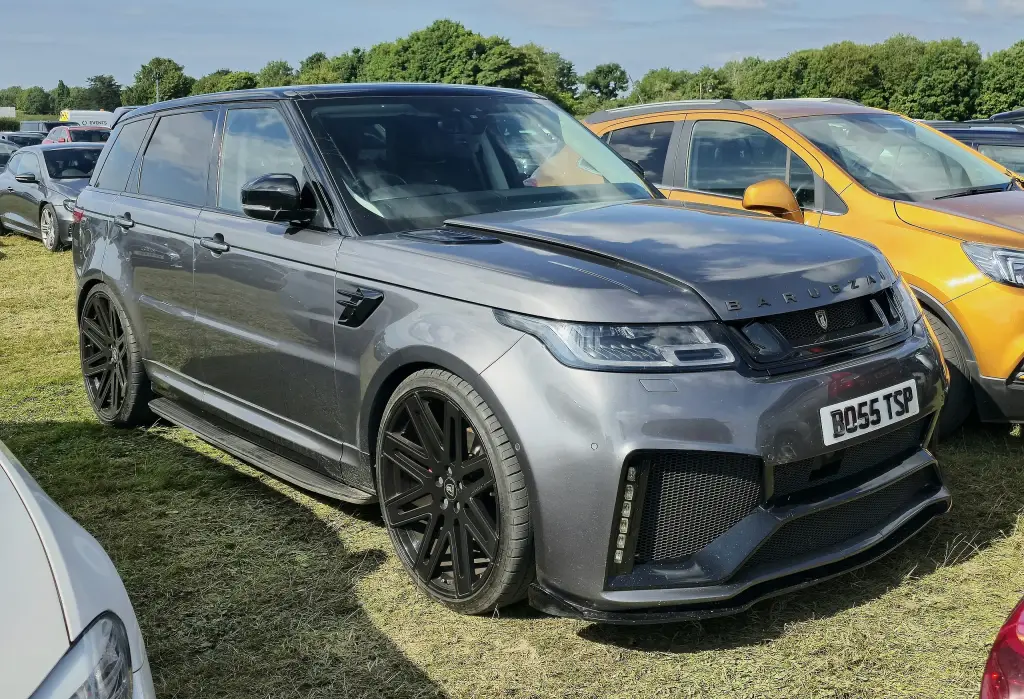
The chassis of the Sport was adapted from the integrated bodyframe, semi-monocoque, independently suspended design that first appeared on the Discovery 3 in 2004. Land Rover argued that this gave the refinement and rigidity of a monocoque with the robustness of a separate chassis off-road, and shared parts kept manufacturing cheaper. Although based on a modified Discovery 3 chassis, the Sport is smaller than its sibling in every dimension, with a wheelbase 140 mm shorter. Its size and raked roofline rule out a third row, which was never the intention for a sports tourer.
The 2005–2009 HSE used a naturally aspirated 4.4-litre Jaguar AJ-V8 with 300 hp and 425 N·m, while the Supercharged model had a 4.2-litre supercharged version with 385 hp and 550 N·m. Both petrol engines had a sump and oil pick-up designed for extreme angles. The unblown engine was dropped from the UK market in 2007 for lack of demand. For 2010 they were replaced by a 5.0-litre all-aluminium AJ-V8 at 370 hp and 510 N·m, and a supercharged 5.0-litre at 510 hp and 625 N·m. The 2.7-litre TDV6 turbodiesel produced 190 hp and 440 N·m, and the 3.6-litre twin-turbo TDV8 arrived in 2007 in both the Sport and the flagship Range Rover.
All engines drove through an adaptive six-speed ZF automatic, except the SDV6, which had the eight-speed ZF8HP70. The gearboxes had a CommandShift mode that adapted to driving style and let the driver change gear sequentially. Air suspension was standard with three ride height settings: 172 mm normal, 227 mm off-road and a lowered access mode, plus an extra height reached by holding the button. The system could sense a wheel losing load and raise the body, and cross-linked air springs opened valves to push an adjacent wheel down, imitating a live axle. Terrain Response, first seen on the Discovery 3, was standard, with settings for general driving, grass, gravel and snow, mud and ruts, sand and rock crawl.
Design and features
- Discovery 3 bones: integrated bodyframe and independent suspension, shortened by 140 mm in wheelbase.
- Air suspension: three ride heights plus cross-linking for off-road traction.
- Terrain Response: five terrain settings as standard.
- V8 power: from a 4.4-litre V8 to a 510 hp supercharged 5.0-litre.
Range Rover Sport versions
- HSE (2005): naturally aspirated 4.4-litre V8.
- Supercharged (2005): 4.2-litre supercharged V8 with Brembo front brakes.
- TDV6 (2005): 2.7-litre turbodiesel.
- TDV8 (2007): 3.6-litre twin-turbo diesel.
- 2010 engines: 5.0-litre V8 and 5.0-litre supercharged.
- SDV6: eight-speed automatic transmission.
The Sport shares its idea of a driver’s Range Rover with the Range Rover itself and is built alongside the Discovery. More cars are in the Land Rover collection.
Sources
- Range Rover Sport, English Wikipedia: concept, chassis, engines, suspension