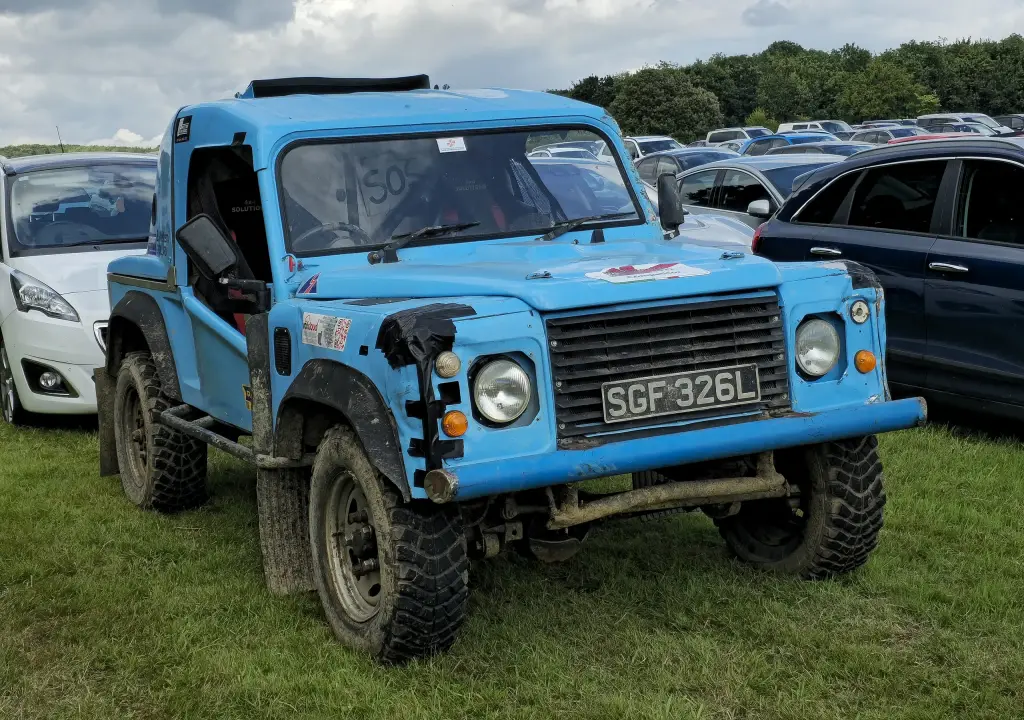
The Land Rover Series I, II and III are compact British off-road vehicles produced by the Rover Company from 1948 and later by British Leyland. Inspired by the Second World War Jeep, the Land Rover was the first mass-produced civilian four-wheel drive with doors and an available hard roof.
Land Rover Series at a glance
| Production | from 1948, by Rover and later British Leyland |
|---|---|
| Body | aluminium alloy, chosen because of post-war steel shortages |
| Chassis | fully box-welded steel frame |
| Suspension | leaf springs, with selectable two- or four-wheel drive |
| Constant four-wheel drive | Series I, 1948 to mid-1951; Stage 1 V8 of the Series III |
| Long-wheelbase model | added in 1954 |
| Station wagon | 1956, the world’s first four/five-door 4WD off-roader of the kind |
| Starting | front hand crank possible |
| Power take-offs | front and rear, for farm machinery |
| Seats | up to seven in short-wheelbase, up to ten in long-wheelbase models |
based on one source (English Wikipedia)
History of the Land Rover Series
The Land Rover was conceived in 1947 as Rover recovered from the war. Before the war Rover built luxury cars, which were not in demand afterwards, and raw materials were rationed to companies making industrial equipment or goods for export. Rover’s Coventry factory had been bombed, and the company had moved into a shadow factory at Solihull, built before the war for Bristol Hercules aircraft engines, that now stood empty. Plans for a small car called the M Type were drawn up but would have been too expensive to build.
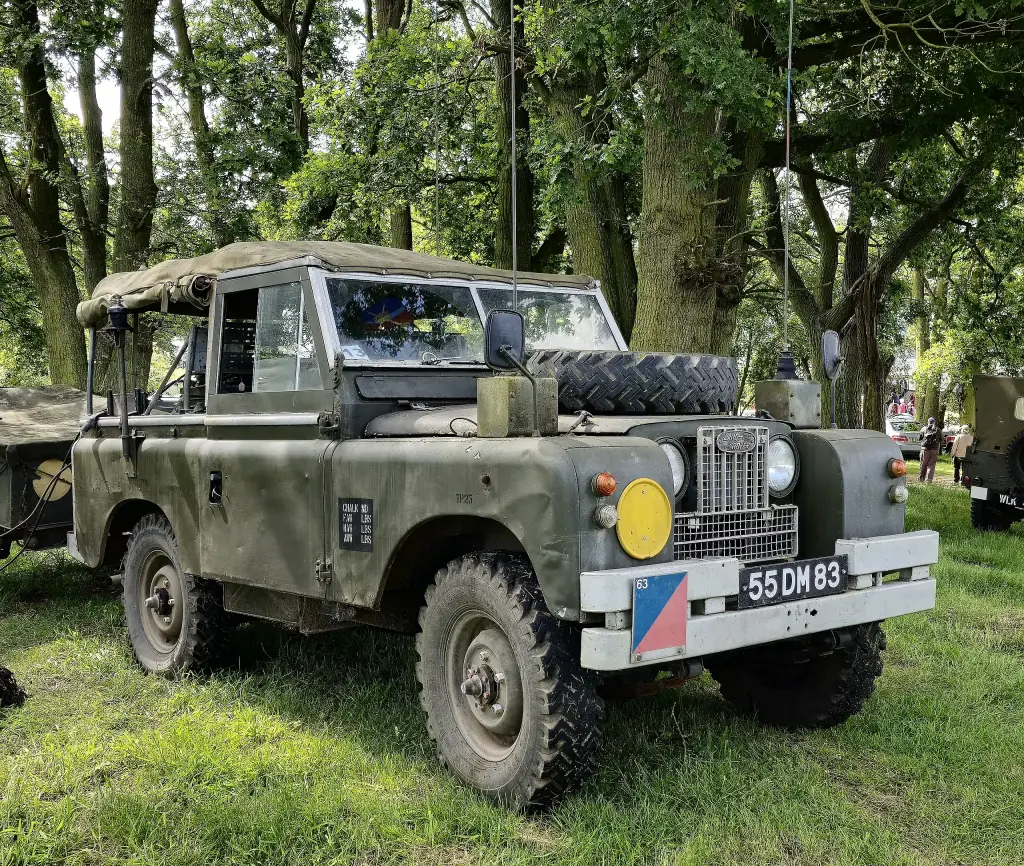
Maurice Wilks, Rover’s chief designer, proposed a light agricultural and utility vehicle along the lines of the Willys Jeep, with an emphasis on farm use. He was possibly inspired by the Standard Motor Company, which had similar problems and was building the Ferguson TE20 tractor, but more probably by his own experience of an army-surplus Jeep on his farm in Anglesey. His design added a power take-off because there was a gap in the market between Jeeps and tractors. The first prototype had the steering wheel in the middle and became known as the centre steer; it used a Jeep chassis with the engine and gearbox of a Rover P3 saloon. The body was hand-made in an aluminium-magnesium alloy called Birmabright to save rationed steel, and early vehicles were painted in surplus aircraft cockpit paint, so they came only in shades of light green.
Testing showed a capable machine: power take-offs from the front of the engine and from the gearbox let it drive farm machinery like a tractor. As production neared, the tractor emphasis faded and centre steering proved impractical. The wheel moved to the side as usual, the bodywork was simplified, a larger engine went in with a specially designed transfer gearbox in place of the Jeep unit, and the result used no Jeep components at all. It was slightly shorter than the Jeep but wider, heavier and faster, and kept the power take-offs. The Land Rover was meant to be built for two or three years to earn cash and export orders so Rover could return to luxury cars; instead it outsold them and became a brand of its own.
After the long-wheelbase model of 1954, Land Rover offered the world’s first four- or five-door four-wheel-drive off-road station wagon in 1956. Series models kept a box-welded steel ladder frame, made from four strips welded into a box at each side, and flat body panels with simple constant-radius curves, which could be cut and formed by hand from aluminium sheet on a basic jig. Space use was a strength: with three abreast in some rows and troop seats in the back, a short-wheelbase vehicle could seat seven and a long-wheelbase one up to ten.
Design and features
- Aluminium body: light and rust-free, a consequence of post-war steel rationing.
- Box-section ladder chassis: simple and strong, welded up from steel strips.
- Power take-offs: front and rear, so the vehicle could work as a tractor.
- Long life: in 1992 Land Rover said 70% of everything it had built was still in use.
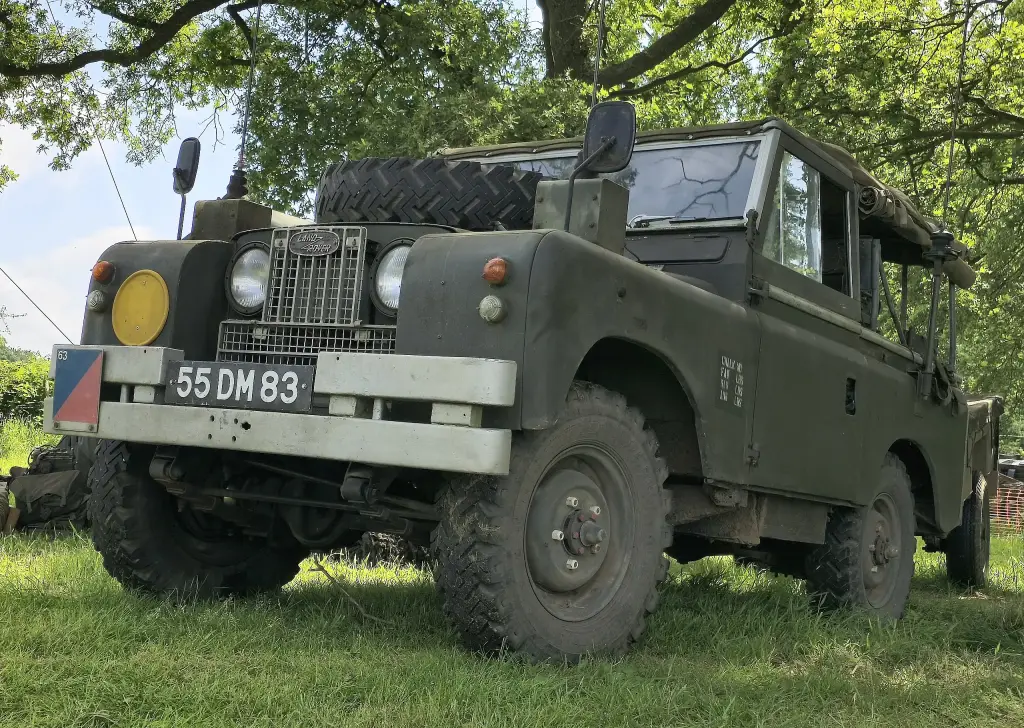
Land Rover Series versions
- Series I (1948): centre-steer prototype followed by production cars; constant four-wheel drive until mid-1951.
- Long-wheelbase model (1954): the first LWB Series Land Rover.
- Station wagon (1956): the first four/five-door four-wheel-drive off-road station wagon.
- Series II and IIA: the generations that established the shape most people know.
- Series III: the final leaf-sprung generation, including the Stage 1 V8 with permanent four-wheel drive.
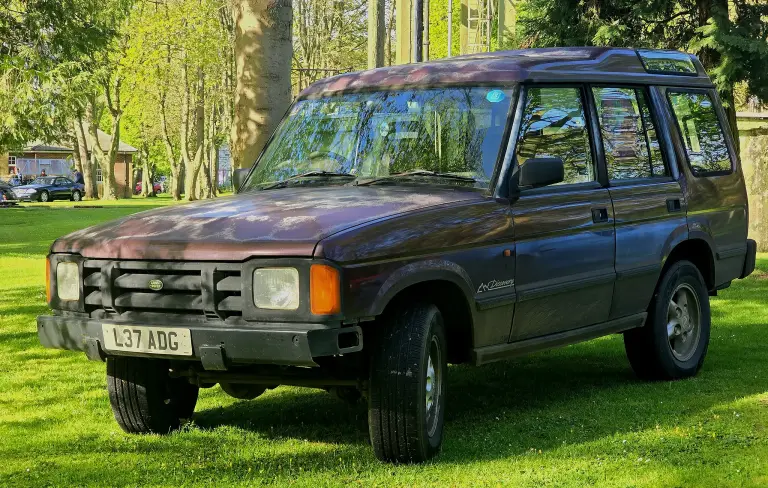
The Series was replaced by the coil-sprung Land Rover Defender, and its station-wagon idea lives on in the Discovery. More cars are in the Land Rover collection.
Sources
- Land Rover series, English Wikipedia: origins, construction, generations