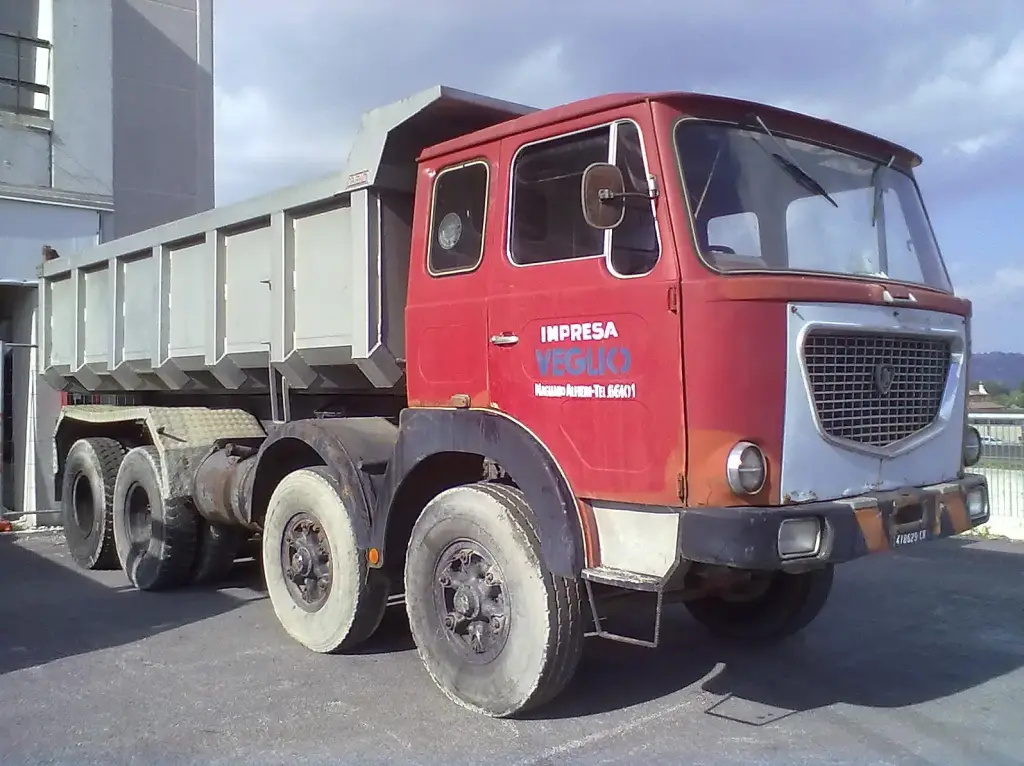
The Lancia Esagamma was a truck and bus chassis built from 1962 to 1971 at Lancia’s Bolzano plant, with bus production continuing to 1973. It was the last industrial vehicle in Lancia’s history, and its name comes from the Greek word for six, after its six-cylinder engine. Altogether 6,648 Esagamma trucks were built.
Lancia Esagamma at a glance
| Maker | Lancia Veicoli Industriali, Bolzano |
|---|---|
| Trucks | 1962–1971 |
| Bus chassis | to 1973 |
| Type | heavy truck and bus chassis |
| Engine | 10,521 cc straight-six, 24 valves, aluminium block |
| Power | 187 to 228 hp, turbocharged for the strongest version |
| Gearbox | four speeds with two-speed reduction, eight forward |
| Design weight | 19 tonnes gross vehicle weight |
| Versions | 516, 519, 520 |
| Trucks built | 6,648 |
| Export markets | Austria, Belgium, France, Germany, Greece, Netherlands, UK and others |
| Replaced by | none — Fiat ended Lancia’s truck programme |
History of the Lancia Esagamma
A revolutionary truck from Bolzano
The Esagamma was conceived to replace the Esatau B and was a revolutionary design both technically and in driving comfort. Its structure was designed for a gross weight of 19 tonnes, close to the limit being legalised in many European countries at the time. The engine was a 10,521 cc straight-six with 24 valves and an aluminium block, and the gearbox had four speeds with permissive synchronisers plus a two-speed reduction unit, giving eight forward and two reverse gears.
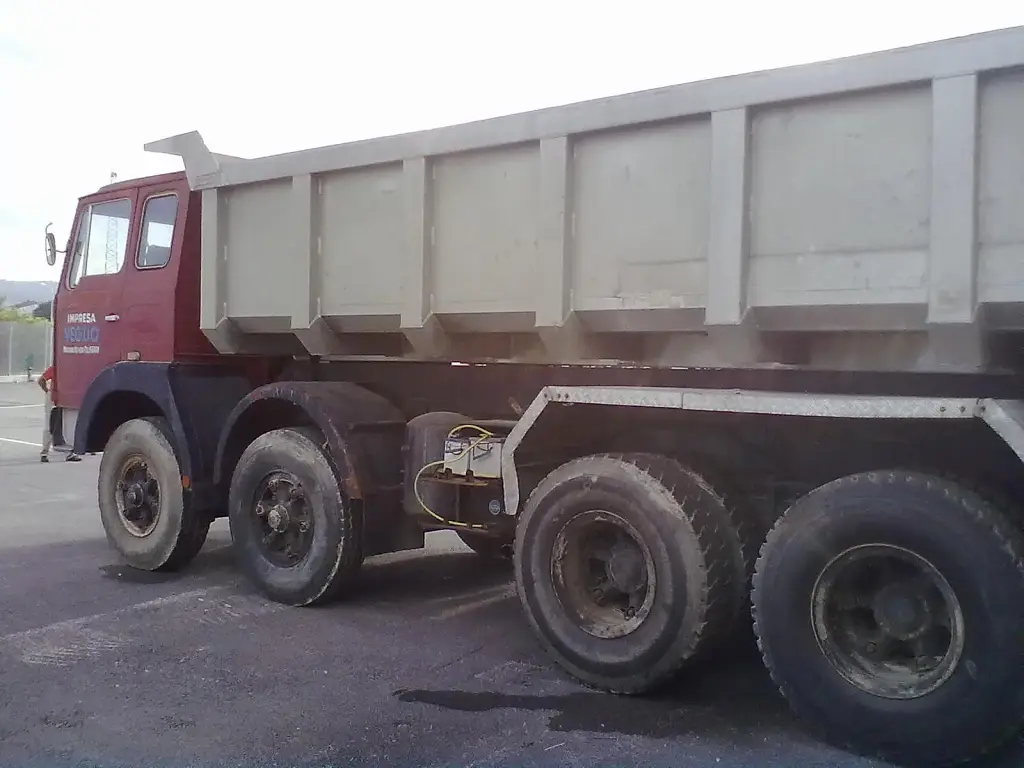
The three versions
Only the 516 was sold at first, with 187 hp. In 1966 came the 519, called Esagamma in export markets and Esagamma E in Italy, where the E marked the version prepared for the weights then in use in Europe; it was more powerful and could be recognised by changes to the lights, and was built with right-hand drive as standard, with left-hand drive as an option. At the end of 1967 the 516 and 519 gave way to the 520 with 209 hp, and a turbocharged 516 with a Holset turbocharger reached 228 hp.
Buses and trolleybuses
Esagamma chassis were widely used for buses, notably the long-distance 715 and the city 718, bodied by the leading coachbuilders of the day, with horizontal engines of 187 to 237 hp. They served Italian public transport operators including ATM in Milan, AMT in Genoa until 1983 and ATAC in Rome until the early 1990s. A number of complete chassis went to Porto in Portugal and were bodied locally in single and double-decker form, staying in service until the mid-1990s. A trolleybus for ATM Milan was planned on the same chassis and mechanicals, but the change of ownership at Lancia ended the project.
The end of Lancia trucks
At the end of 1969 Fiat took over Lancia and with it the Bolzano plant. It quickly became clear that the new owner did not intend to continue Lancia industrial vehicles, which were considered too costly and overlapped with Fiat’s own Fiat V.I. and OM brands, and the Esagamma was taken out of production in 1971. The last one registered was a 520 four-axle road truck in 1978. Despite modest production of 6,648 trucks in nine years, the model was exported widely, to Austria, Belgium, France, Germany, Greece, Yugoslavia, the Netherlands, the United Kingdom, Spain and also to China, Libya and possibly Canada, and was used as a transporter, site vehicle and even a crane carrier.
Design and features
- Big six: a 10,521 cc straight-six with 24 valves and an aluminium block.
- Eight speeds: four ratios with a two-speed reduction unit.
- Modern cab comfort: a design built for the new 19-tonne European limits.
- Bus base: chassis for city, intercity and trolleybus bodies.
Lancia Esagamma versions
- 516: the original 1962 truck, 187 hp, also built turbocharged at 228 hp.
- 519 / Esagamma E: 207 hp from 1966, right-hand drive as standard.
- 520: 209 hp from late 1967.
- Bus 715: long-distance coach chassis, 1965–1970.
- Bus 718: city bus chassis, 200 built in 1973–1974.
The Esagamma replaced the Lancia Esatau and followed the smaller Lancia Esadelta. More vehicles are in the Lancia collection.
Sources
- Lancia Esagamma, English Wikipedia: production numbers, versions, buses
- Lancia Esagamma, Italian Wikipedia: history, engines, export markets, bus use