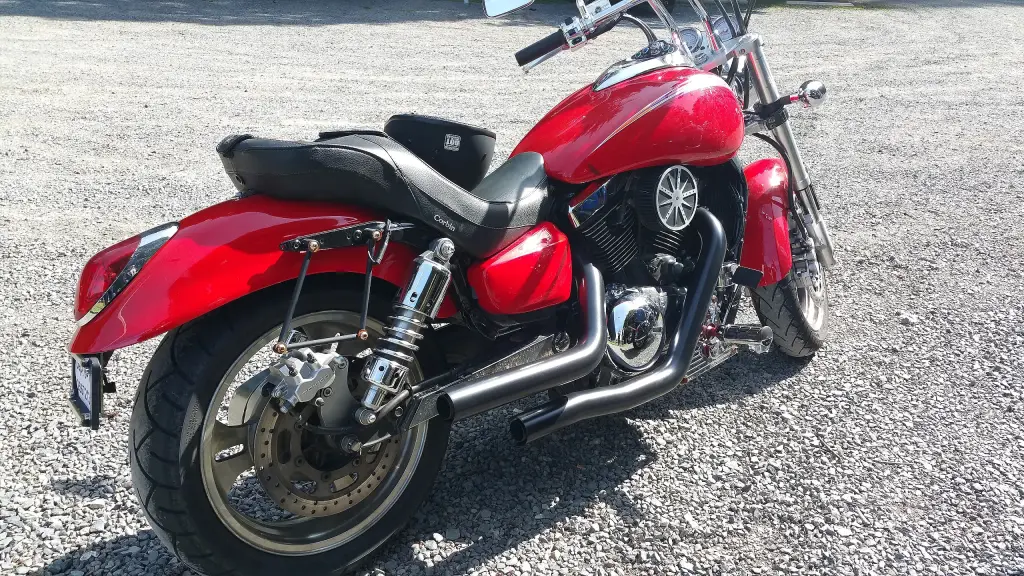
Kawasaki has used the Vulcan name for its custom and touring bikes since 1984, with the model designation VN and mostly V-twin engines from 398 to 2,053 cc. The family covers the small Vulcan 400 and 500, the big 1500, 1600 and 1700 cruisers and the modern Vulcan S.
Kawasaki Vulcan at a glance
| Maker | Kawasaki |
|---|---|
| Name since | 1984 |
| Model code | VN |
| Engines | mostly V-twins, 398–2,053 cc |
| First model | Vulcan VN700A, 1985 |
| VN700 | 699 cc in the USA to avoid tariffs, 749 cc from 1986 |
| Vulcan 400 | 1986, entry-level cruiser |
| Vulcan 500 | EN500A from 1990, Vulcan 500 LTD from 1996 to 2009 |
| Vulcan 88 / 1500 | 1,470 cc V-twin, 1987 onwards |
| Vulcan 650 S | 2015, 649 cc parallel twin from the Ninja 650 |
| Later models | Vulcan 900, 1600 and 1700 |
The two articles describe the same family from different angles; the German one adds the European model history.
History of the Kawasaki Vulcan
Kawasaki launched the Vulcan VN700A worldwide in 1985, its first cruiser powered by its own V-twin engine, with shaft drive. A rare VZ 750 variant with chromed wheel arches also existed. To avoid United States tariffs on Japanese motorcycles over 700 cc, the first American model was limited to 699 cc, but the tariff was lifted in 1986 and capacity rose to 749 cc. Apart from paint, the Vulcan 750 stayed largely unchanged through a 22-year production run, with only minor component adjustments.
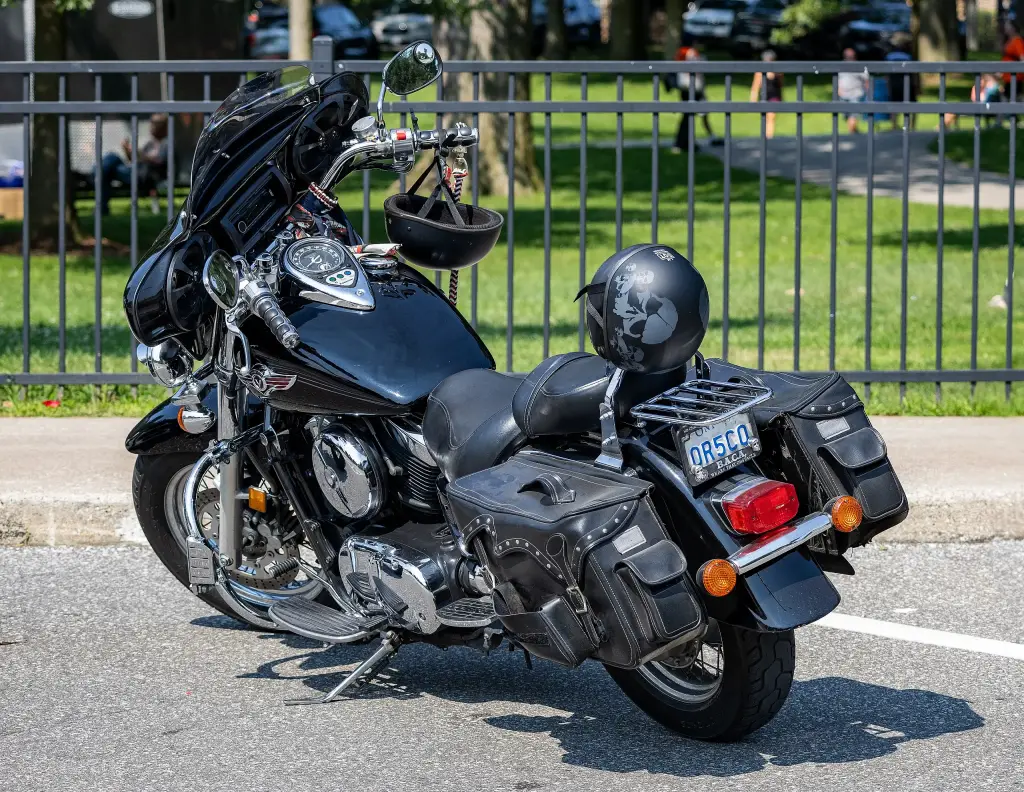
Smaller Vulcans
The Vulcan 400 arrived in 1986 as an entry-level cruiser. Its first series had a 398 cc liquid-cooled twin with belt drive and a six-speed gearbox; the second series used a 399 cc V-twin similar in design to the 750, with chain drive and a five-speed to cut cost, and was built in Classic and Drifter forms. The Vulcan 500, the EN500A of 1990, replaced the 454 LTD with a 498 cc parallel twin almost identical to the Ninja 500R engine, a six-speed gearbox and belt final drive. It was replaced by the Vulcan 500 LTD (EN500C) in 1996, with new ergonomics, cam profiles and lower-compression pistons that moved the power band down, carburettors reduced from 34 to 32 mm and a chain instead of a belt. The LTD lasted until the 2009 model year, a run of nearly 20 years.
The big cruisers
The Vulcan 88 of 1987 was named after the nominal cubic inches of its 1,470 cc liquid-cooled V-twin, a direct challenge to the Honda Gold Wing and Harley-Davidson Electra Glide. It was built from 1987 to 1999 with a four-speed gearbox, a claimed 56.2 hp at 4,500 rpm and 106.6 N·m at 3,250 rpm, and weighed just over 270 kg ready to ride. The Vulcan 1500 Classic of 1996 had the same 1,470 cc 50-degree V-twin with a single-pin crankshaft and a five-speed gearbox, but a lower 700 mm seat, wide handlebars and forward floorboards. The 1500 Meanstreak of 2002, sold for two years before the 1600 Meanstreak took over, used new cams, larger valves, bigger throttle bodies, high-compression pistons and a redesigned combustion chamber for 72 hp and 120 N·m, with the brakes of the ZX-9R. The Vulcan 1500 Drifter of 1999 to 2005 was a homage to the 1948 Indian Chief. The VN800A of 1995 brought modern cruiser style with a softail layout and a 21-inch front wheel, joined by the Classic in 1996 and the Drifter in 1999; the 800 range ended in 2006, replaced by the 900.
Vulcan S
The Vulcan 650 S of 2015 is a sport cruiser with an Ergo-Fit system offering three footpeg positions, three seats and two handlebars. Its 649 cc parallel twin comes from the Ninja 650, retuned with a heavier flywheel and redesigned intake for more low and mid-range torque. It is a very untraditional cruiser in looks, with a high-tensile steel diamond frame, 41 mm forks, a lay-down rear monoshock, a 300 mm front disc and a 14 litre tank.
Design and features
- V-twin cruisers: the core of the range since 1985, from 398 cc to 2,053 cc.
- Vulcan 88: the 1,470 cc “King of the Cruisers” that took on the Gold Wing and Electra Glide.
- Long-running 500: the Vulcan 500 stayed on sale for almost 20 years as Kawasaki’s entry cruiser.
- Ergo-Fit: the Vulcan S lets buyers choose footpeg, seat and handlebar positions at purchase.
- Modern parallel twin: the Vulcan S breaks with V-twin tradition using the Ninja 650 engine.
Kawasaki Vulcan versions
- Vulcan 750 (1985–2006): the first V-twin Vulcan, shaft drive.
- Vulcan 400 and 500: the entry-level cruisers of the 1980s and 1990s.
- Vulcan 88 / 1500 (1987–2008): the big-bore line, including the Meanstreak and Drifter.
- Vulcan 800 (1995–2006): modern cruiser style, replaced by the 900.
- Vulcan 900, 1600 and 1700: the later cruisers and tourers.
- Vulcan S (2015 onwards): the 649 cc sport cruiser with Ergo-Fit.
The Vulcan line includes the Vulcan 900, and the Vulcan S uses the engine of the ER-6. More models are in the Kawasaki collection.
Sources
- Kawasaki Vulcan, English Wikipedia: model history, specifications, Vulcan S
- Kawasaki VN, German Wikipedia: VN model list, VN 750 and VN 800 details