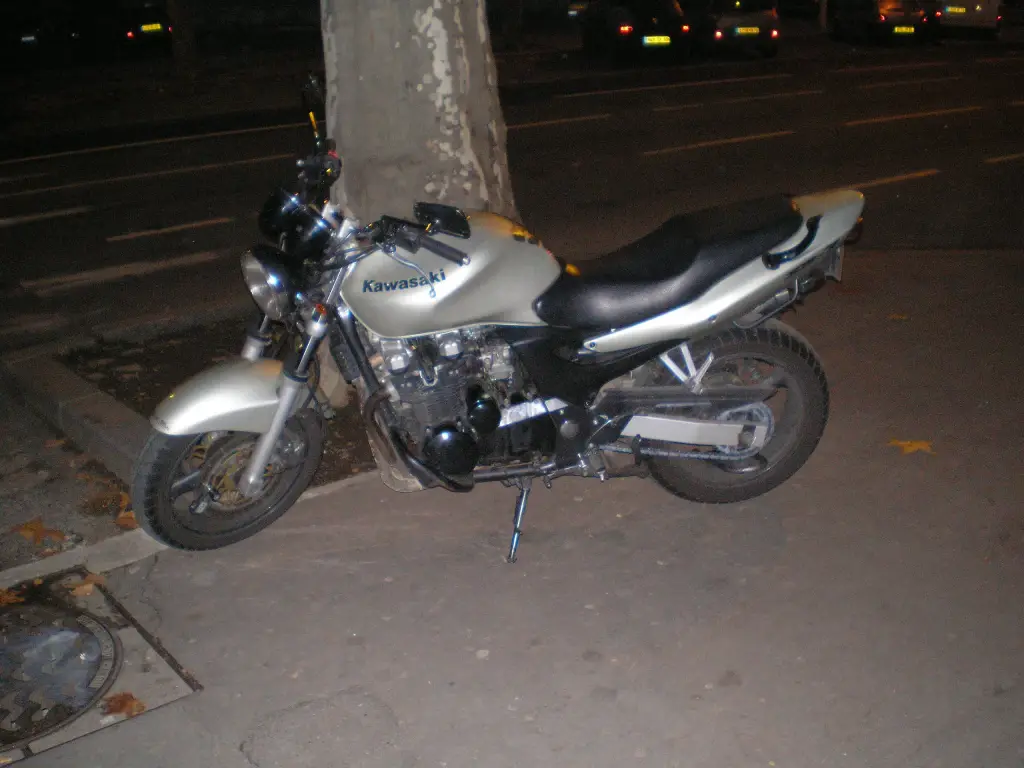
The Kawasaki ZR-7, together with the ZR-7S, is a standard motorcycle that Kawasaki sold in the United States from 1999 through 2003 and in a few other countries through the 2005 model year. It was a simple, affordable machine built on the heritage of the Zephyr.
Kawasaki ZR-7 at a glance
| Maker | Kawasaki |
|---|---|
| Model codes | ZR750-H1 to ZR750-H5 |
| USA | 1999–2003 |
| Other markets | to the 2005 model year |
| Class | standard / naked |
| Engine | 738 cc air-and-oil-cooled DOHC inline four |
| Power | 57 kW |
| Torque | 63 N·m |
| Carburettors | four Keihin CVK 32 mm |
| Transmission | five-speed with positive neutral finder, wet clutch |
| Final drive | chain |
| Seat height | 800 mm |
| ZR-7S dry weight | 210 kg |
| ZR-7 wet weight | 231 kg |
| Differences of the S | fairing, headlight and instruments, stiffer fork springs |
Based on one source, the English Wikipedia article on the ZR-7.
History of the Kawasaki ZR-7
The ZR-7 arrived in 1999 as a straightforward standard bike using the air-and-oil-cooled 738 cc inline four that had powered the Zephyr 750, and it replaced the Zephyr in Kawasaki’s range. It was sold in the United States from 1999 through 2003 and in a few other countries through the 2005 model year, in model codes ZR750-H1 to ZR750-H5.
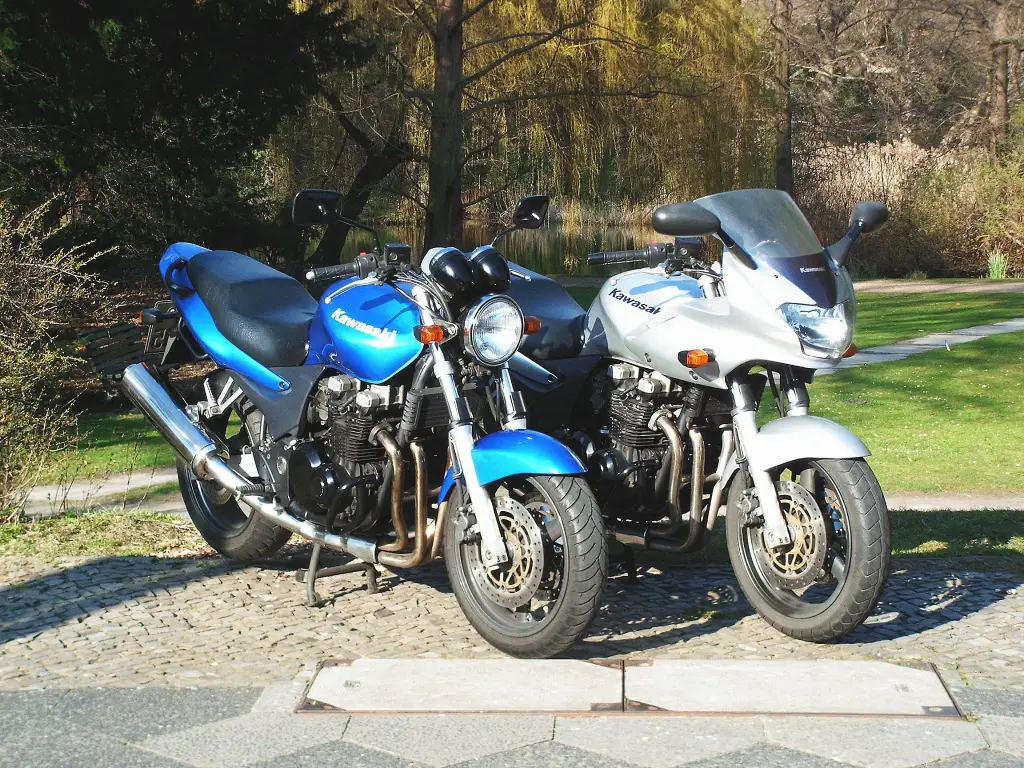
ZR-7 and ZR-7S
The main differences between the ZR-7 and the ZR-7S were the S model’s fairing and its associated headlight and instrument cluster, plus stiffer fork springs. Both used the same engine, producing 57 kW and 63 N·m, fed by four constant-velocity 32 mm Keihin CVK carburettors and driving through a five-speed gearbox with a positive neutral finder and a wet clutch, with chain final drive. The seat height was 800 mm. The ZR-7S had an advertised dry weight of 210 kg, while the unfaired ZR-7 weighed 231 kg wet.
Place in the range
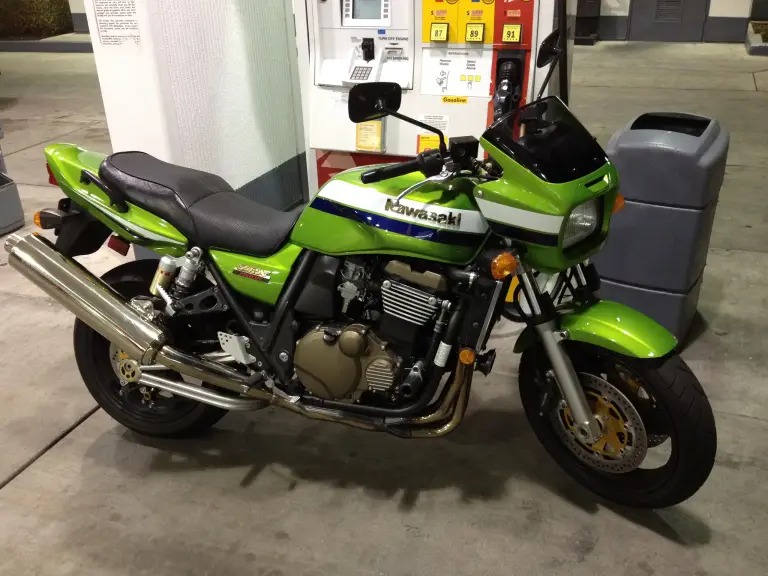
The ZR-7 was a deliberately simple machine: no fairing on the standard model, carburettors rather than injection, and a steel frame. It bridged the retro Zephyr era and the more modern Z750 that followed, and it is still regarded as an easy, durable roadster.
Design and features
- Zephyr-derived engine: a proven 738 cc air-and-oil-cooled inline four in a simple chassis.
- Carburettors: four 32 mm Keihin CVK units, simple to maintain.
- Positive neutral finder: a Kawasaki convenience that makes finding neutral at a standstill easy.
- ZR-7S fairing: the faired version added wind protection and stiffer fork springs.
Kawasaki ZR-7 versions
- ZR-7 (ZR750-H1 to H5): the unfaired standard, 231 kg wet.
- ZR-7S: fairing, matching headlight and instruments, stiffer fork springs, 210 kg dry.
The ZR-7 followed the Zephyr and used its 750 engine; the Z750 came later. More models are in the Kawasaki collection.
Video: Kawasaki ZR 7 von Mr. A
Video by thetempler03 on YouTube.
Sources
- Kawasaki ZR-7, English Wikipedia: model codes, markets, engine, weights, differences