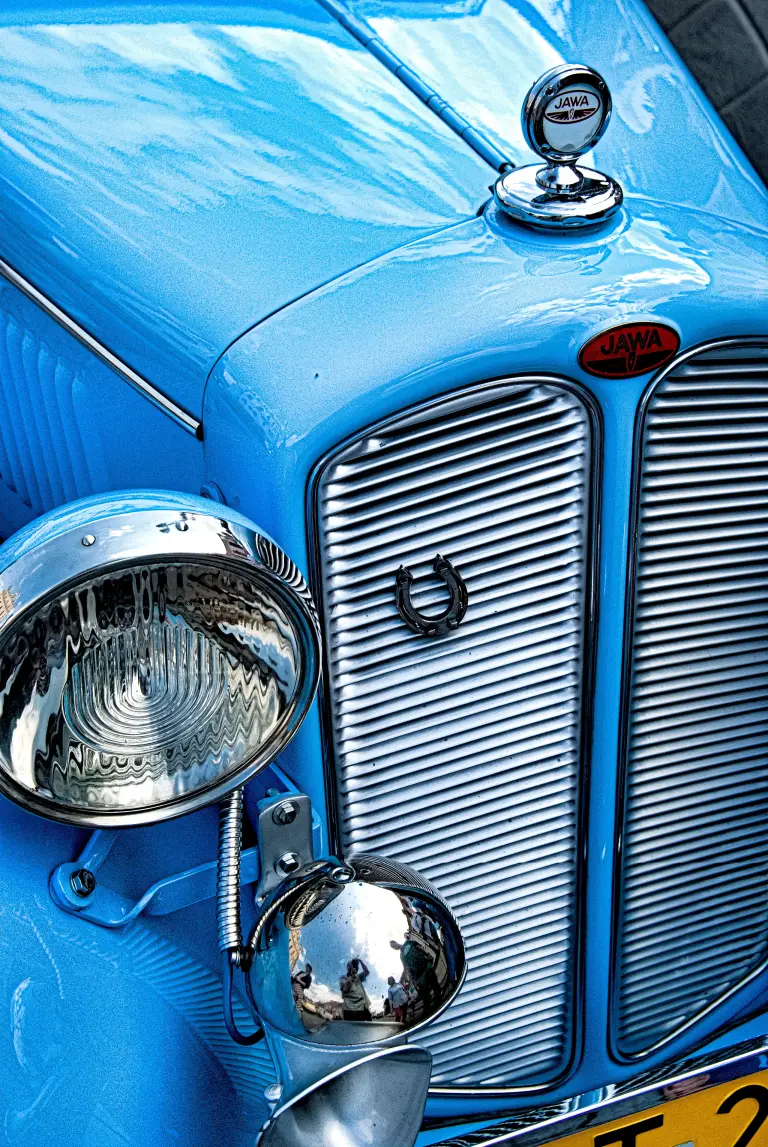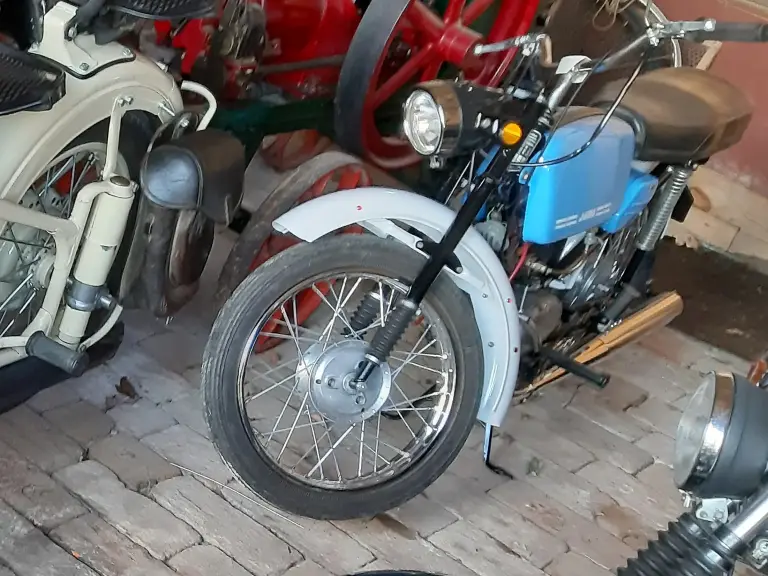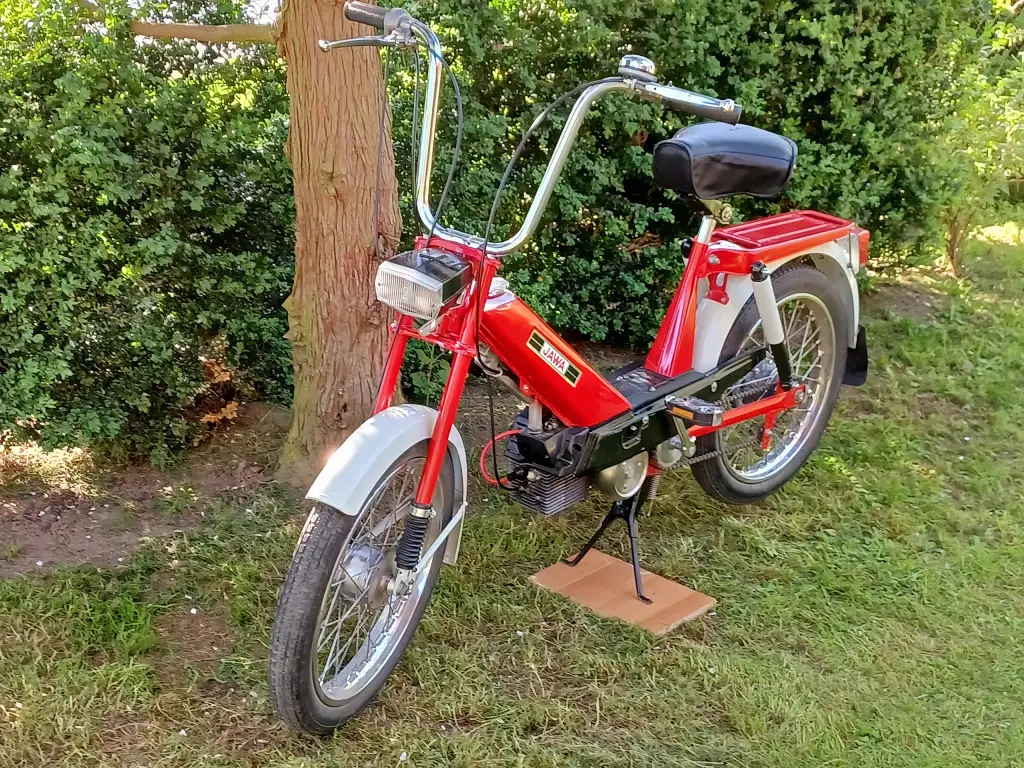
The Babetta was the small moped that filled the roads of Czechoslovakia and, above all, the export markets of Western Europe. Made at Považská Bystrica in Slovakia from 1970, it was sold in other countries under the Jawa name and stayed in production until 1999.
Babetta at a glance
| Maker | ZVL, Považská Bystrica, later Kolárovo |
|---|---|
| Production | 1970–1999 |
| Type 28/228 | 1970–1972 |
| Type 207 | from 1972 |
| Type 210 | 1983–1996 |
| Engine | 50 cm³ two-stroke single |
| Type 228 power | 1.5 hp at 4,500 rpm |
| Top speed | 40 km/h |
| Fuel consumption | 1.8 l/100 km |
| Weight | 42 kg |
| Wheels | 19 inch at first, 16 inch from the type 207 |
There is no English article on the Babetta; this page is based on the Czech Wikipedia article.
History of the Babetta
In the second half of the 1960s Motokov, the state import and export company, saw a market for a small, robust and simple motorcycle, one that in some countries needed no driving licence. Development was given to the Považské strojírny works in Považská Bystrica, with the Dutch and German markets in mind: both wanted pedals and large wheels, which the legislation of the time favoured for a motorised bicycle. Two designers, G. Ulický and J. Šafárik, produced the type 228. The name Babetta came from the actress Brigitte Bardot, who had advertised the Velosolex.
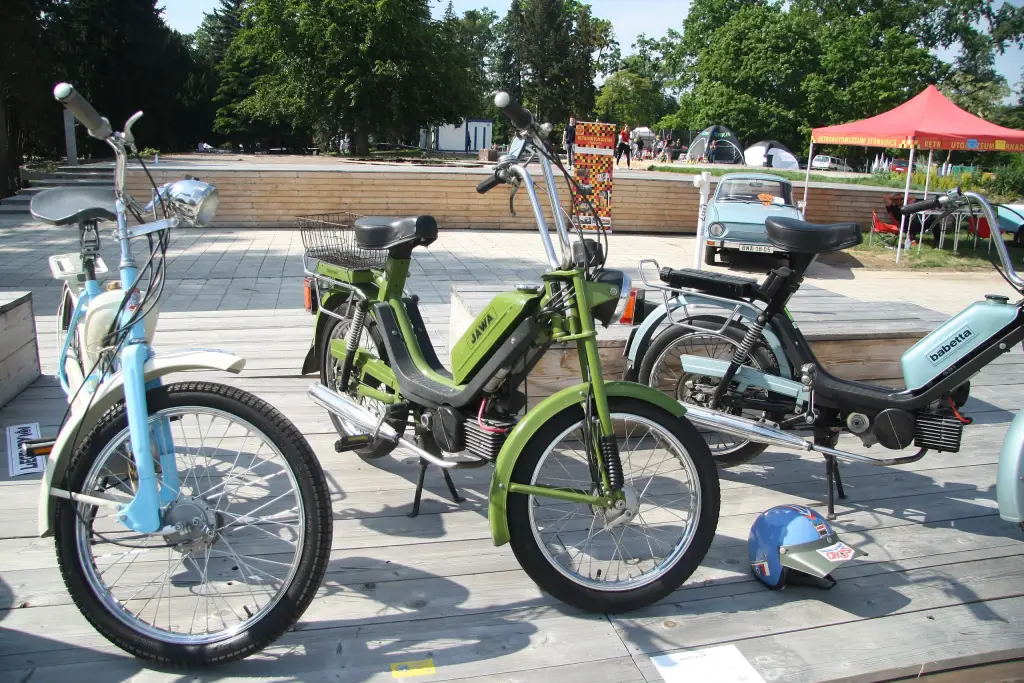
The first Babetts, type 28, appeared in 1970 with the Tranzimo electronic ignition – the first contactless electronic ignition fitted to a moped anywhere – and 19-inch wheels, replaced after about two years by 16-inch ones that stayed for the rest of the line. The type 207 that followed in 1972 was a new generation. It was so successful that in 1976 the whole output went for export, and in 1974 it won the Gute Form design prize in West Germany.
The 210 and the move to Kolárov
In 1983 came the type 210, with a new design, a new frame, a new engine and a two-speed automatic gearbox. Its second gear was added by a third set of clutches: one clutch for starting on the pedals, one for pulling away, one for the change at a given speed. The Považské strojírny employed about 13,500 people, 3,500 of them on mopeds, but a Cold War order for jet engines took the capacity of the works, and in 1986 production of the 210 moved to Kolárov together with all the tooling and documentation.
The end came slowly. Jawa’s partner RMZ in Riga built the Babetta 134 Stella, then Jawa supplied all components for the 134 Star; the attractive 193 Sting and 134 Hopper helped sales for a while, but emission rules and Asian competition could not be held back. The company split into Mopedy s.r.o. and Babetta a.s., and at the beginning of 1999 production of all Babetta types stopped.
Design and features
- Tranzimo ignition: the first contactless electronic ignition on a moped in the world, fitted to the type 28/228.
- Export design: pedals and large wheels were chosen to suit Dutch and German rules for motorised bicycles.
- Automatic gearbox: the 210 of 1983 shifted by itself through two speeds using three clutches.
- Light and simple: 42 kg on the first type, 1.8 l/100 km and a 3-litre tank.
Babetta versions
- Type 28/228 (1970–1972): first Babetta, 19-inch wheels, Tranzimo ignition.
- Type 206 MOFA (1971–1972): detuned version for Germany, 25 km/h.
- Type 207 (from 1972): 16-inch wheels, the best-selling generation.
- Type 210 (1983–1996): new engine and two-speed automatic.
- 193 Sting and 134 models: the last attempts of the 1990s.
The other small Jawa of the period was the Jawa 50/23 Mustang, and the light off-road moped is the Jawa 90. More are in the Jawa collection.
Sources
- Babetta, Czech Wikipedia: history, types, production