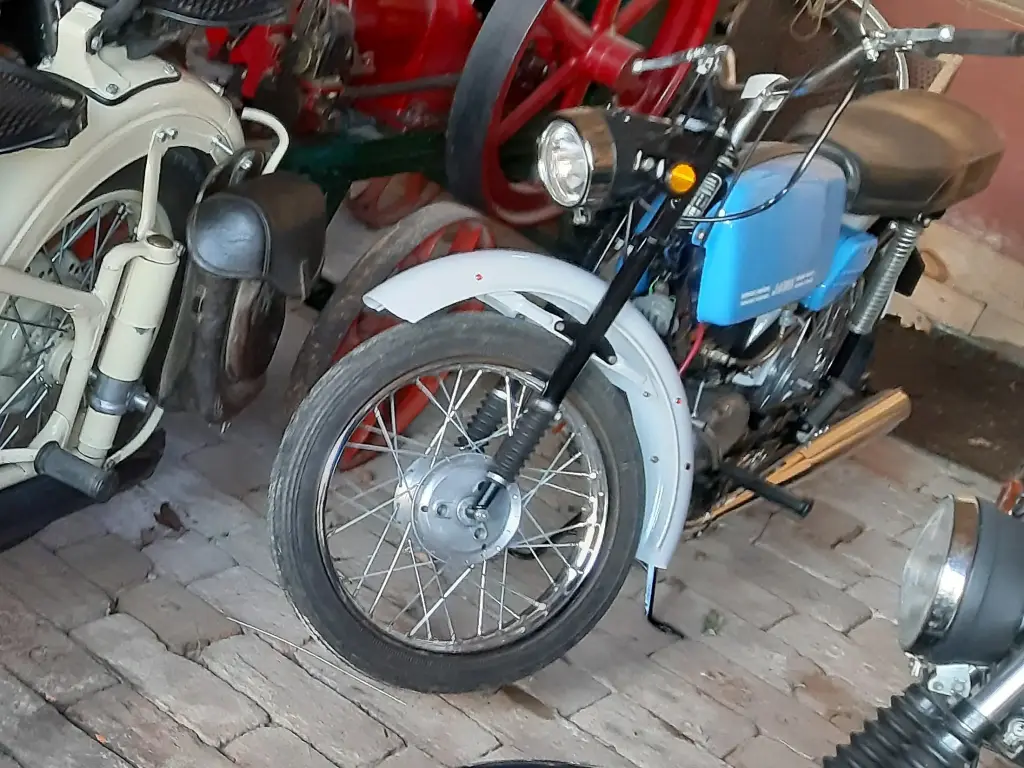
The Jawa 50/23 Mustang was the last of Jawa’s Pionýr small motorcycles. A light 50 cc two-seater with a two-stroke single, it was developed together with the Italian firm Italjet and made from 1969 to 1982.
Jawa 50/23 Mustang at a glance
| Maker | Považské strojírny, with Italjet of Italy |
|---|---|
| Production | 1969–1982 |
| Type 23A | 1969–1975, mainly for export |
| Type 23 | 1975–1982 |
| Renamed | JAWA 223.100 (23A) and 223.200 (23) in 1977 |
| Engine | 50 cm³ air-cooled two-stroke single |
| Gearbox | three-speed, foot change on the left |
| Wheels | 16 inch |
| Dry weight | 65 kg |
| Payload | 160 kg |
| Top speed | 65 km/h |
| Fuel consumption | 2.3–3.5 l/100 km |
There is no English article on the Mustang; this page is based on the Czech Wikipedia article.
History of the Jawa 50/23 Mustang
The Mustang closed the Pionýr series that had begun with the Jawa 550 and 555 and continued through the 05, 20 and 21 Sport. It was created in cooperation between the Považské strojírny works and the Italian company Italjet, and it was a two-seat, light motorcycle with a single-cylinder two-stroke engine. The type 23A was built from 1969 to 1975, mainly for export; the frame came from the earlier 50/20 and had welded mounts for the tank, seat and mudguards.
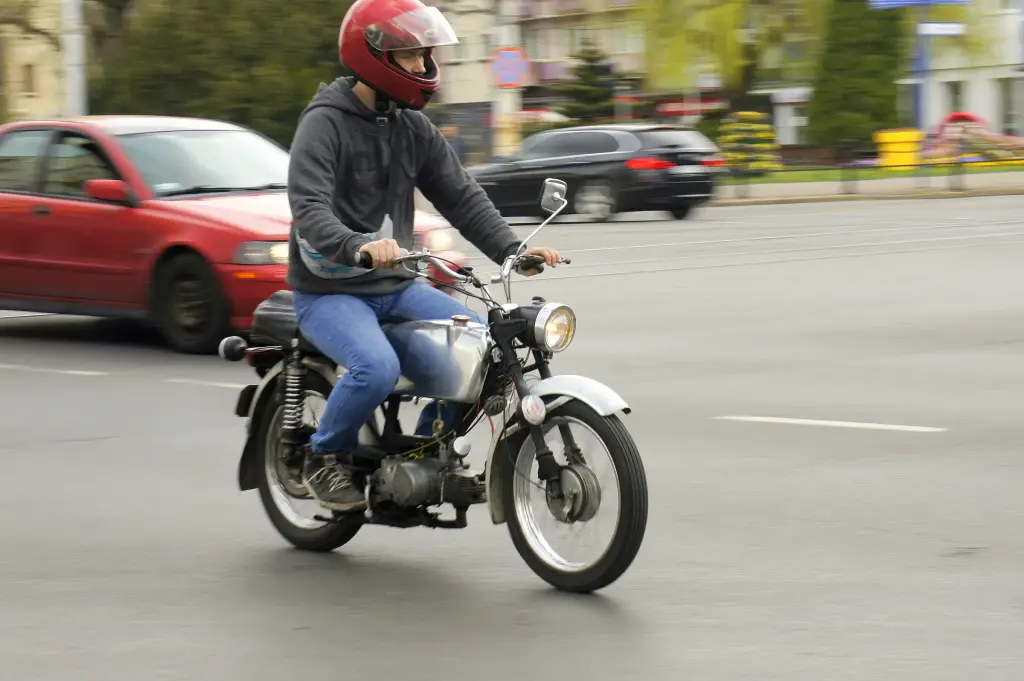
The 23A was refined year by year. From 1971 it had rear swinging arms of steel tube instead of pressed steel, a round 80 km/h speedometer in place of the rectangular 120 km/h one, handlebars without a cross brace, a fuel tap fixed by a nut, a tool box with a removable lid and the stand spring moved to the footrest bracket. From 1972 came a one-piece chain guard, and from 1974 a tubular swinging arm, unshielded rear shock absorbers with chrome springs, a different fuel tap, wide handlebars with a T-shaped welded joint, and fork sliders without gaiters.
The 23 of 1975
The main change with the type 23 was electrical: lighting output rose from 20 W to 30 W, with two 15 W coils in series instead of separate 15 W and 5 W coils. The handlebar levers were pressed from steel sheet with balls at the ends, the front mudguard had riveted mounting plates and the exhaust had a new open shape. From 1979 the fork sliders were covered by gaiters, the front fork came as a complete assembly, the mudguard was fixed from inside and the exhaust and silencer were revised.
In 1976 the type 23 received new tank stickers reading JAWA, and in 1977 both versions were renamed – the 23A became the 223.100 and the 23 the 223.200 – with the stickers replaced by painted lettering. That specification lasted until production ended in 1982.
Design and features
- Light two-seater: 65 kg dry, 160 kg payload, 16-inch wire wheels.
- Pionýr ancestry: the frame was derived from the earlier Jawa 50/20.
- Simple electrics: flywheel magneto ignition, 6 V lighting of 20 W, later 30 W.
- Italian cooperation: developed together with Italjet of Italy.
Jawa 50/23 Mustang versions
- 23A (1969–1975): the export version, 20 W lighting.
- 23 (1975–1982): 30 W lighting and revised chassis parts.
- 223.100 and 223.200 (1977–1982): the same bikes under new type numbers and painted badges.
The Mustang belongs to the same small-bike family as the Babetta moped, and the off-road moped of the era is the Jawa 90. More are in the Jawa collection.
Sources
- Jawa 50/23 Mustang, Czech Wikipedia: history, changes by year, technical data