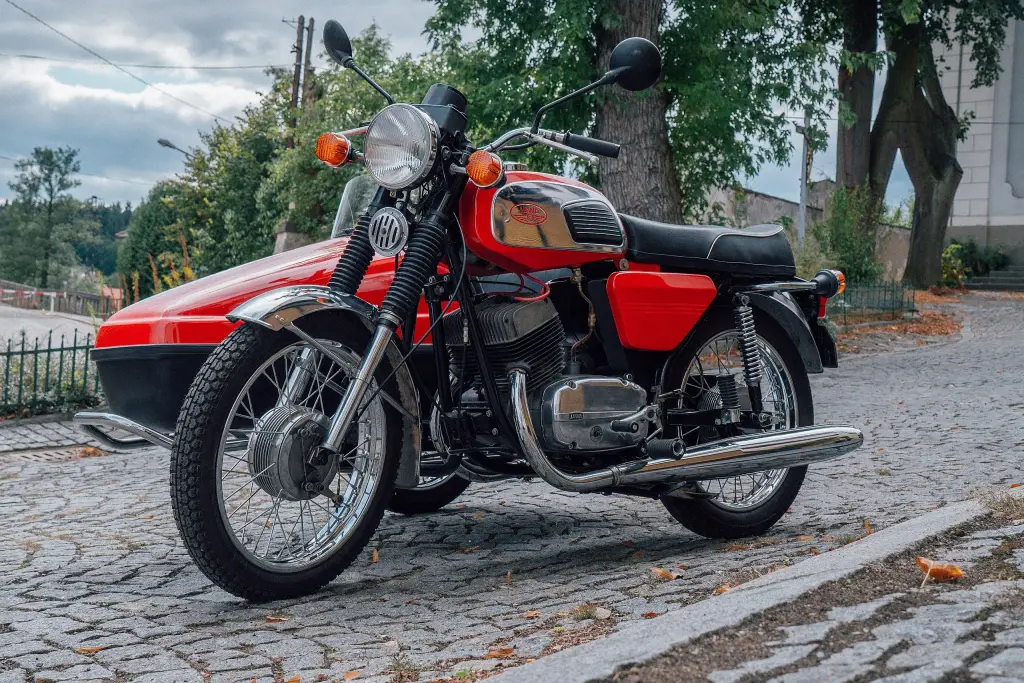
The Jawa 350 is one of the longest-lived motorcycle families in Europe. Its air-cooled 343 cc two-stroke twin, good for about 132 km/h in the 1950s, was sold in more than 120 countries and dominated the roads of the Eastern Bloc from the 1960s to the 1990s.
Jawa 350 at a glance
| Maker | Jawa, Týnec nad Sázavou, Czechoslovakia |
|---|---|
| Production | from the 1930s to 1992 in Czechoslovakia, later in the Czech Republic |
| Engine | 343 cm³ air-cooled two-stroke twin |
| Top speed | about 132 km/h in the 1950s |
| Export | more than 120 countries |
| Main rivals | MZ and Simson, Pannonia, Junak, IZh |
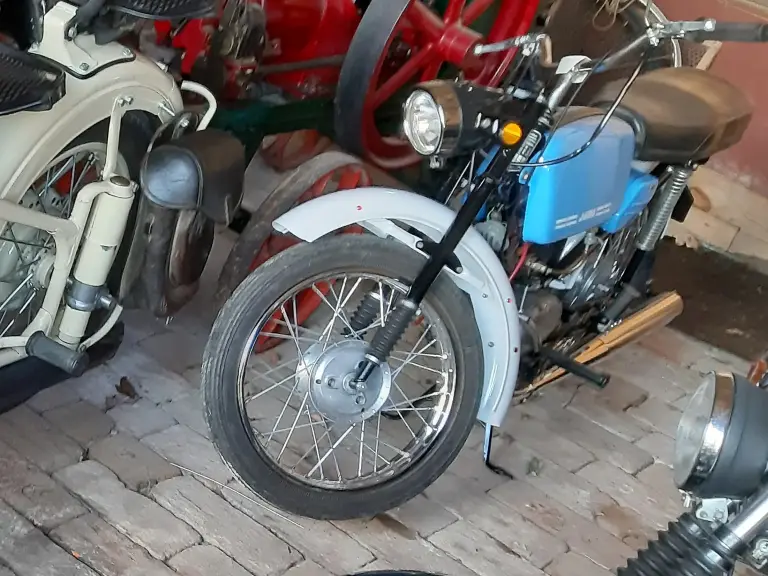
| Type 634 | 1973–1984, new closed frame, 16.2-litre tank |
| Type 634-7 | 1981 update with rev counter and restyled tank |
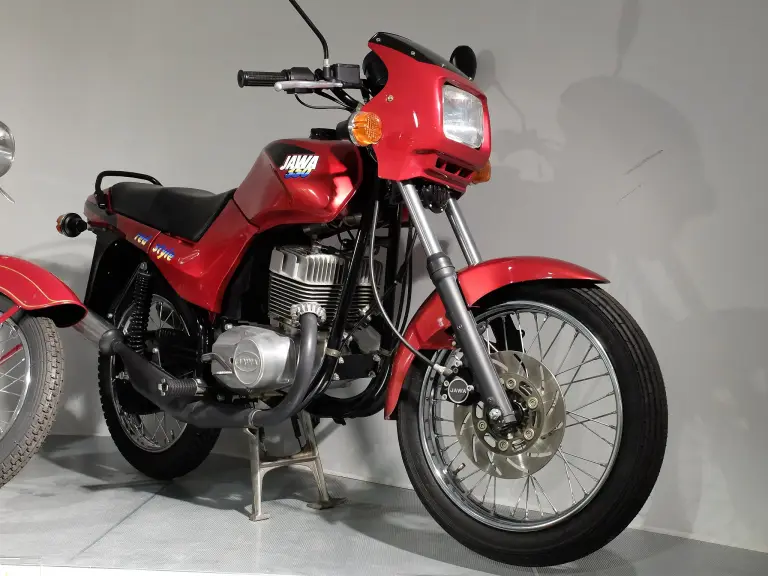
| Type 640 | from 1991, new bodywork and rectangular headlamp |
| UK names | Classic and Sport |
| Second-hand appeal | almost mechanically unchanged since the 1970s |
The English article covers the whole 350 family; the Czech article on the 634 supplies the technical detail of the best-known generation.
History of the Jawa 350
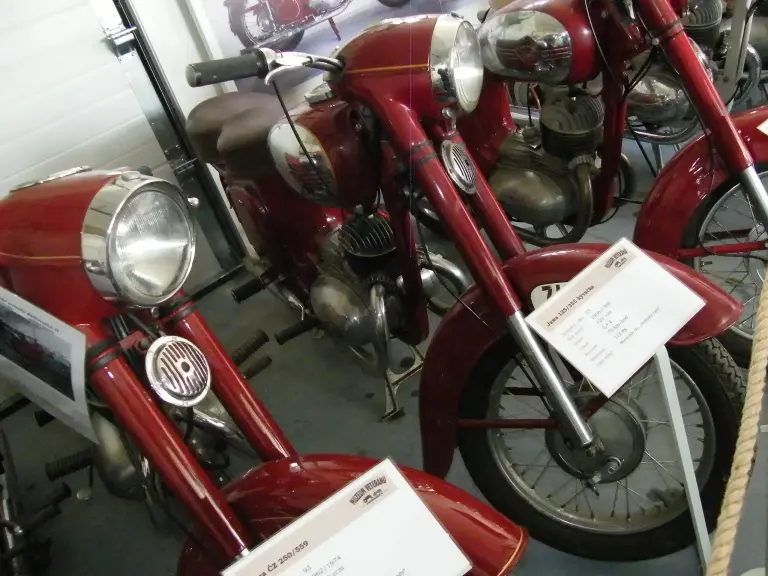
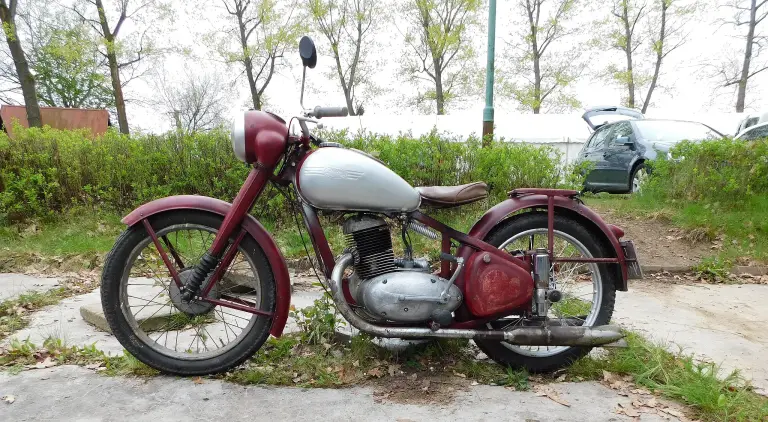
The 350 name goes back to the first years of the factory. From 1934 to 1936 Jawa built a 350 SV four-stroke single, replaced in 1935 by the 350 OHV. The modern line began in 1948 with the 350 Pérák, the first two-stroke twin, followed by the 350/354 of 1954–1964. With its air-cooled 343 cc engine the bike could reach about 132 km/h and was exported to more than 120 countries, becoming the first foreign motorcycle on sale in the post-war Soviet Union.
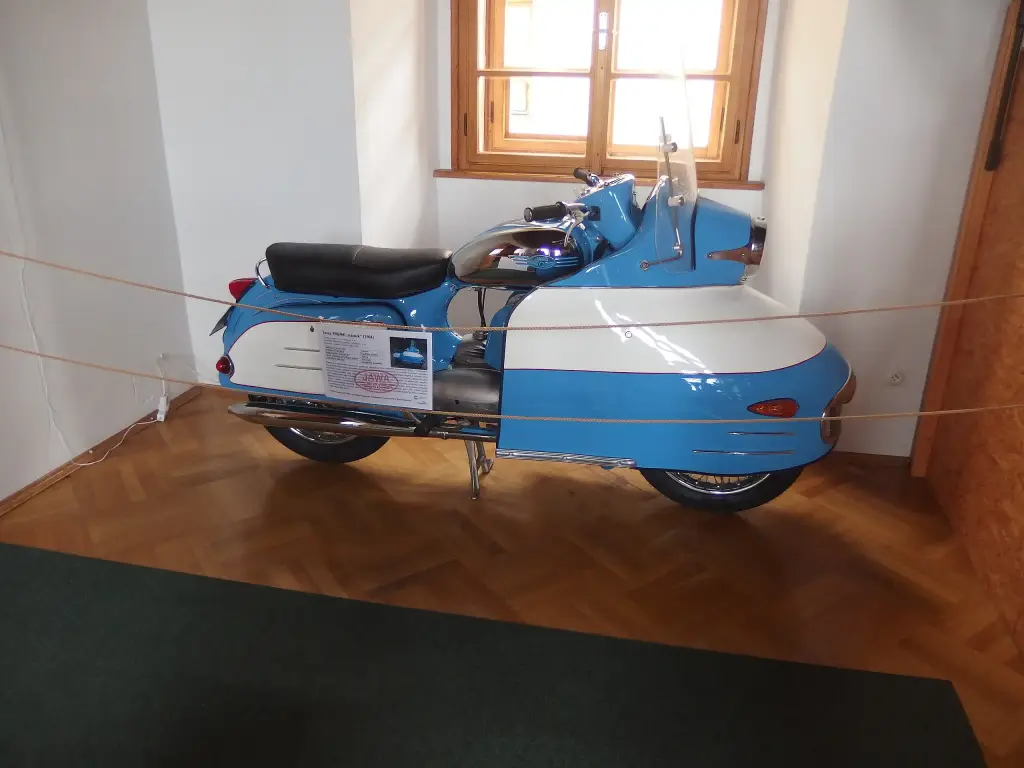
In the 1960s and 1970s the 350 was the default big motorcycle of the Communist Bloc. Its competitors were the German MZ 250 and Simson, the Hungarian Pannonia, the Polish Junak and the Soviet IZh – a market that Japanese makers had not yet entered. Jawa answered with a rapid succession of types: the 360 Automatic of 1964 with the first automatic clutch on a motorcycle, the 361 Sport of 1965 with 19-inch wheels, the 362 Californian, the 633 Bizon and, in 1973, the 634.
The 634 generation
The 634 of 1973–1984 kept the proven 343.5 cm³ two-stroke twin but put it in a completely new closed frame, three-quarters double and patented, borrowed from Jawa’s competition machines. The fuel tank grew to 16.2 litres, the seat was anatomically shaped and lockable, and the bike was happy to hold 100 km/h on bad roads. Early engines had no separate lubrication, so oil had to be mixed with the petrol; the Oilmaster system came later. The 1981 update, the 634-7, brought a rev counter, a new tank, lights and handlebars, and a little less vibration, noise and fuel consumption.
Later types
The 638 of 1986 and the 639 of 1984 with a front disc brake carried the design into the 1990s. In 1991 came the 350/640, mechanically close to the 638 but with smoother bodywork and a rectangular headlamp. The two-stroke twin is still made and sold in Britain as the Classic and the Sport, and in 2017 Jawa added the 350 OHC, a four-stroke single built on a Chinese Shineray chassis that meets modern emission rules.
Why it lasted
The 350 survived because it was simple, strong and easy to repair. Its frame, its separate gearbox oil supply and its modest electrics suited owners who serviced their own machines, and spare parts stayed available for decades. That is why a 350 is still a common sight at Czech veteran rallies.
Design and features
- Two-stroke twin: 343 cm³, air-cooled, almost unchanged in layout since the 1970s.
- Closed double frame: the 634 introduced a patented frame derived from Jawa competition bikes.
- Big tank: 16.2 litres on the 634, raised to 17 litres in 1982.
- Separate lubrication: Oilmaster arrived after the first 634s, which needed oil mixed into the fuel.
- Long production: the same basic engine served from the Pérák to the 640.
Jawa 350 versions
- 350 Pérák (1948–1956): the first two-stroke twin.
- 350/354 (1954–1964): the classic 1950s twin.
- 350/360 Automatic (1964–1974): single-cylinder with the first automatic clutch on a motorcycle.
- 350/361 Sport (1965–1969): twin with larger 19-inch wheels.
- 350/634 (1973–1984): new frame and bodywork, the best-known version.
- 350/640 (from 1991): restyled body with a rectangular headlamp.
The 640 is described in its own article, Jawa 350/640, and the smaller brother of the 350 is the Jawa 250. More Jawas are in the Jawa collection.
Sources
- Jawa 350, English Wikipedia: production, export, versions, rivals
- Jawa 350/634, Czech Wikipedia: 634 frame, tank, 1981 update