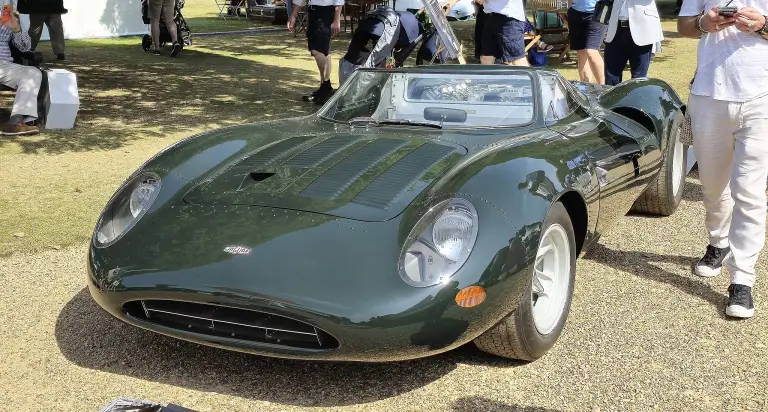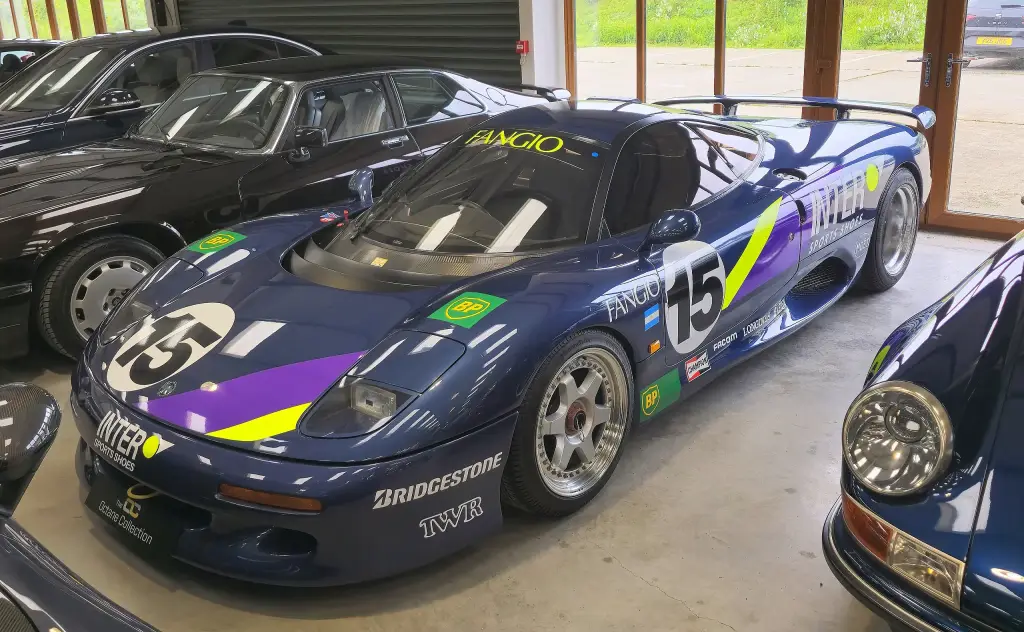
The Jaguar Sport XJR-15 is a two-seater sports car of which a limited number were produced by JaguarSport, a subsidiary of Jaguar and Tom Walkinshaw Racing, between 1990 and 1992. Only 50 were planned, though 53 chassis were eventually made, each selling for £500,000.
Jaguar XJR-15 at a glance
| Production | 1990–1992 |
|---|---|
| Builder | JaguarSport, Bloxham, Oxfordshire |
| Planned | 50 cars; 53 chassis made |
| Price | £500,000 |
| Chassis | based on the Le Mans-winning XJR-9 |
| Body | carbon fibre and Kevlar |
| Engine | 6.0-litre V12, 450 bhp |
| Gearbox | six-speed manual, unsynchronised |
| Weight | 1,050 kg |
| 0–60 mph | 3.9 seconds |
| Top speed | 191 mph, gearing limited |
| Race series | Jaguar Intercontinental Challenge, 1991 |
History of the Jaguar XJR-15
Origins
Tom Walkinshaw came up with the idea in 1988 after seeing the XJ220 concept at the British Motor Show. Following Jaguar’s Le Mans success he enlisted Peter Stevens, who later co-designed the McLaren F1, to develop a road-going version of the XJR-9, originally designated the R-9R. Wealthy racing enthusiasts pressed Walkinshaw to build a road-going racer, intended as a better alternative to the XJ220. Early owners included Derek Warwick, Bob Wollek, Vern Schuppan, Matt Aitken, Andy Evans and the Sultan of Brunei.
From racer to road car
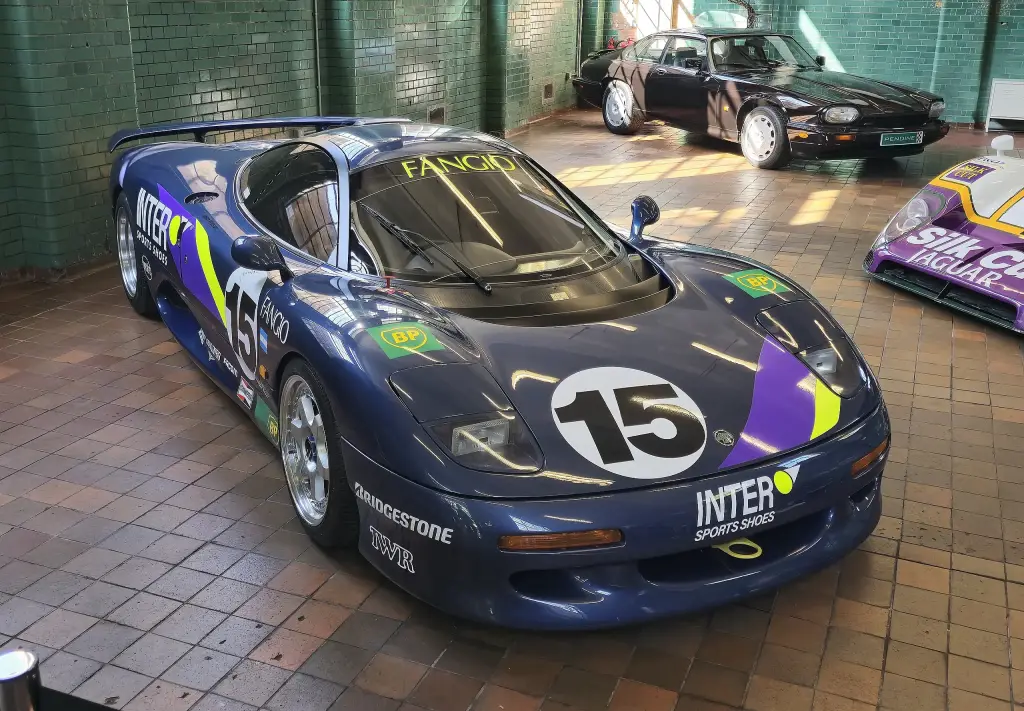
To make the XJR-9 usable on the road, Stevens widened the cockpit by 75 mm and raised the roof by 40 mm for more headroom. The scale model was ready by Easter 1989, the clay model by October, and the first prototype was ready for Walkinshaw to drive when he returned from France in July 1990. Production was announced in a press release on 15 November 1990 with an official launch at Silverstone early in 1991. The car was built by JaguarSport at Bloxham in Oxfordshire, with no official involvement from Jaguar itself. It complied with British construction and use regulations and could be registered for road use, though with so few made it was never type-approved.
Engineering
The XJR-15 is powered by a 6.0-litre naturally aspirated 24-valve Jaguar V12 of 450 bhp, with electronically managed fuel injection and a fly-by-wire throttle that was advanced for its time. Transmission was a TWR unsynchronised six-speed manual, with a five-speed synchromesh unit as an option. The chassis and bodywork were carbon fibre and Kevlar, making it the first road-going car built entirely of those composites, before the McLaren F1 used similar methods in 1992. It measured 4.80 m long, 1.90 m wide and 1.10 m tall and weighed 1,050 kg. Suspension was fully independent with non-adjustable Bilstein dampers, wide-based front wishbones with pushrods to horizontally mounted spring-damper units, and the XJR-9’s rear suspension with vertical coil springs inside the rear wheels to leave room for venturi tunnels. The engine was a stressed member of the rear frame, the floor was completely flat in Group C fashion, and the steel disc brakes used AP four-piston callipers. It reached 60 mph in 3.9 seconds and 191 mph, limited by gearing.
Racing
The car competed in a single-make series, the Jaguar Intercontinental Challenge, which supported three Formula One races at Monaco, Silverstone and Spa in 1991. Road testers found the softer suspension a compromise but praised the ride and grip, and Tiff Needell described the result as oversteer until the car was understood, after which it showed excellent change of direction.
Design and features
- Carbon fibre body: the first road car built entirely from carbon fibre and Kevlar.
- XJR-9 chassis: Le Mans-winning engineering adapted for the road.
- 6.0-litre V12: 450 bhp with a fly-by-wire throttle.
- Road-going racer: registered for the road but never type-approved.
- Intercontinental Challenge: a one-make series at Monaco, Silverstone and Spa in 1991.
Jaguar XJR-15 versions
- XJR-15 (1990–1992): the standard road car, 53 chassis.
- Five-speed option: a synchromesh gearbox instead of the six-speed TWR unit.
- Race cars: entered in the 1991 Jaguar Intercontinental Challenge.
The XJR-15 was based on the Jaguar XJR-9 and offered an alternative to the Jaguar XJ220. More cars are in the Jaguar collection.
Sources
- Jaguar XJR-15, English Wikipedia: origins, design, engineering, racing