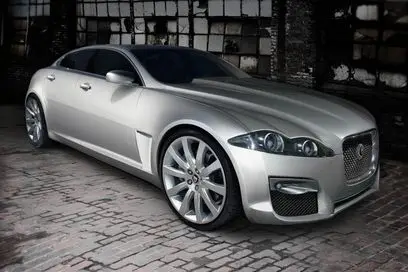
The Jaguar XJ6 is the six-cylinder saloon that began the XJ line in 1968. It replaced most of Jaguar’s existing saloons, which by then had grown to four separate ranges, and it stayed in production in three series until the six-cylinder Series 3 was replaced in 1987.
Jaguar XJ6 at a glance
| Introduced | September 1968 |
|---|---|
| Series | 1 (1968–1973), 2 (1973–1979), 3 (1979–1987) |
| Engines | 2.8 and 4.2-litre XK six, 3.4 from 1975 |
| Wheelbase | 2.76 m standard, long version from 1972 |
| Suspension | Mark X independent rear, Mark 1 front subframe |
| Transmission | Borg-Warner Model 8, Model 12 from 1970 |
| Fuel | twin tanks with two lockable fillers |
| Upmarket version | Daimler Sovereign |
| Coupé | short-wheelbase two-door, 1975–1978 |
| Facelifts | 1973 and 1979 |
History of the Jaguar XJ6
Series 1
The XJ6 carried over the 2.8-litre and 4.2-litre versions of Jaguar’s XK straight-six, along with the widest version of the Mark X’s independent rear suspension and the subframe-mounted front suspension first seen in the 1955 Mark 1, now with anti-dive geometry. Introduced in September 1968 on a 2.76 m wheelbase, it had power steering and leather upholstery as standard on the 2.8 De Luxe and 4.2 models. An upmarket Daimler Sovereign continued the name from the Daimler version of the Jaguar 420; the 4.2 Daimler cars arrived in October 1969 with television advertisements in which Sir William Lyons called the XJ the finest Jaguar ever. One unusual inheritance from the Mark X and S-Type was a pair of fuel tanks on either side of the boot, filled through separately lockable caps on the rear wings. Early road tests praised the brakes and ride.
Series 2
In March 1970 the 4.2-litre XJ6 switched from the Borg-Warner Model 8 automatic to the Model 12, whose three forward positions let the driver hold lower gears. In 1972 a long-wheelbase option added four inches of rear legroom. The facelift of autumn 1973 created the Series II, with the 4.2-litre six and, in the XJ12, the 5.3-litre V12, joined by a 3.4-litre XK engine in 1975. At the 1974 London Motor Show Jaguar withdrew the standard-wheelbase saloon, so all later cars had the longer cabin. The Series II and its two-door coupé, sold from 1975 to 1978, were the last Jaguars with direct input from Sir William Lyons before his retirement.
Series 3
The 1979 Series 3 saloons received a redesigned upper body and new bumpers, which gave the car the cleaner, more upright look it is remembered for. The six-cylinder Series 3 cars were replaced by the second-generation XJ in 1987, though the V12 models carried on until 1992. Over its life the XJ6 established the shape and engineering layout that Jaguar used for its flagship saloons for the next five decades.
Design and features
- One range instead of four: the XJ6 consolidated Jaguar’s saloon line-up.
- XK six-cylinder engines: 2.8, 3.4 and 4.2 litres across the three series.
- Mark X rear suspension: Jaguar’s independent layout in its widest form.
- Twin fuel tanks: filler caps on both rear wings.
- Daimler Sovereign: the upmarket version with more equipment.
Jaguar XJ6 versions
- Series 1 (1968–1973): 2.8 and 4.2-litre cars, long wheelbase from 1972.
- Series 2 (1973–1979): facelifted body, 3.4 added in 1975, coupé until 1978.
- Series 3 (1979–1987): redesigned upper body and bumpers.
- Daimler Sovereign: the luxury version sold alongside the Jaguar.
The XJ6 replaced the Jaguar Mark 2 and the Jaguar Mark X and was followed by the Jaguar XJ40. More cars are in the Jaguar collection.
Sources
- Jaguar XJ, English Wikipedia: Series 1 to 3, engines, equipment