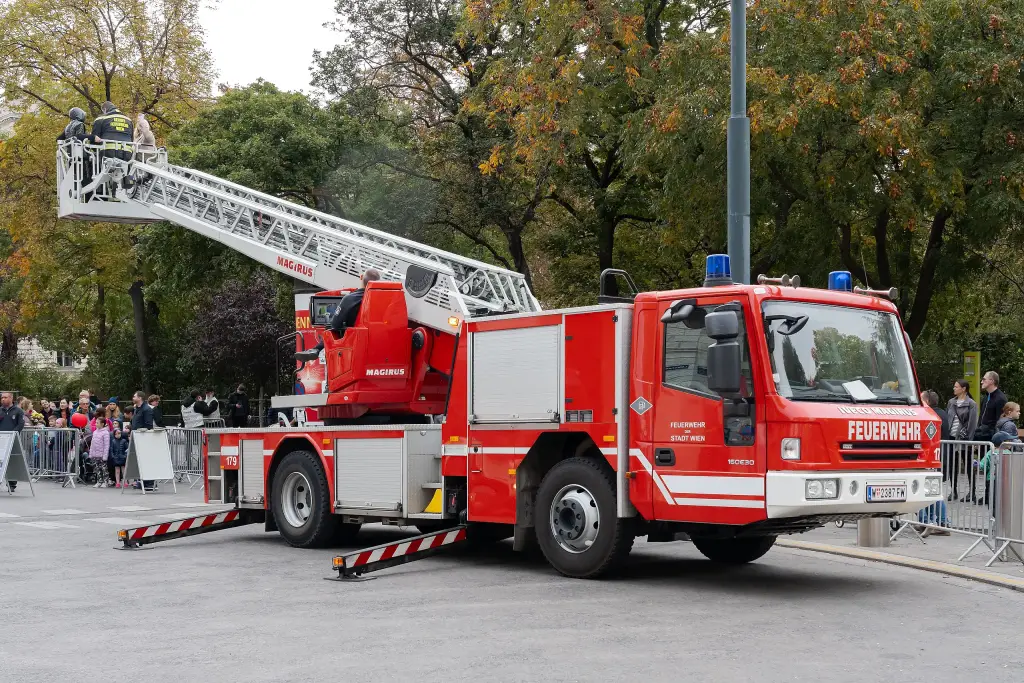
Magirus is a lorry and bus maker based in Ulm, Germany, founded by Conrad Dietrich Magirus. It was long part of Klöckner-Humboldt-Deutz, maker of Deutz engines, so its vehicles were usually sold as Magirus-Deutz, with a logo of a stylised M whose long point recalls the spire of Ulm Minster. Magirus is one of the largest makers of fire-fighting equipment, and its fire engines are now built mainly on Iveco chassis.
Iveco Magirus at a glance
| Founded | 1864, by Conrad Dietrich Magirus (1824–1895) |
|---|---|
| Headquarters | Ulm, Germany |
| Fire engines since | 1866 |
| Lorries and buses since | the late 1910s |
| Former owner | Klöckner-Humboldt-Deutz, seller of Deutz engines |
| Brand name | Magirus-Deutz for most of the 20th century |
| Part of Iveco | from 1975 |
| Sold | 2024 to the investment company Mutares SE |
| Current products | fire engines on Eurocargo, Stralis and Trakker chassis, and the Dragon |
| Famous invention | the turntable ladder |
History of the Iveco Magirus
Magirus began building fire-fighting vehicles in 1866 and started making lorries and buses in the late 1910s. Its vehicles gained a reputation for high engineering standards and for working in the hardest conditions, and the company invented the turntable ladder, the Magirus Leiter, which quickly became standard equipment for fire brigades around the world.
The firm was part of Klöckner-Humboldt-Deutz and most of its lorries and buses were sold as Magirus-Deutz, with the stylised M logo. Magirus supplied vehicles to the German army in the Second World War and used forced labour in its works from 1942; in 1945 it also ran a subcamp of the Dachau concentration camp. After the war the company rebuilt its position, and in 1974 it won the largest order in its history, the Delta Project, for about 9,500 dumper and flatbed lorries of the types M232 D19 and M290 D26 for the construction of the Baikal-Amur Mainline in the Soviet Union. That single order pushed exports to 70 per cent of production in 1975 and made Magirus-Deutz the second largest lorry maker in Germany.
In 1975 Magirus became part of Iveco, which continued some Magirus lorries for a short while as Iveco Magirus before dropping the name in most countries, although Iveco lorries with air-cooled engines were still sold under the Magirus brand in Germany and other European and Middle Eastern markets until the end of the 1980s. In 1982 the former owners sold the licence for Soviet production of up to 25,000 Series 413 diesel engines.
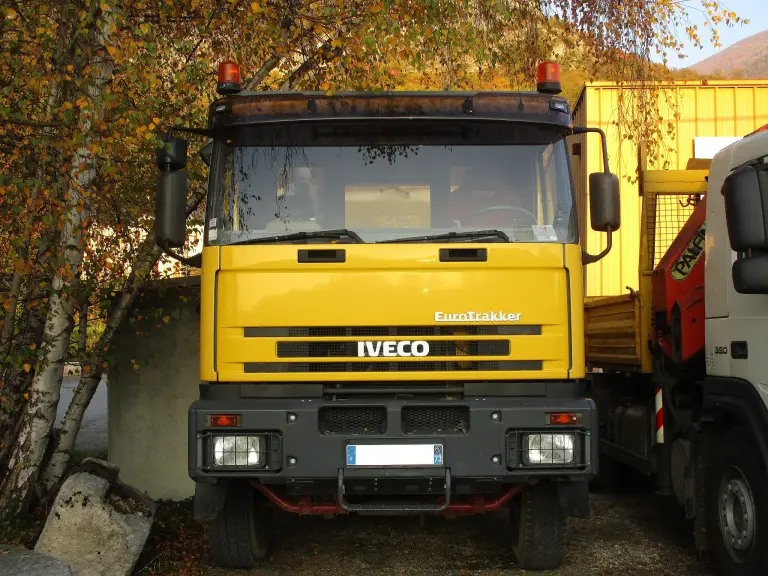
Today the Magirus brand is used only for fire-fighting equipment, not for the whole lorry range, and the fire engines are based on Iveco chassis, the Eurocargo, the Stralis and the Trakker, alongside the Dragon airport crash tender. Iveco, owner since 1980, decided in 2024 to sell the loss-making business to Mutares SE, and the deal was completed in January 2025, so Magirus is again an independent company.
Design and features
- Turntable ladders: the company invented them and has built them since the 19th century.
- Fire specialist: one of the largest makers of fire-fighting equipment.
- Iveco chassis: modern fire engines built on Eurocargo, Stralis and Trakker chassis.
- Ulm heritage: the M logo still recalls the spire of Ulm Minster.
Iveco Magirus versions
- Magirus-Leiter: the original turntable ladder, later with hydraulic and computer control.
- Magirus-Deutz lorries: air-cooled lorries and buses sold until the late 1980s.
- Iveco Magirus fire engines: on Iveco chassis, including the EuroFire generation.
- Magirus Dragon: the airport crash tender of the current range.
The fire engines of the Iveco years were sold through Iveco EuroFire, and the chassis came from the EuroCargo and Trakker. More Iveco vehicles are in the Iveco collection.
Sources
- Magirus, English Wikipedia: history, ownership, products, orders