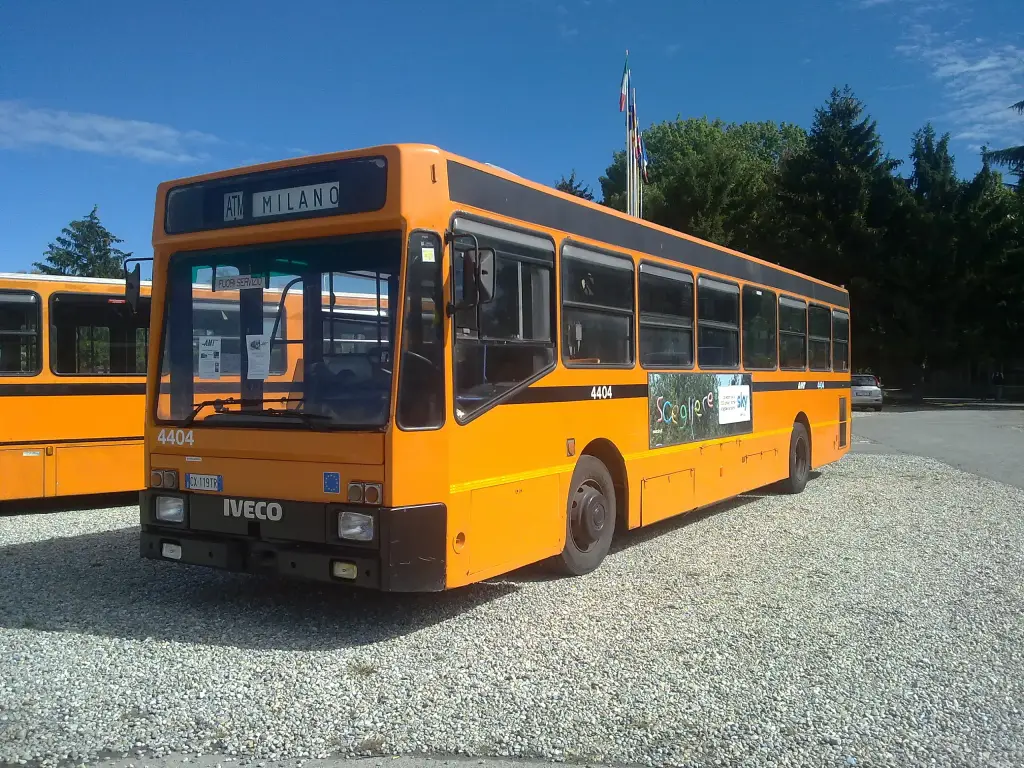
The Iveco Effeuno was a class of Italian buses built by Iveco between 1984 and 1989. It came in three versions with different interiors: the 471 for urban service, the 571 for suburban work and the 671 for interurban routes. The design was simple and practical, and the buses were bought by most of the public transport companies in Italy.
Iveco Effeuno at a glance
| Maker | Iveco |
|---|---|
| Production | 1984–1989, some sources give 1990 |
| Models | 471 urban, 571 suburban, 671 interurban |
| Project | drawn up in the late 1970s, prototype shown in 1981 |
| Replaced | Fiat 470, 570 and 670 |
| Lengths | 10.5 m and 12 m, articulated version 18 m |
| Urban engine | Fiat 8220.12, 9,572 cc, 203 hp |
| Interurban engine | Fiat 8220.32 turbo, 9,570 cc, 240 hp |
| Gearbox | automatic, ZF or Voith-DIWA |
| Trolleybus version | Marelli electrical equipment, Socimi bodywork |
| Replaced by | Iveco 480 class |
| Largest fleets | ATAC Rome about 500 buses, ATM Milan about 350 |
History of the Iveco Effeuno
The Effeuno was designed towards the end of the 1970s, as its project code shows: the 7 stood for the decade in which it was drawn up, and the prototype was shown in 1981. It was meant to succeed the Fiat 470, 570 and 670, and the aim was a solid vehicle able to work hard at full load for long periods with cheap maintenance.
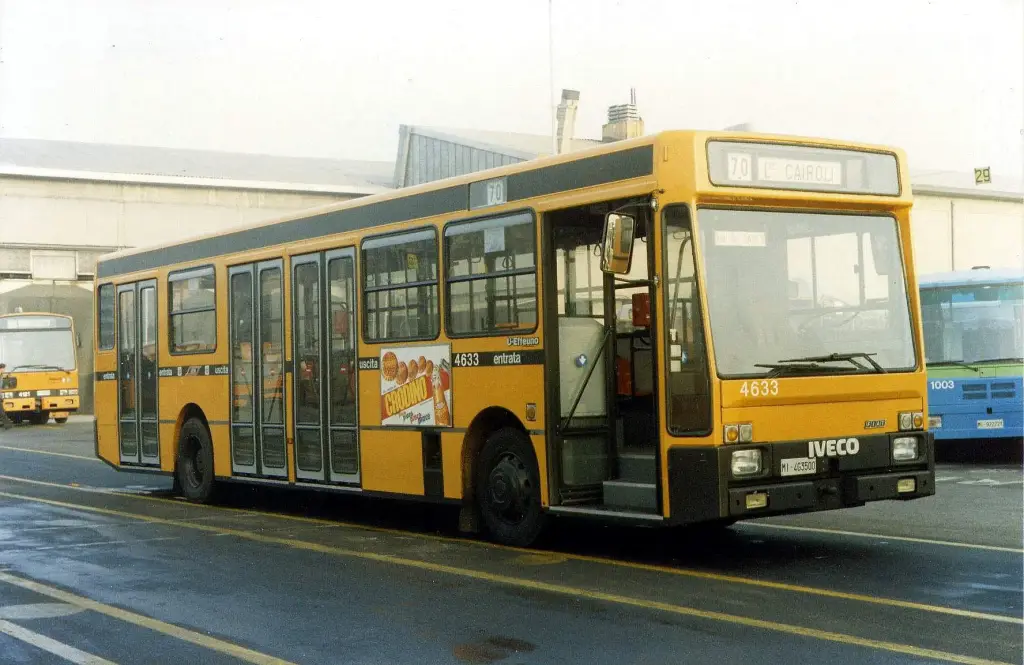
The original Iveco bodywork was very simple and built for easy availability of spare parts. It broke sharply with the style of the earlier models and was closely followed by the two later types, the TurboCity and TurboCity R. The Effeuno can be recognised by its black plastic bumpers, the large sloping windscreen and the corrugated sheet-metal engine cover, which its successors dropped.
The 471 and 571 used the naturally aspirated Fiat 8220.12 engine of 203 hp, while the interurban 671 and all the articulated buses had the turbocharged 8220.32 version of 240 hp, with an automatic gearbox from ZF or Voith-DIWA. A trolleybus version was also built, with Marelli electrical equipment and Socimi bodywork, as model 8833 for Modena and 8839 for Cagliari. The name Effeuno comes from Federtrasporti-Uno.
Most examples were built entirely by Iveco, but several Italian coachbuilders, among them SEAC-Viberti and Portesi, made bodies on the Effeuno chassis, and none of the articulated buses had the original Iveco body. The buses were bought by almost every public transport operator in Italy, with about 500 at ATAC in Rome and 350 at ATM in Milan. By 2020 all had left service, though some are kept as historic vehicles.
Design and features
- Three interiors: urban 471, suburban 571 and interurban 671 on one design.
- Simple bodywork: chosen for cheap parts and easy repair, with a corrugated engine cover.
- Automatic gearbox: ZF or Voith-DIWA units in every version.
- Trolleybus variant: built with Socimi bodywork for Modena and Cagliari.
Iveco Effeuno versions
- Iveco 471 (urban): 10.5, 12 or 18 metres, two to four doors.
- Iveco 571 (suburban): the same lengths with two or three doors.
- Iveco 671 (interurban): two outward-opening doors and the turbo engine.
- Articulated buses: 18 metres, always with outside bodywork.
- Trolleybus 8833 and 8839: Socimi bodies for Modena and Cagliari.
The Effeuno was replaced by the TurboCity and the 480 class, and the urban 471 was the smaller relative of the Iveco 370 coach. More Iveco buses are in the Iveco collection.
Sources
- Iveco Effeuno, English Wikipedia: models, engines, lengths, replacement
- Iveco Effeuno, Italian Wikipedia: project, bodywork, trolleybus, fleets