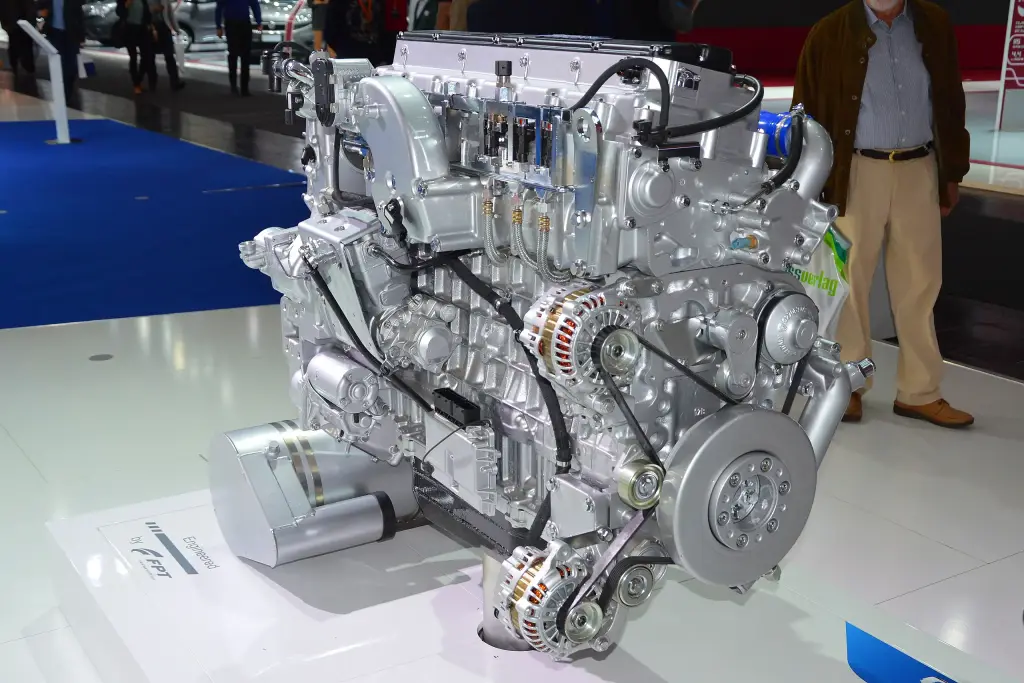
Cursor is the name of a generation of engines designed by Iveco for commercial vehicles, boats and other uses. The first Cursor engine was produced in 1998 and was fitted at first to the Iveco EuroStar and EuroTech, before spreading to the Stralis, Strator, Trakker and S-Way.
Iveco Cursor at a glance
| Type | diesel engines, six cylinders in line |
|---|---|
| First produced | 1998 |
| First used in | Iveco EuroStar and Iveco EuroTech |
| Later used in | Stralis, Strator, Trakker, S-Way and marine applications |
| Valves | four per cylinder, overhead camshaft driven by gears |
| Fuel system | unit pumps, then common rail on the Cursor 9 |
| Turbocharger | variable geometry |
| Cursor 8 | 7.8 litres, from 180 kW (245 hp) |
| Cursor 10 | 10.3 litres |
| Cursor 13 | 12.9 litres, up to 420 kW (570 hp) |
| Emissions | Euro 3 at first, then Euro 4, Euro 5 and Euro 6 with SCR |
Based on one source: the Italian Wikipedia article.
History of the Iveco Cursor
The Cursor was designed by Iveco as a new generation of engines for commercial vehicles, boats and other applications. The first units were produced in 1998 and went into the EuroStar and EuroTech; later the family was fitted to the Stralis, the Strator, the Trakker and the S-Way, and it also found marine uses.
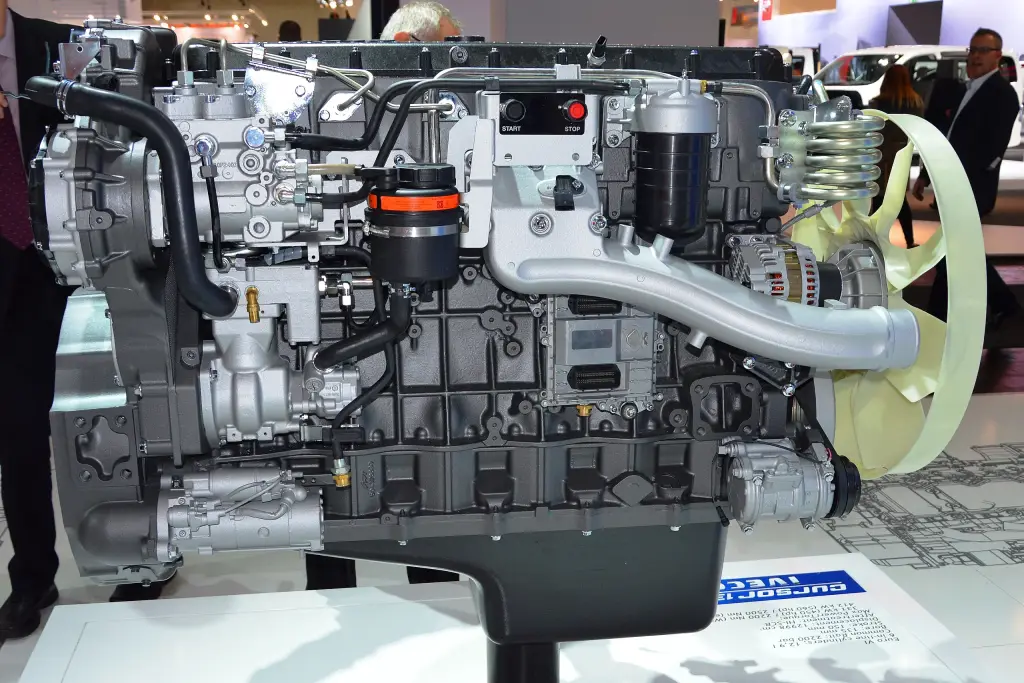
The engines are six-cylinder units with the cylinders in line and a single overhead camshaft driven by gears. Each cylinder has four valves, joined in pairs by a bridge, and between the valve seats sits a pump of the unit-injection system. The exhaust rockers are mounted eccentrically and can be moved hydraulically for the Iveco Turbobrake engine brake, which opens the exhaust valves slightly to stop the engine accelerating. The electronic control unit is mounted on the engine and cooled, and the turbocharger has variable geometry.
The model numbers follow the displacement in litres: the Cursor 8 has 7.8 litres, the Cursor 10 has 10.3 and the Cursor 13 has 12.9, with outputs from 180 kW (245 hp) in the smallest to 420 kW (570 hp) in the largest. The Cursor 9 introduced the common-rail system with a high-pressure pump driven by gears. In the beginning the Cursor met the Euro 3 emission rules, and later changes brought it to Euro 4, Euro 5 and Euro 6, with selective catalytic reduction doing the work of cutting pollutants.
Design and features
- One family, many sizes: 7.8, 10.3 and 12.9 litres, plus the common-rail Cursor 9.
- Four valves per cylinder: a single overhead camshaft with gear drive.
- Turbobrake: an engine brake that opens the exhaust valves hydraulically.
- Long emissions life: developed from Euro 3 to Euro 6 using SCR.
Iveco Cursor versions
- Cursor 8: 7.8 litres, from 245 hp.
- Cursor 9: the first with common-rail injection.
- Cursor 10: 10.3 litres.
- Cursor 13: 12.9 litres and up to 570 hp.
- Marine versions: the same engines were adapted for boats.
The Cursor was introduced in the EuroStar and EuroTech, and later powered the Stralis and the Trakker. More Iveco lorries are in the Iveco collection.
Sources
- Iveco Cursor, Italian Wikipedia: history, construction, sizes, emissions