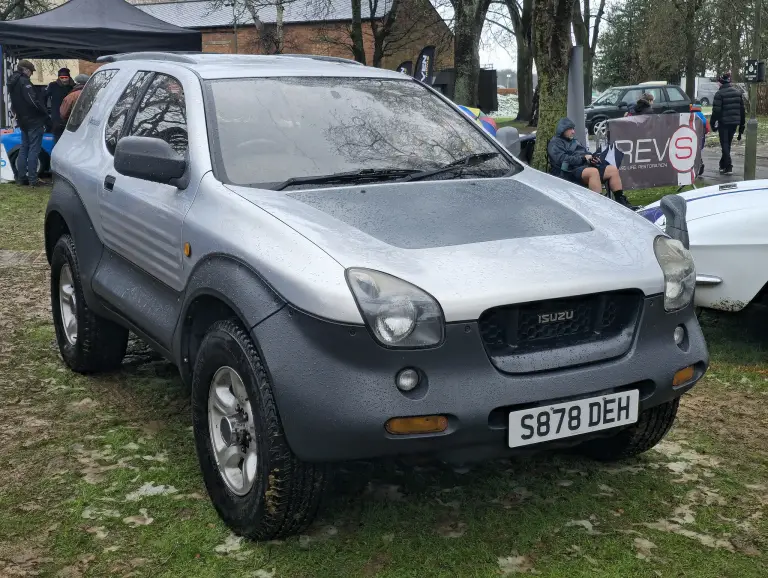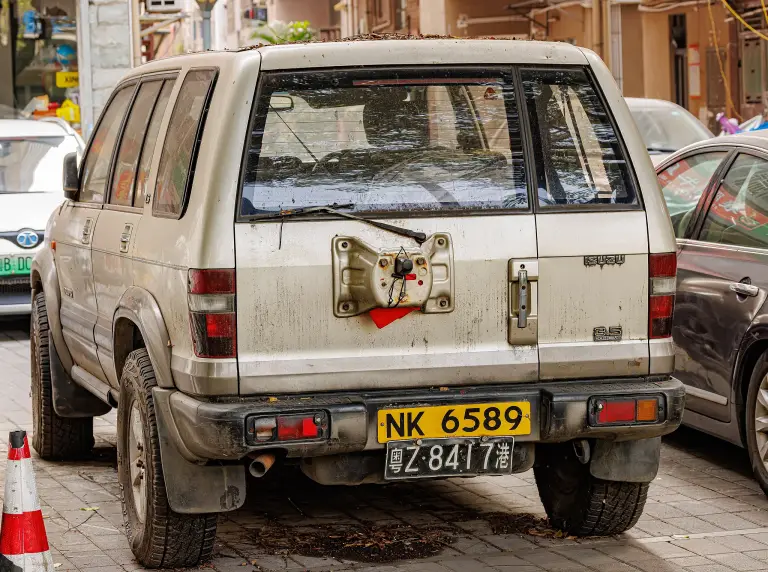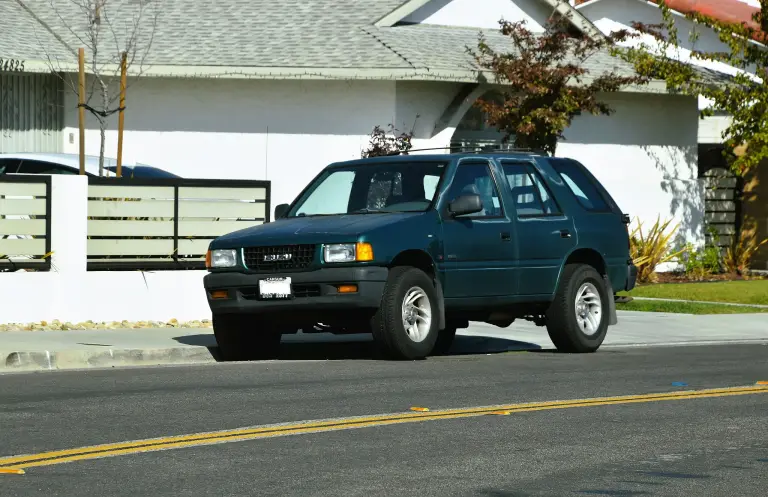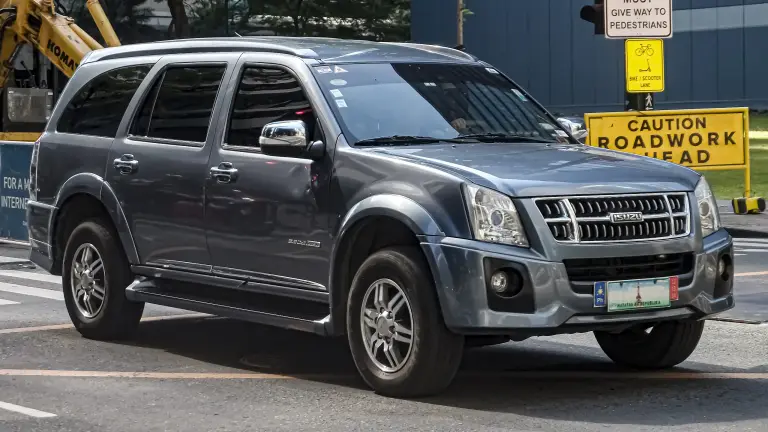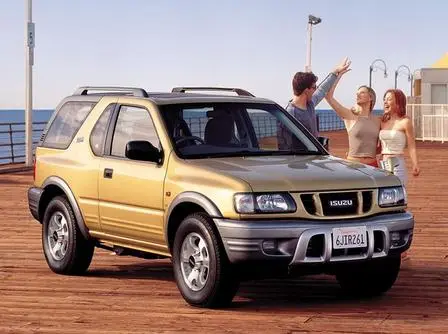
The Isuzu MU is a mid-size SUV that Isuzu produced from 1989 to 2005. The three-door MU arrived in 1989 and the five-door MU Wizard followed in 1990; production of the first generation ended in 1998, when the five-door became simply the Isuzu Wizard. The letters MU stand for Mysterious Utility.
Isuzu MU at a glance
| Maker | Isuzu Motors, Japan |
|---|---|
| Production | 1989–2005 |
| Class | mid-size SUV |
| First generation | 1989–1998 |
| Based on | Isuzu Faster (TF) pickup |
| Bodies | three-door and five-door |
| Japanese names | MU and MU Wizard, later Wizard |
| American names | Amigo, then Rodeo Sport for the three-door |
| European names | Opel, Vauxhall and Holden Frontera Sport |
| Other markets | Isuzu Cameo and Vega in Thailand, Isuzu Frontier in South Africa |
based on one source (English Wikipedia)
History of the Isuzu MU
The three-door MU
The three-door MU made its debut in Japan in 1989, based on the 1988 Isuzu Faster TF pickup; the three- and five-door models shared bodywork and most components from the front doors forward, and both came with rear- or four-wheel drive. In the United States the three-door was sold from the second quarter of 1989 as the Isuzu Amigo, with a 2.3-litre 4ZD1 four-cylinder of 102 hp in rear-wheel drive and a 2.6-litre 4ZE1 in four-wheel drive, at first with a manual gearbox only. Early Amigos were sparsely equipped, with air conditioning, two or four seats and S or XS trim. The 1991 cars had a rounder grille, 1992 brought the 2.6-litre engine as standard and a four-speed automatic for rear-wheel drive, 1993 a larger grille and a revised bumper, and 1994 a high-mounted rear stop light together with standard power steering and mirrors; the Amigo was dropped from the American market in 1995. A handful of XS-F editions with power windows, locks and four-wheel anti-lock brakes were also built.
The five-door and other names
The five-door was sold in Japan as the MU Wizard, and in North America as the Isuzu Rodeo and Honda Passport. Opel, Vauxhall and Holden sold it as the Frontera, and it was also badged the Chevrolet Frontera in Egypt, the Isuzu Cameo and Isuzu Vega in Thailand, the Isuzu Frontier in South Africa and the Chevrolet Rodeo in Ecuador, Colombia and Bolivia. The short three-door carried the Opel, Vauxhall and Holden Frontera Sport names in Europe and Australia, and Honda sold it in Japan as the Honda Jazz from 1993 to 1996 under a model-sharing agreement.
American Rodeo equipment
The five-door Rodeo reached the United States in 1990 for the 1991 model year with a 2.6-litre four of 119 hp or a 3.1-litre General Motors V6 of the same power but more torque, and an automatic gearbox for the V6. Four-wheel-drive versions had manually locking hubs on the S trim and automatic hubs on the XS and LS, with rear-wheel anti-lock brakes as standard. For 1993 Isuzu replaced the GM V6 with its own 3.2-litre 24-valve overhead-cam V6 of 174 hp, softened the suspension, added a Holden 2.4-litre four and a third brake light, and moved the V6 badge behind the front wheels. The second generation arrived in 1998, and the three-door Amigo became the Rodeo Sport for 2001; production of both ended in 2004.
Design and features
- Mysterious Utility: the meaning of the MU initials.
- Pickup base: the Faster TF chassis under a closed body.
- Many badges: Amigo, Rodeo Sport, Honda Jazz, Frontera Sport, Cameo and Vega.
- Two wheelbases: three-door MU and five-door MU Wizard.
Isuzu MU versions
- MU (1989): three-door, rear- or four-wheel drive.
- MU Wizard (1990): five-door version.
- Amigo (1989–1994): the American three-door.
- Rodeo (1990–2004): the American five-door.
- Rodeo Sport (2001–2004): the later American three-door.
- Wizard (1998–2005): the second-generation five-door.
The MU shared its chassis with the Faster and its five-door body with the American Rodeo; the later Thai SUV line began with the MU-7. More models are in the Isuzu collection.
Sources
- Isuzu MU, English Wikipedia: history, names, American equipment