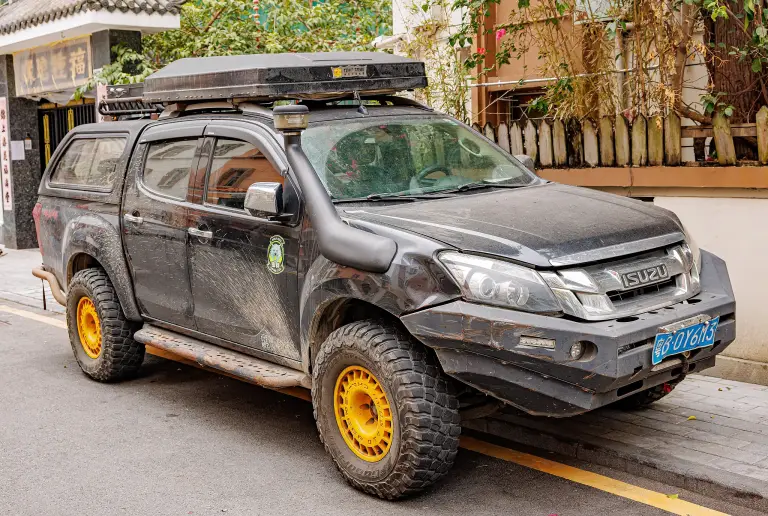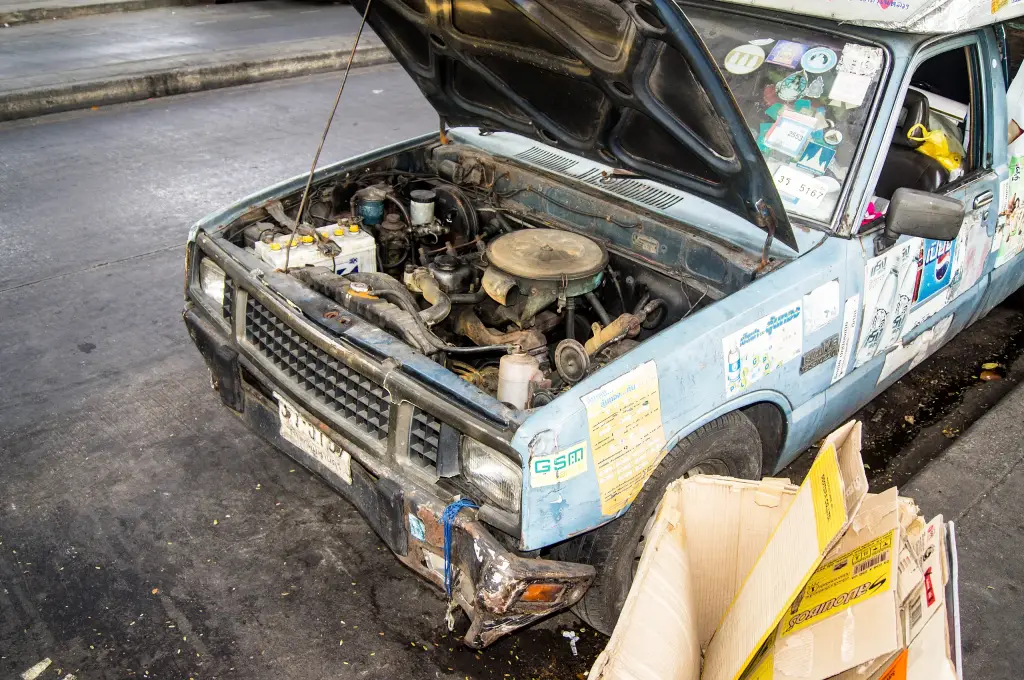
The Isuzu Faster is a compact pickup truck that Isuzu built and sold between 1972 and 2002 over three generations. It appeared under many nameplates: Isuzu KB for the first and second generations and TF for the third, Chevrolet LUV and Bedford KB through General Motors channels, and Holden Rodeo in Australia. In Japan the Faster name was eventually replaced by Rodeo, and worldwide the model was succeeded by the D-Max, except in Japan and North America.
Isuzu Faster at a glance
| Maker | Isuzu Motors, Japan |
|---|---|
| Production | 1972–2002 |
| Class | compact pickup |
| Generations | three |
| Model codes | KB for the first two generations, TF for the third |
| Other names | Chevrolet LUV, Bedford KB, Holden Rodeo |
| Chassis | ladder frame, leaf-spring live rear axle, independent front suspension |
| Wheelbases | 2,600 mm and 2,995 mm |
| Engines | 1.6 petrol, 1.8 petrol, 2.0 diesel |
| Four-wheel drive | from 1978 on the KB40 chassis |
| Successor | Isuzu D-Max |
based on one source (English Wikipedia)
History of the Isuzu Faster
First generation (1972)
The KB20 and KB25 Faster arrived in 1972, derived from the Isuzu Florian and sharing its doors and front end. It replaced the Isuzu Wasp, a pickup version of the Bellett. Regular-wheelbase cars were the KB20 and the 2,995 mm long-wheelbase model the KB25, with a 2,290 mm bed. The chassis was a traditional ladder frame with a leaf-spring live rear axle and independent front suspension, and the car was small enough in Japanese terms to keep the favourable compact classification. Most markets received a carburettor 1.6-litre SOHC petrol engine of 94 PS or a 2.0-litre diesel of 62 PS, while Japan used the OHV G161. In 1978 a four-wheel-drive version on the KB40 chassis was added, sold in Japan as the Faster Rodeo, and a double cab on the longer chassis was also available. Sales ended in 1980.
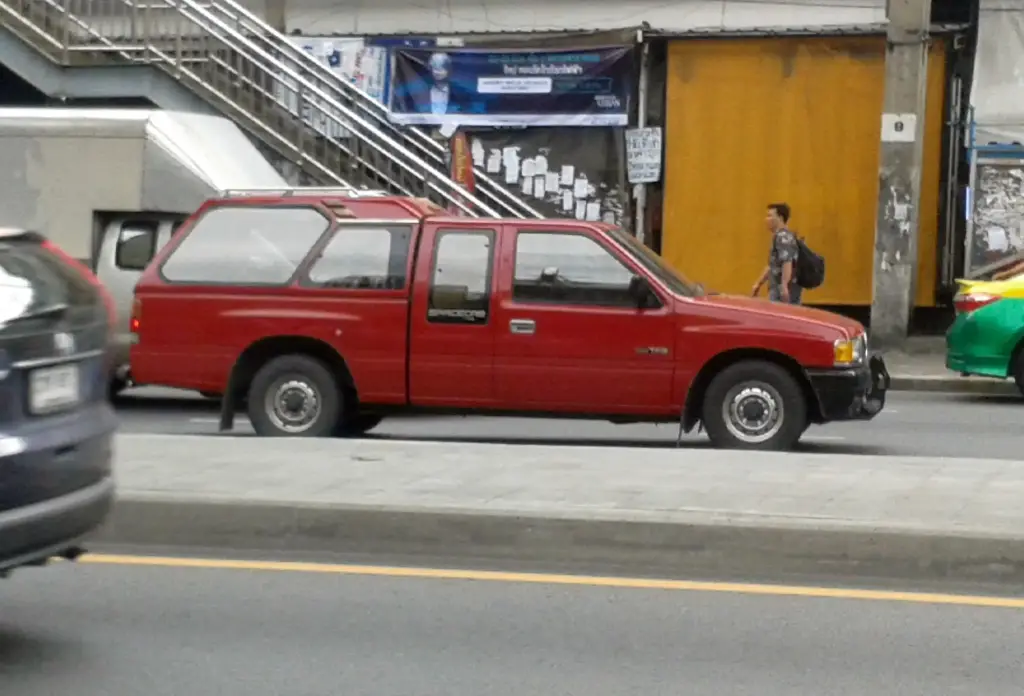
Sold as the LUV
Most exports were distributed through General Motors as the Chevrolet LUV, short for light utility vehicle, and Bedford in Europe sold it as the Bedford KB. In Australia, GM-Holden imported the Faster from November 1972 as the Chevrolet LUV, renamed it Isuzu KB in 1977 and replaced it in December 1980 with the second generation, badged Holden Rodeo. American sales began in March 1972 as an answer to the Datsun and Toyota pickups and the Mazda-built Ford Courier; to avoid the 25 per cent tariff on light trucks the LUVs were imported as cab chassis and given their beds in the United States. The 1976 model year brought a three-speed automatic and front disc brakes, and in 1978 a longer wheelbase and larger cargo bay lifted sales to 71,145. Four-wheel drive arrived for 1979, making the LUV the first four-wheel-drive minitruck on sale and earning it Motor Trend’s Truck of the Year award; sales peaked at 100,192.
Second and third generations
The second generation of 1980 was marketed worldwide as the Isuzu KB or simply Pick Up, keeping the Rodeo suffix for four-wheel-drive models, and it was the first Isuzu pickup with three cab styles: single cab, double cab and Space Cab, sold as Sports Cab in some markets. The chassis was carried over although the body was new, and British sales continued as the Bedford KB. The third generation used the TF code and was sold in many markets as the Isuzu TF, including as the TFR in Thailand and the Fuego in the Philippines, before the D-Max replaced it in most of the world.
Design and features
- Three generations: KB, KB again and TF, from 1972 to 2002.
- Chevrolet LUV: the badge under which most exports were sold.
- First 4×4 minitruck in the US: four-wheel drive from 1979.
- Three cab styles: single, double and Space Cab from 1980.
Isuzu Faster versions
- KB20 (1972): regular-wheelbase single cab.
- KB25 (1972): long-wheelbase version with a longer bed.
- KB40 Faster Rodeo (1978): four-wheel drive.
- Second generation (1980): new body, three cab styles.
- TF (third generation): the final Faster, also sold as TFR and Fuego.
The Faster was replaced by the D-Max, and the later TF was closely related to the Rodeo. More models are in the Isuzu collection.
Video: Isuzu KB 4×4
Video by betosoto22 on YouTube.
Sources
- Isuzu Faster, English Wikipedia: generations, exports, engines