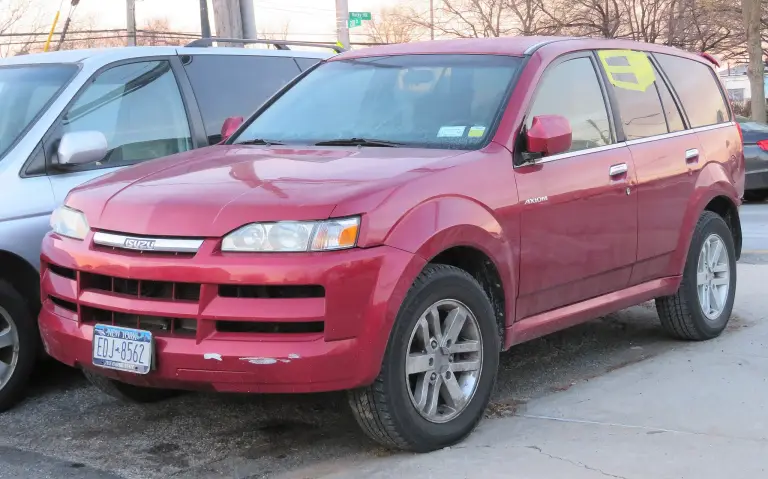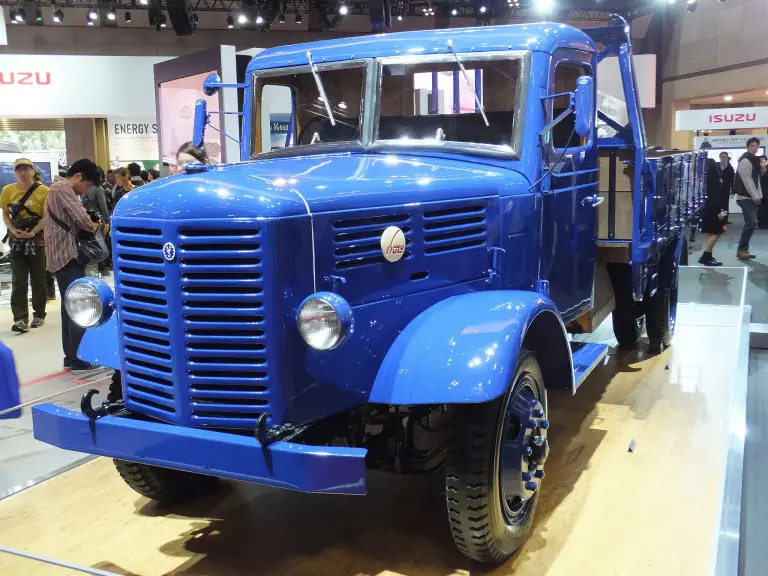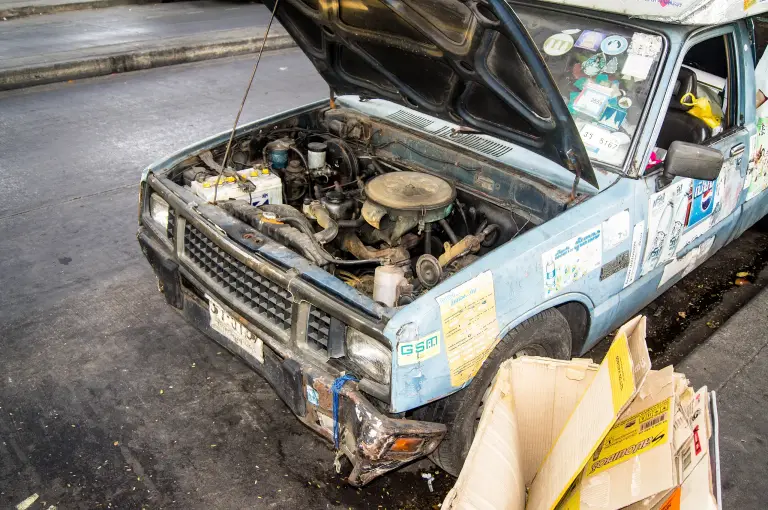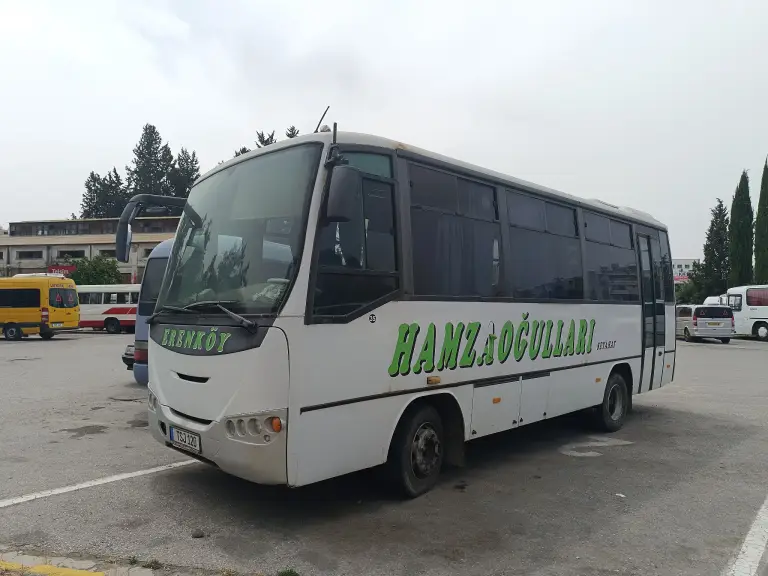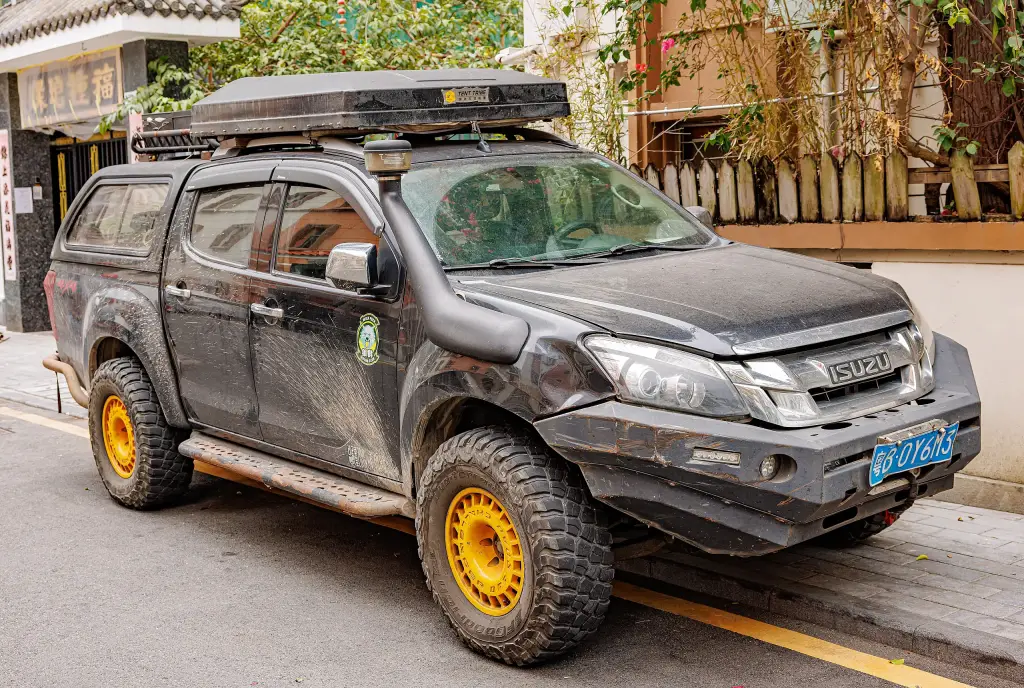
The Isuzu D-Max is a pickup truck that Isuzu has built since 2002. It succeeded the Isuzu Faster and KB, and its first and second generations shared a platform with the Chevrolet Colorado; the third generation shares its platform with the third-generation Mazda BT-50, which Isuzu builds in the same plant in Thailand. Its SUV counterparts are the MU-7 for the first generation and the MU-X since.
Isuzu D-Max at a glance
| Maker | Isuzu, mainly Thailand |
|---|---|
| Production | since 2002 |
| Class | compact pickup, mid-size from the third generation |
| Predecessor | Isuzu Faster / KB |
| Platform | shared with the Chevrolet Colorado, then the Mazda BT-50 |
| First generation | RA/RC, 2002 |
| Engines at launch | 2.5 4JA1-T and 3.0 4JH1-T diesels |
| Common-rail | 3.0 4JJ1-TC with 146 PS from October 2004 |
| 2006 facelift | 4JJ1-TCX with variable-geometry turbo, MaxMatic-III automatic |
| SUV versions | MU-7 (first generation), MU-X (later) |
| Australasia | sold as the Holden Rodeo, then Holden Colorado |
based on one source (English Wikipedia)
History of the Isuzu D-Max
A world premiere in Thailand
The D-Max had its world premiere in Thailand in 2002, a location chosen because General Motors and Isuzu had just closed their small truck plant in Japan and moved the joint operation to Thailand. The range started with a single-cab Spark, extended-cab SpaceCab and double-cab Cab4 models in two- and four-wheel drive, sold alongside an almost identical Chevrolet Colorado that arrived in 2004. The first engines came from the predecessor: the 3.0 4JH1-T and the 2.5 4JA1-T, both diesels. A lifted two-wheel-drive version called the Hi-Lander followed late in 2003, and Isuzu was the third maker in Thailand to offer such a model after Toyota and Ford.
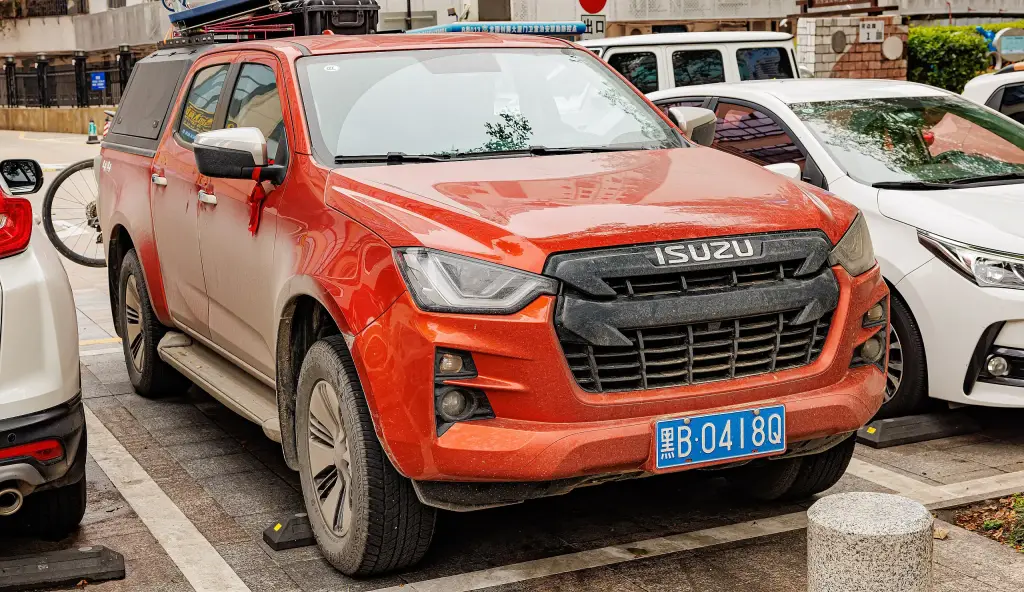
DDi iTEQ engines
In October 2004 Isuzu introduced the DDi iTEQ common-rail diesel family, starting with the 3.0 4JJ1-TC of 146 PS. Every model received a mid-cycle refresh with a new front bumper that incorporated an instant spoiler underneath, and a new five-speed manual gearbox appeared. Early in 2005 a 2.5 4JK1-TC of 116 PS joined the range as the economical choice, and four-wheel-drive models and the Hi-Lander were raised by 25 mm.
Facelifts and special editions
The third quarter of 2006 brought a major facelift, the 3.0 4JJ1-TCX engine with a variable valve geometry turbo, new MUX five-speed manual and MaxMatic-III automatic transmissions, projector headlamps and a new interior. In 2007 Isuzu marked fifty years in Thailand with Gold Series models for 2008, and the Hi-Lander Cab4 received the VGS turbodiesel. Platinum models replaced the Gold Series in October 2008, with new grille designs, revised headlamps and fog lamps and engines retooled for B5 biodiesel; the SpaceCab gained a stronger Safety Pillar Cab, and some Cab4 models received the Super Flex Plus rear suspension. Super Platinum arrived in September 2009 with new alloy wheels, a rear bumper and a short-pole antenna. Special D-Max and MU-7 models were also built for Thailand’s two big motor shows.
Design and features
- DDi iTEQ common rail: the 3.0 4JJ1-TC of 146 PS from 2004.
- Variable-geometry turbo: the 4JJ1-TCX of 2006, with new automatic gearbox.
- Hi-Lander: a lifted two-wheel-drive version with four-wheel-drive ground clearance.
- Local variations: Gold, Platinum and Super Platinum editions for Thailand.
Isuzu D-Max versions
- Spark (single cab): two-wheel drive only, chassis cab or long bed.
- SpaceCab: extended cab, standard-height 4×2 or 4×4 as the Rodeo.
- Cab4: double cab, in 4×2 and 4×4 forms.
- Hi-Lander: lifted 4×2, from late 2003.
The D-Max replaced the Faster and gave rise to the MU-7 and later MU-X SUVs. More models are in the Isuzu collection.
Sources
- Isuzu D-Max, English Wikipedia: history, engines, editions