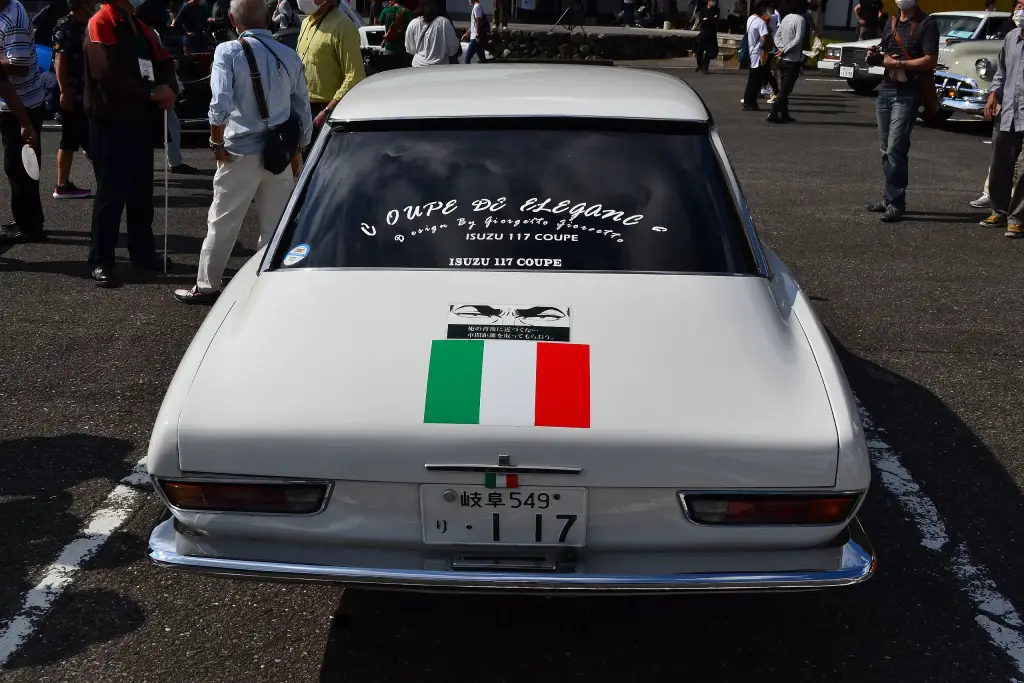
The Isuzu 117 Coupé is a compact gran turismo two-door fastback coupé that Isuzu built between 1968 and 1981. It was styled by Giorgetto Giugiaro, one of the first Japanese cars designed by an Italian, and it was among the first Japanese cars with a double-overhead-camshaft engine and the first with electronic fuel injection. It can also be regarded as the world’s first sports car to be offered with a diesel engine.
Isuzu 117 Coupé at a glance
| Maker | Isuzu Motors, Japan |
|---|---|
| Production | December 1968–1981 |
| Design | Giorgetto Giugiaro |
| Body | two-door fastback coupé |
| Layout | front engine, rear-wheel drive |
| Engines | 1.6 L DOHC, 1.8 L SOHC, 1.95 L petrol, 2.0 L diesel |
| Fuel injection | Bosch D-Jetronic from 1970 (model EC) |
| Gearbox | four-speed manual, five-speed from May 1976 |
| Handbuilt series | 2,458 cars, December 1968–late 1972 |
| Facelifts | 1975 emissions tuning; 1977 rectangular headlights |
| Special edition | Giugiaro Edition from 1979 |
| Built | 86,192 |
based on one source (English Wikipedia)
History of the Isuzu 117 Coupé
Prototype and handbuilt cars
The 117 Coupé was shown as a prototype at the 1966 Geneva Motor Show and again at the Tokyo Motor Show the same year. Small-scale production began in December 1968, with cars effectively handmade at a rate that rarely exceeded fifty a month. Isuzu needed an exotic model to draw buyers into its showrooms, in the same way as the Nissan Silvia and later the Toyota 2000GT, while the company saw itself as a maker of limited-production cars. The first engine was a 1.6-litre double-overhead-camshaft four, and from 1970 a Bosch D-Jetronic electronic fuel injection unit was offered in the model badged EC. A twin-carburettor 1.8-litre single-cam engine joined in November 1970, and a cheaper single-carburettor 1800N followed in 1971. The car carried leather seats, dashboard trim of Taiwanese camphor laurel and headrests as standard, and it was expensive by Japanese standards. The early handbuilt series amounted to 2,458 cars between December 1968 and late 1972.
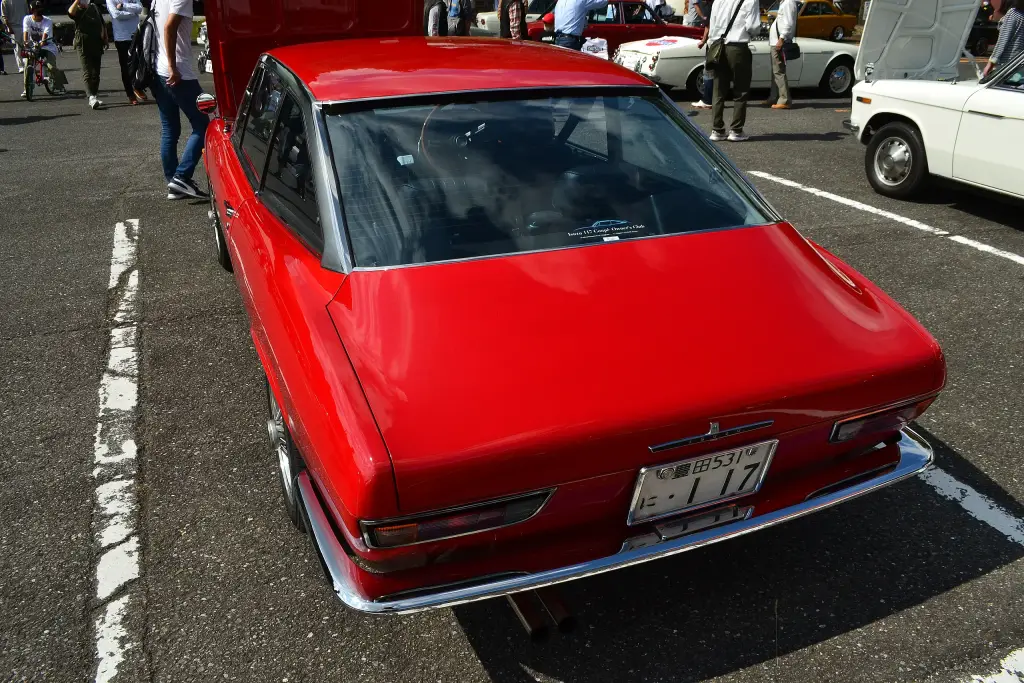
Mass production
The coupé proved so desirable that, with the arrival of the cooperation with General Motors, Isuzu moved it to mass production in March 1973. Japanese sales jumped from 965 cars in 1972 to 9,506 in 1974. The 1.8-litre engine became standard in several forms, with or without fuel injection and with single or twin camshafts, and output dropped somewhat in October 1975 under stricter emissions rules. Manual cars received five-speed gearboxes in May 1976.
Second facelift and the diesel
In November 1977 the front end was restyled: four round headlamps gave way to four rectangular units, an air dam was added and plastic mouldings replaced more costly interior trim. A 1.95-litre engine appeared in 1978, and in 1979 the XD diesel version made the 117 the first sports car offered with an oil-burning engine. A Giugiaro Edition was sold from 1979. Production ended in 1981, when the Piazza, also styled by Giugiaro, took its place.
Design and features
- Giugiaro body: one of the first Japanese cars styled by an Italian designer.
- Twin-cam engines: double overhead camshafts and, from 1970, Bosch electronic fuel injection.
- Lavish equipment: leather seats, camphor laurel dashboard and headrests even in the handbuilt era.
- Diesel option: the XD of 1979 made it the first diesel-engined sports car.
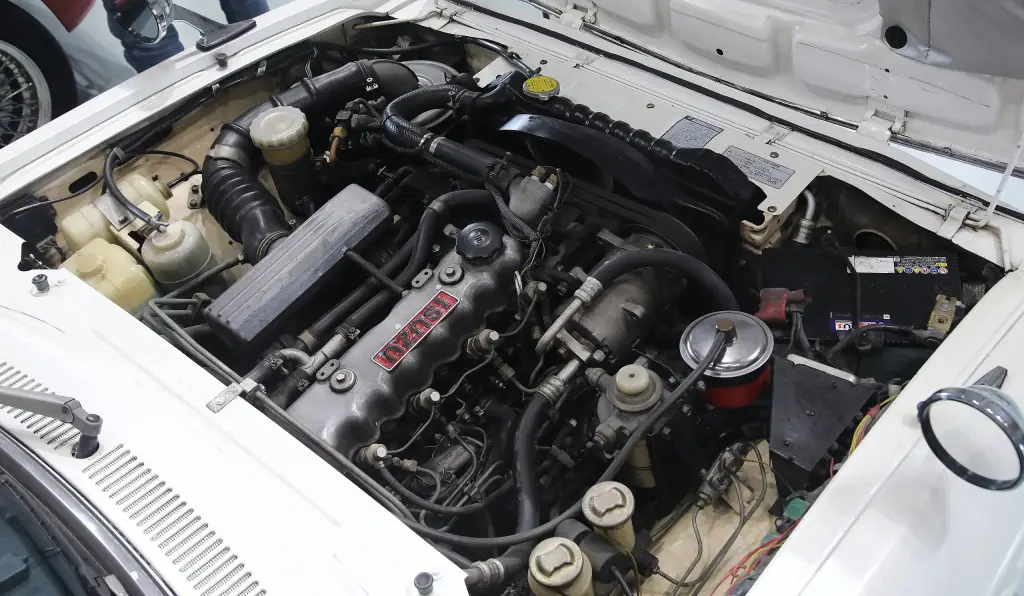
Isuzu 117 Coupé versions
- 117 Coupé (1968–1972): handbuilt cars with the 1.6-litre twin-cam engine.
- EC (1970): Bosch D-Jetronic fuel injection.
- 1800N (1971): cheaper single-carburettor 1.8-litre version.
- Mass-production cars (1973–1981): 1.8 and 1.95-litre engines, rectangular lights from 1977.
- XD (1979): the diesel version.
- Giugiaro Edition (1979): special version named after the designer.
The 117 Coupé was replaced by the Piazza, also styled by Giugiaro, and its twin-cam engine later powered the Bellett GT-R. More models are in the Isuzu collection.
Video: A very hard to miss Isuzu 117 Coupe
Video by WasabiCars on YouTube.
Sources
- Isuzu 117 Coupé, English Wikipedia: history, engines, production