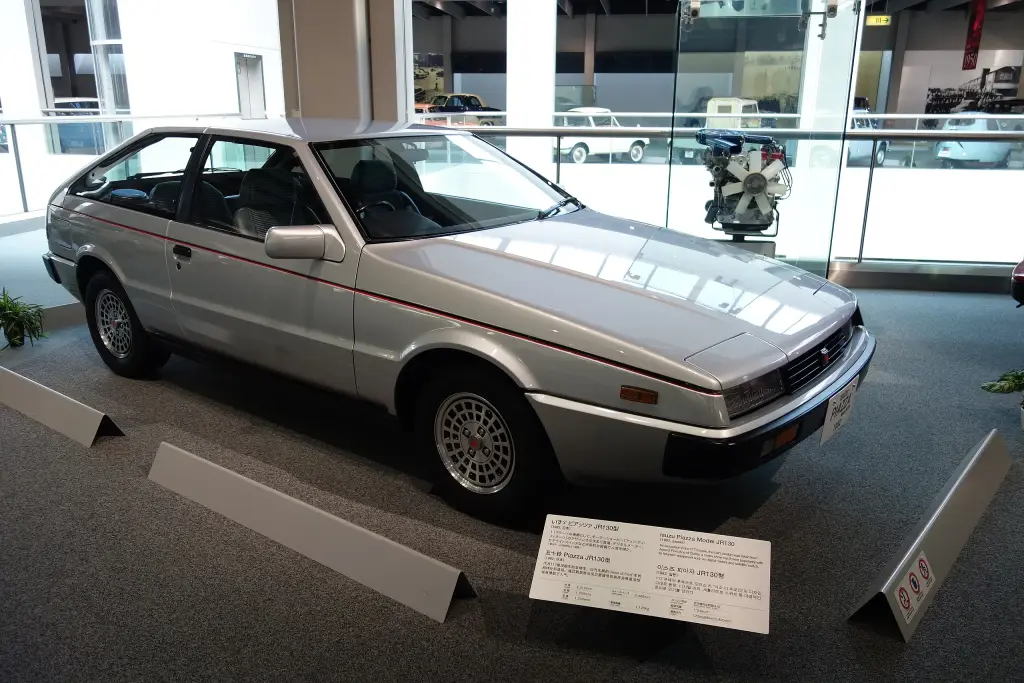
The Isuzu Piazza is a small, sporty three-door liftback coupé that Isuzu made from 1981 to 1993 over two generations. It was sold as the Isuzu Impulse in North America and as the Holden Piazza in Australia, and the first generation was rear-wheel drive while the second used front- or all-wheel drive and was also sold as the Gemini Coupé and the Geo Storm.
Isuzu Piazza at a glance
| Maker | Isuzu Motors, Japan |
|---|---|
| Production | 1981–1993 |
| Class | sporty three-door liftback coupé |
| Design | Giorgetto Giugiaro, Italdesign |
| First generation | 1980–1990, rear-wheel drive |
| Second generation | front- or all-wheel drive |
| Engines | 2.0 L SOHC and DOHC, later a 2.0 turbo |
| Gearboxes | five-speed manual, four-speed automatic |
| Suspension tunes | standard, Irmscher and Lotus |
| Other names | Isuzu Impulse, Holden Piazza, Gemini Coupé, Geo Storm |
| US cars registered by 2010 | about 2,300 |
based on one source (English Wikipedia)
History of the Isuzu Piazza
From the Asso di Fiori
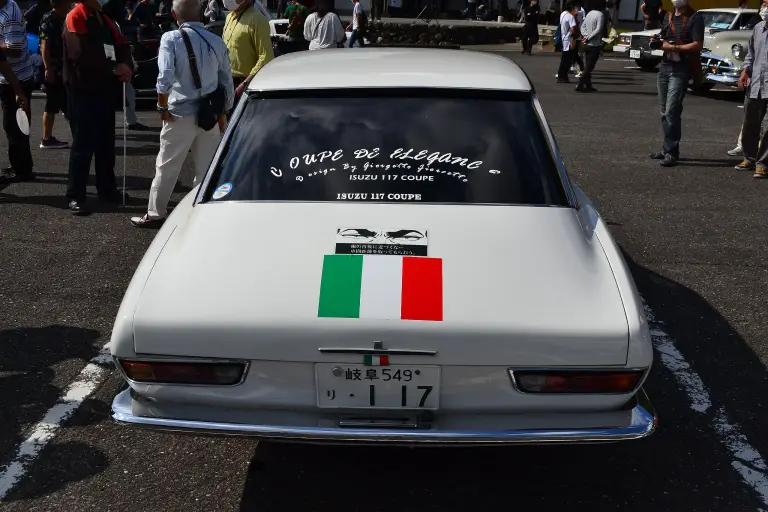
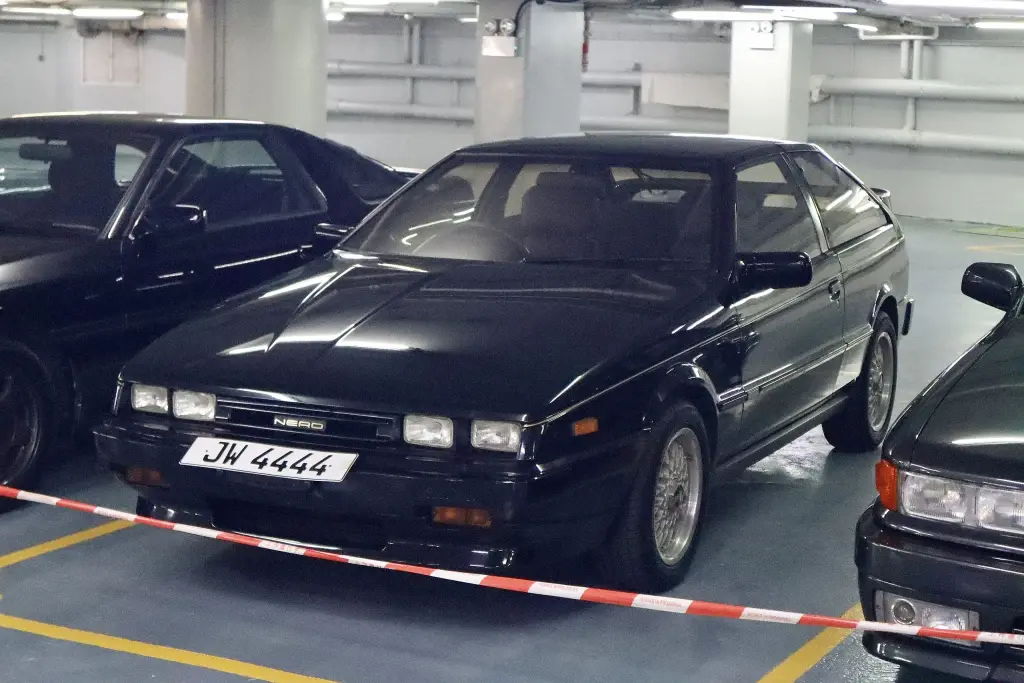
In 1978 Isuzu asked Giorgetto Giugiaro to design a replacement for the 117 Coupé, also his work, and delivered several T-series Chevettes to Italdesign with a free hand. The result was the wedge-shaped three-door hatchback shown as the Asso di Fiori, or Ace of Clubs, at the 1979 Tokyo Motor Show; Giugiaro called it his fifth Copernican revolution. Within 48 hours of the unveiling Isuzu put the car into production with minimal changes, keeping the single-blade windscreen wiper and a steering wheel adjustment that moved the instrument cluster with it. Assembly began in September 1980 in Fujisawa with a 2.0-litre SOHC engine of 120 PS carried over from the 117 Coupé or a 2.0-litre DOHC of 135 PS, a five-speed manual or four-speed automatic, and rear-wheel drive. A turbocharged SOHC engine of 180 PS arrived in April 1984 and the naturally aspirated twin-cam was phased out. Trims included Bella, XN, XS, XJ, XE, XG and Nero, with three suspension tunes: standard, Irmscher and Lotus. Production continued through 1990.
The Impulse in America
In the United States the car arrived in 1983 as the Impulse, at first with the 2.0-litre SOHC engine of 90 hp. A turbocharged version of 140 hp followed in 1985, the 1987 RS used the 4ZC1 turbo, and for 1988 the body was tidied with a larger rear spoiler and fixed headlights. The 2.0-litre non-turbo engine gave way to a 2.3-litre of 110 hp sold only in America, because a larger engine would have pushed Japanese buyers into a higher road tax band and broken the compact-class rules. From 1988 every Impulse had a Lotus-tuned suspension with redesigned anti-roll bars and stiffer dampers. Isuzu sold the Impulse as everything standard, with only non-turbo and Turbo trims. By 2010 only about 2,300 Impulses were still registered in North America.
Britain and the second generation
The Piazza reached Britain in 1985 in a single trim with a 147 bhp 2.0-litre turbo, limited to 600 cars in the first year under the gentlemen’s agreement on Japanese imports. It was Isuzu’s first car sold there under its own name. The first importer went out of business in 1986 and a London dealer bought the remaining stock at a bargain price; those early cars became known as pre-Lotus Piazzas because of their criticised handling, and from 1987 the International Motors Group took over the franchise with the updated Lotus Piazza. The second generation, front- or all-wheel drive, was sold more cheaply as the Gemini Coupé and in the United States as the Geo Storm.
Design and features
- Giugiaro wedge: the production car came almost unchanged from the Asso di Fiori show car.
- Turbo power: 180 PS in Japan and 140 hp in the American Impulse.
- Lotus suspension: standard on American cars from 1988 and in the later British Piazza.
- Rare today: only about 2,300 Impulses were registered in North America in 2010.
Isuzu Piazza versions
- Piazza (1980–1990): the first-generation rear-wheel-drive coupé.
- Impulse (1983–1989): the American version, including the turbo and RS.
- Piazza Turbo (1984): 180 PS in Japan.
- Lotus Piazza: the later British and American specification with Lotus suspension.
- Second generation: front- or all-wheel drive, also sold as the Gemini Coupé and Geo Storm.
The Piazza replaced the 117 Coupé and was based on the Gemini platform. More models are in the Isuzu collection.
Video: Isuzu Piazza XE handling by Lotus
Video by heniadir on YouTube.
Sources
- Isuzu Piazza, English Wikipedia: design, engines, American and British history