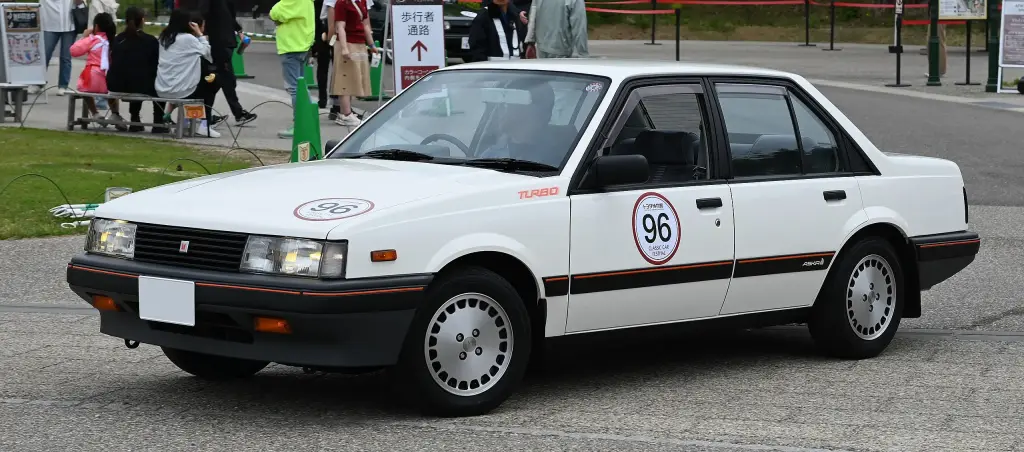
The Isuzu Aska was the nameplate Isuzu used for its mid-size sedans between 1983 and 2002. The first Aska was a version of General Motors’ J-car built by Isuzu and replaced the Isuzu Florian; later the name went onto rebadged Subaru Legacy and Honda Accord saloons sold through Isuzu’s Japanese dealers. The name comes from Asuka, the old name of a village in Nara Prefecture, shortened so that it would be easier to pronounce abroad.
Isuzu Aska at a glance
| Maker | Isuzu Motors, Japan |
|---|---|
| Production | 1983–2002 |
| Class | mid-size sedan |
| Predecessor | Isuzu Florian |
| Successor | none |
| Body | four-door sedan only |
| Generations | four |
| First generation | 1983–1989, GM J-car, 108,512 built |
| Second generation | 1990–1993, rebadged Subaru Legacy |
| Third generation | 1994–1997, rebadged Honda Accord |
| Fourth generation | 1998–2002, Honda Accord |
| Export names | Chevrolet Aska, Holden Camira, Isuzu JJ, Holden Aska |
based on one source (English Wikipedia)
History of the Isuzu Aska
First generation (1983–1989)
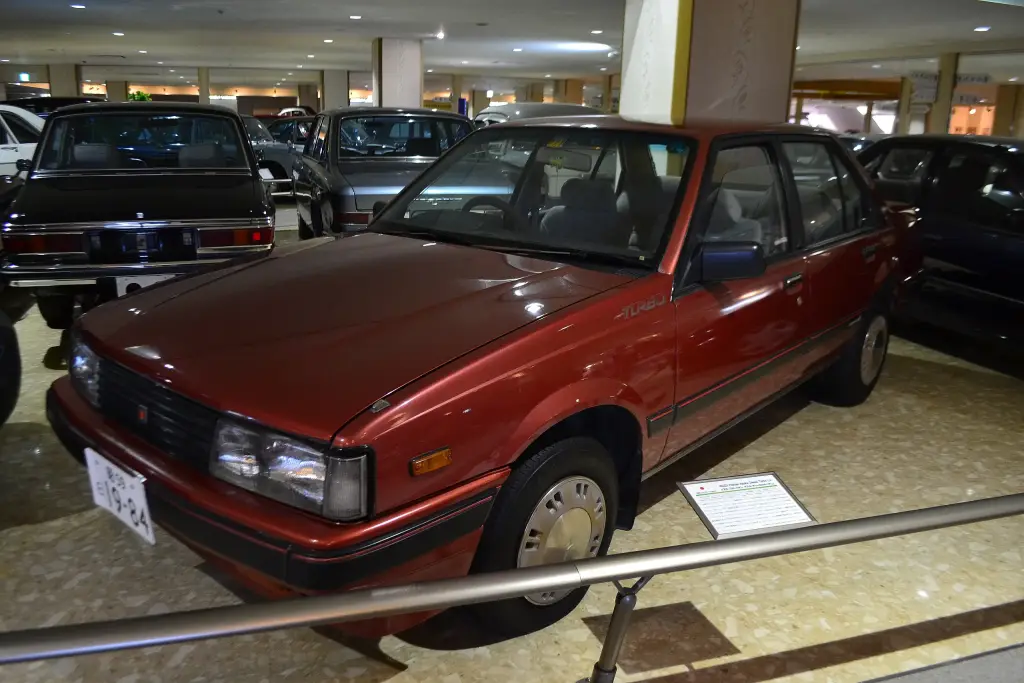
The original Aska was developed within GM’s J-car programme as the replacement for the dated Florian. Unlike the other J-cars it came only as a four-door sedan, because the Florian estate had never sold well, and its rear styling differed most from the other versions. From 1983 to 1984 the car was called the Florian Aska and only in 1985 did it become simply the Aska. It was launched in March 1983 with carburettor 1.8 and 2.0-litre petrol engines and a diesel, and in August 1983 a turbodiesel with 89 PS joined the range. October 1983 brought the LJ Turbo, a fuel-injected turbocharged 2.0-litre with 150 PS. In November 1985 the German tuner Irmscher, which cooperated with Isuzu on several models, produced a version with a distinctive body kit that became something of a cult object in Japan. The semi-automatic NAVi5 transmission, an automated manual with an electronically operated clutch, was offered on the naturally aspirated 2.0 from September 1984 and later on diesels. The first generation ended in March 1989 with 108,512 cars built.
Built and sold abroad
From 1984 the Aska was assembled in Arica, Chile, from CKD kits and sold there and in Ecuador as the Chevrolet Aska, in three equipment levels. In Southeast Asia it was known as the Isuzu JJ, and in New Zealand it was sold as the Holden Camira between 1984 and 1987, replacing the Australian-sourced JD Camira. In Indonesia the two-litre version was briefly sold as the Holden Aska.
Second generation (1990–1993)
Without the resources to develop another mid-size car of its own, Isuzu turned to Subaru: Isuzu supplied Bighorns to Subaru while Subaru’s Legacy sedan became the Isuzu Aska from June 1990. The engines were 1.8 and 2.0-litre flat fours, the larger available with Subaru’s all-wheel drive. The arrangement ended in May 1993.
Third and fourth generations (1994–2002)
Isuzu then allied with Honda and rebadged the Honda Accord sedan, presented in March 1994. Only the grille and badges differed, and the car came only with a two-litre four and a four-speed automatic; Isuzu called it the CJ1. Production stopped in September 1997. A second Accord-based Aska arrived in November 1997 and lasted until 2002, when the nameplate was dropped without a replacement.
Design and features
- One body style: every Aska was a four-door saloon.
- NAVi5: an automated manual gearbox with an electronic clutch, years before similar systems in Europe.
- Irmscher version: a body-kitted special of 1985 that became a cult car in Japan.
- Borrowed cars: the last three generations were Subaru and Honda models with Isuzu badges.
Isuzu Aska versions
- Florian Aska (1983–1984): the original name of the J-car saloon.
- LJ Turbo (1983): 2.0-litre turbo with 150 PS.
- Irmscher Aska (1985): tuned body-kit version.
- Legacy-based Aska (1990–1993): flat-four engines, optional all-wheel drive.
- Accord-based Aska (1994–2002): two-litre engine and automatic gearbox.
The Aska replaced the Bellel‘s descendant the Florian in Isuzu’s range, and the company’s earlier saloons are represented by the Gemini. More models are in the Isuzu collection.
Video: 1983 ISUZU ASKA Ad
Video by mycub on YouTube.
Sources
- Isuzu Aska, English Wikipedia: generations, engines, production