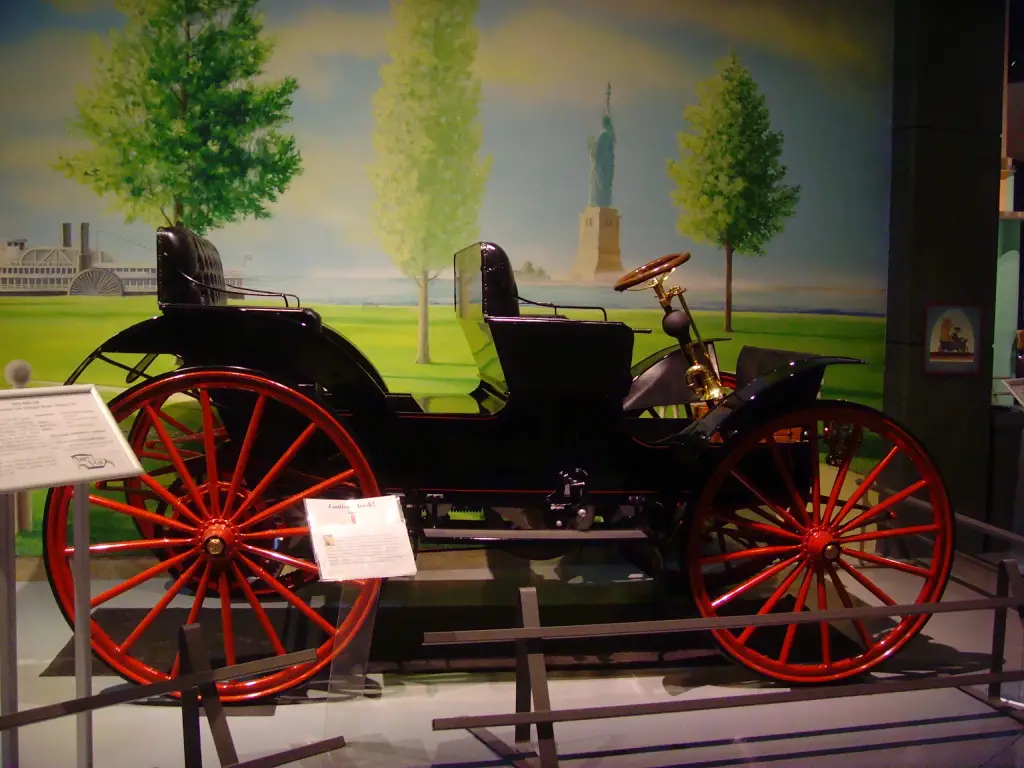
The International Harvester Auto-Buggy was a two-cylinder, air-cooled motor car announced in February 1907. Built on high wagon-style wheels, it was joined late in 1908 by the Auto Wagon, which became International Harvester’s first true truck and stayed in production until 1917.
International Auto-Buggy at a glance
| Maker | International Harvester Corporation |
|---|---|
| Announced | February 1907 |
| Buggy dropped | early 1912 |
| Engine | two-cylinder horizontally opposed, air cooled, 18–20 hp |
| Drive | chain drive, two forward gears and one reverse |
| Wheels | large rubber-shod high wheels |
| Seating | two bench seats for four passengers; canvas top optional |
| Auto Wagon | announced late 1908, one bench on a well-sided tray |
| Wagon models | Model A from 1908 to 1911; wide-track version as Model B |
| Later models | AA and AW 1907–1911; MA, MW and MAX 1912–1917; M and E 1915–1917 |
| Replaced by | Model F, in production from 1917 |
Based on one source (English Wikipedia).
History of the International Auto-Buggy
The Auto-Buggy
International Harvester announced the Auto-Buggy in February 1907. It was a motor car rather than a truck: a two-cylinder horizontally opposed air-cooled engine of 18 to 20 horsepower sat beneath the body, driving through a chain to the large high wheels at the back. There were two forward gears and one reverse. The tall wagon-style wheels and wide stance gave it the ground clearance and stability to cope with the poor roads of the time, and a canvas top was among the options. Buyers found it tough and reliable, and the wide network of International Harvester dealers made it easy to service. Because it was classed as a car, it was dropped in early 1912, when the company decided to sell only trucks.
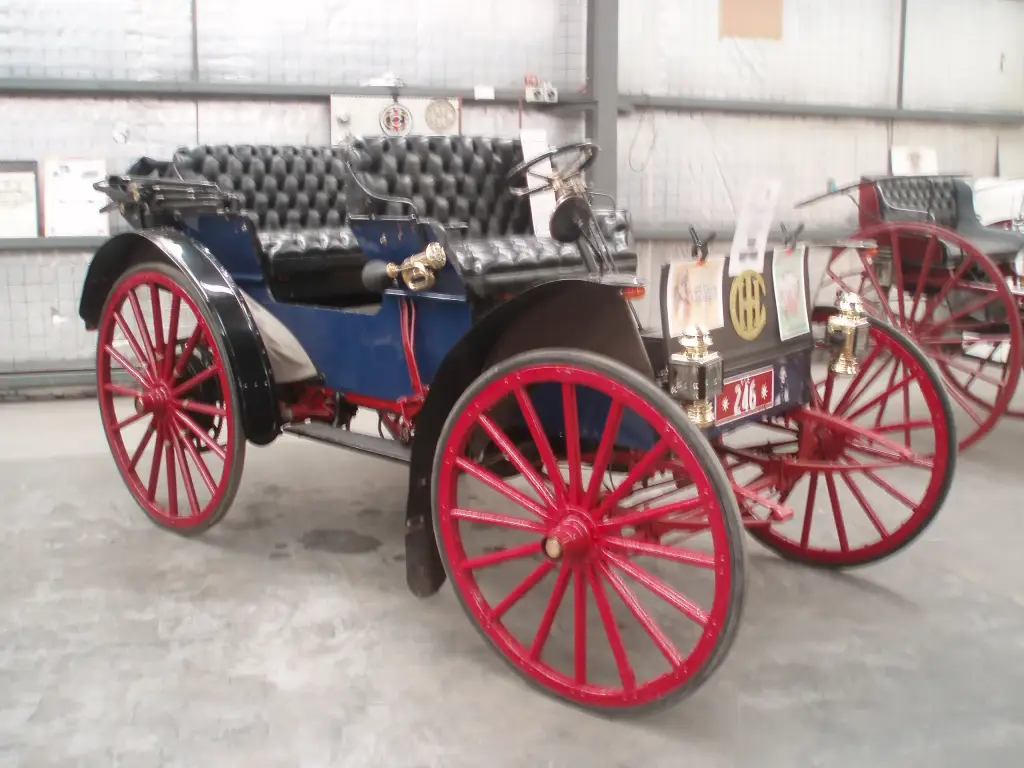
The Auto Wagon
Late in 1908 a variant appeared with a single bench seat mounted on a well-sided tray instead of the Buggy’s car-style body. A second bench could be fitted on the tray, still leaving a short space behind it. This was International Harvester’s first true truck, sold as the Model A from 1908 to 1911, with a wide-track version called the Model B. Auto Wagon sales in 1909 led the emerging light-truck market. The wagon used the same chassis as the Buggy, and its seat-and-tray combination could be put straight onto a Buggy chassis.
Models and the end
The range ran through the air-cooled Model AA and water-cooled Model AW from 1907 to 1911, then the air-cooled MA, water-cooled MW and wide-track air-cooled MAX from 1912 to 1917. Bodies included pickup, delivery, stake, panel delivery and bus, and some were built as fire trucks. Pneumatic tyres became an option. In 1915 came the half-ton Model M with a 1,000 lb load and the three-quarter-ton Model E with 1,500 lb, both built until 1917. The replacement was announced in 1915 and in full production from 1917: the Model F, with a sloping coffin nose, a water-cooled four-cylinder engine, no chain drive and low wheels on solid or pneumatic tyres.
Design and features
- High wheels: wagon-style wheels gave ground clearance and stability on rough roads.
- Air-cooled twin: a horizontally opposed two-cylinder of 18 to 20 horsepower under the body.
- Chain drive: two forward gears and one reverse through a chain to the rear wheels.
- Dealer network: International Harvester dealers made the little vehicle easy to keep running.
- One chassis, two bodies: the Auto Wagon seat and tray could be fitted to a Buggy chassis.
International Auto-Buggy versions
- Auto-Buggy (1907–1912): the car-bodied original with two bench seats.
- Auto Wagon (1908–1917): the truck-bodied version with a bench seat on a tray.
- Model A and Model B: the Auto Wagon from 1908 to 1911 and its wide-track version.
- AA, AW, MA, MW and MAX (1907–1917): air-cooled and water-cooled versions.
- Model M and Model E (1915–1917): half-ton and three-quarter-ton models.
The Auto-Buggy was the beginning of International, whose later trucks are in the International collection; the high-wheeled idea reappeared in the K and KB series only as history.
Sources
- International Harvester Auto-Buggy, English Wikipedia: engine, models, production years