Framo was a Saxon vehicle maker that started in 1927 with DKW-engined delivery three-wheelers, later added small cars, and after the Second World War continued light-van production as an IFA brand. In 1957 the works were renamed VEB Barkas-Werke.
Framo at a glance
| Founded | 1923, Metallwerke Frankenberg GmbH |
|---|---|
| Founder | Jørgen Skafte Rasmussen, owner of DKW |
| First vehicle | 1927 TV 300 delivery three-wheeler, 500 kg payload |
| Small cars | FP 200/300 Stromer (1932/33), Piccolo VH 200/300 |
| Company name | Framo-Werke GmbH from 1 January 1934 |
| Name from | Frankenbergmotorenwerke, its first factory |
| Wartime type | V 501, a development of the V 500 |
| After 1945 | light vans built by IFA under the Framo name |
| Renamed | VEB Barkas-Werke in 1957 |
based on one source (German Wikipedia).
History of the Framo
In 1923 Jørgen Skafte Rasmussen founded the Metallwerke Frankenberg GmbH in a former barracks at Frankenberg. The firm supplied motorcycle parts — saddles, clutches and carburettors — to his nearby Zschopau works, whose products carried the DKW name. In 1927 the combination of a motorcycle with a load bed produced the DKW Eil-Lieferwagen TV 300, a three-wheeled delivery vehicle with a 500 kg payload. The three-wheel layout kept tax and insurance cheap, and the vehicle sold well despite having no steering wheel, no cab, no electric starter and no reverse gear.
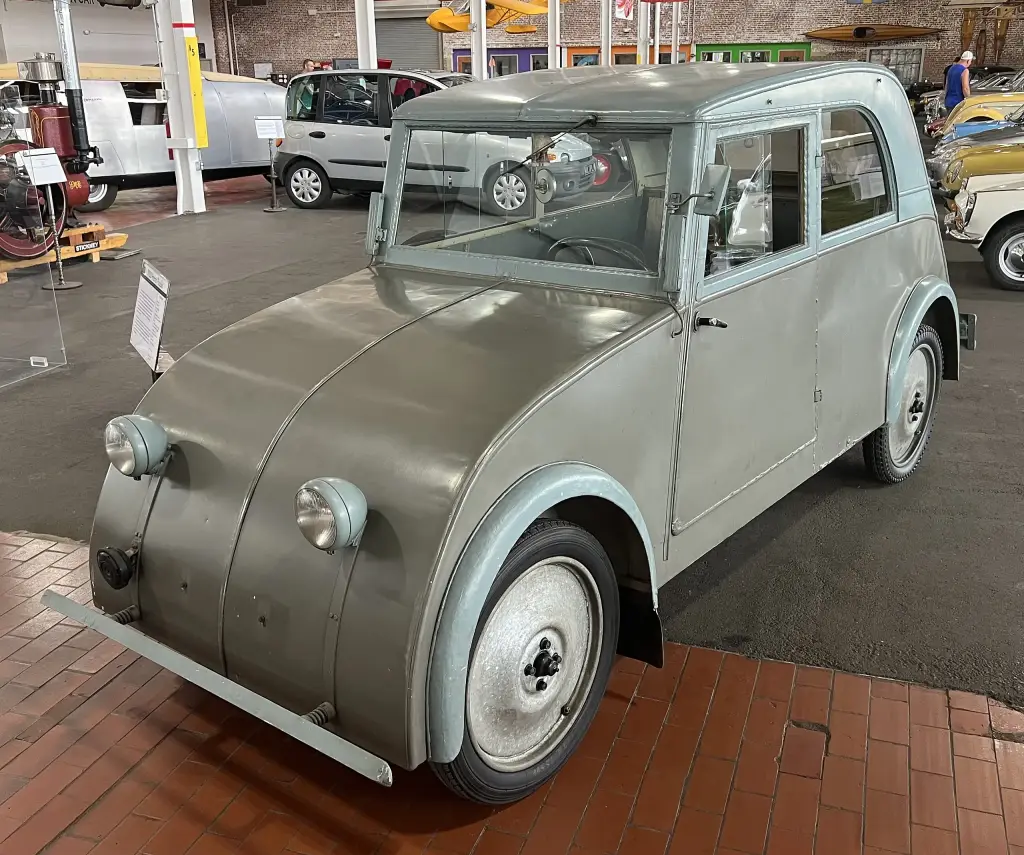
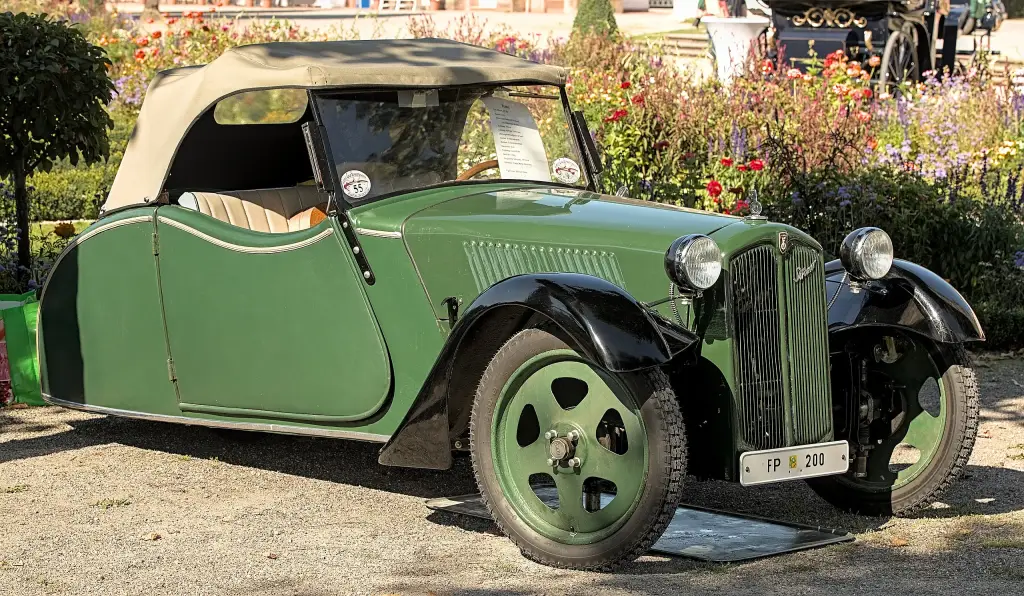
The LT 200 and LT 300 of 1931 added a cab, with an electric starter and a gearbox with reverse available at extra cost; from 1933 the LTH 200/300 had a reverse gear, a steering wheel and a bonnet as standard, with 7 or 9 PS. Their chassis were exported to India in large numbers for rickshaw bodies. In 1932/33 Framo built its first car, the FP 200/300 Stromer, a small front-engined machine with two wheels in front and one behind, a four-speed gearbox and a top speed of 60 km/h. Its body was plywood covered in artificial leather, and even the exhaust gases were routed through the central tube frame. The four-wheeled Piccolo VH 200 and VH 300 followed, with a rear engine driving the left rear wheel by chain. In three years the three car series sold only about 1,070 examples.
Production moved to Hainichen from 1933, and on 1 January 1934 the firm was renamed Framo-Werke GmbH, the name being an acronym of Frankenbergmotorenwerke. The vans grew steadily: the FPT 300, the LTP 200/300, the one-tonne HT 600 of 1935 and the HT 1200 and V 1200 of 1937 with a 34 PS four-cylinder four-stroke engine. The three-wheeled line ended with the LTG, offered as the D 200 with 5.5 PS and the D 500 with 13 PS. In 1939 came the four-wheeled V 500 with a 494 cm³ 13 PS engine and 60 km/h, the first German four-wheeled three-quarter-tonner, built in large numbers.
Wartime standardisation reduced the programme in 1941 to the Einheitstyp 650/2, which became the V 501 with 15 PS, and in 1943 a 17 PS double-piston engine was fitted. Vehicle production ended that year and the works were turned over to armaments. After the war the IFA organisation resumed light-van production under the Framo name; in 1957 the works were renamed VEB Barkas-Werke Hainichen and shortly afterwards merged into the Barkas works at Karl-Marx-Stadt. The brand was revived in 2014 by Framo GmbH, a maker of electric lorries.
Design and features
- DKW two-stroke engines: air-cooled single-cylinder units in the early three-wheelers, later water-cooled four-strokes in the larger vans.
- Three wheels first: a cheap layout for tax and insurance that carried the firm through the Depression.
- Stromer and Piccolo: advanced small cars, but commercial failures with about 1,070 sold in three years.
- From Framo to Barkas: the works became the nucleus of the Barkas van factory in 1957.
Framo versions
- TV 300 / LT 200 / LT 300 / LTH 200/300 (1927–1935): delivery three-wheelers.
- FP 200/300 Stromer (1932/33): three-wheeled small car with front engine.
- Piccolo VH 200/300: four-wheeled small car with rear engine.
- HT 600, HT 1200, V 1200 (1935–1939): four-wheeled vans up to 1.1 t payload.
- V 500 and V 501 (1939–1943): the three-quarter-tonner and its wartime development.
Framo light vans led directly to the Barkas B 1000, and the three-wheeler tradition continued in the Multicar. More vehicles are in the IFA collection.
Sources
- Framo, German Wikipedia: company history, models, production figures