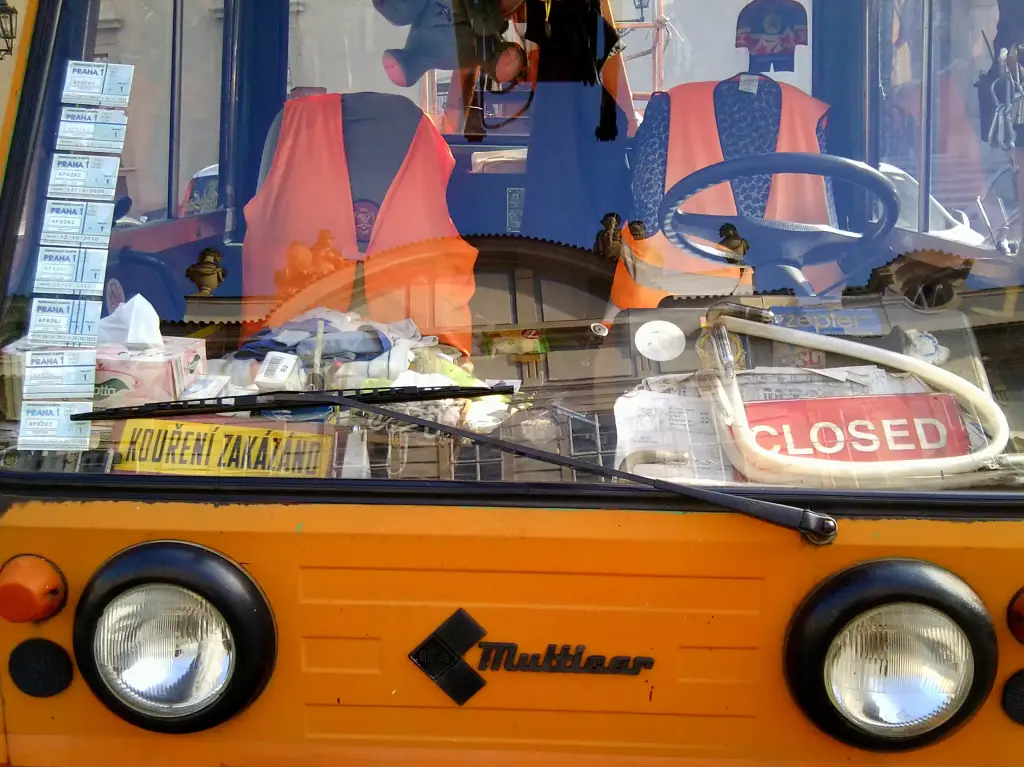
Multicar is the small multifunctional transporter built at Waltershausen in Thuringia, and the only brand of the East German IFA industry that still makes its own vehicles. Its story runs from the ADE works and the Dieselameise to the M21 of 1958 and the export success of the M25.
Multicar at a glance
| Founded | 1920, as the ADE works of Arthur Ade and Hermann Irrgang |
|---|---|
| Place | Waltershausen, Thuringia, from 1926 |
| Name from 1948 | VEB Fahrzeugwerk Waltershausen |
| Predecessor | Dieselameise DK 3, from 1956 |
| First Multicar | M21 of 1958, sold under that name from December 1959 |
| M21 production | 14,000 by 1964 |
| M22 | 42,500 built over the following ten years |
| M24 | 25,659 built until 1978, 48 per cent exported |
| M25 | about 100,000 built, 70 per cent exported |
| M25 engine | IFA diesel, 33 kW (45 PS) |
History of the Multicar
The company was founded in 1920 at Hörselgau in Thuringia by the engineer Arthur Ade and the merchant Hermann Irrgang as the Maschinenfabrik Hörselgau Ade & Irrgang, known as the ADE works. It first made steel bands for solid tyres, later agricultural equipment, vehicle trailers and couplings for lorries and tractors. In 1926 it became a joint-stock company and moved to Waltershausen; in 1928 it presented the ADE Expreß, a three-wheeled light transporter with up to 750 kg payload and ILO engines of 6 to 12 PS.
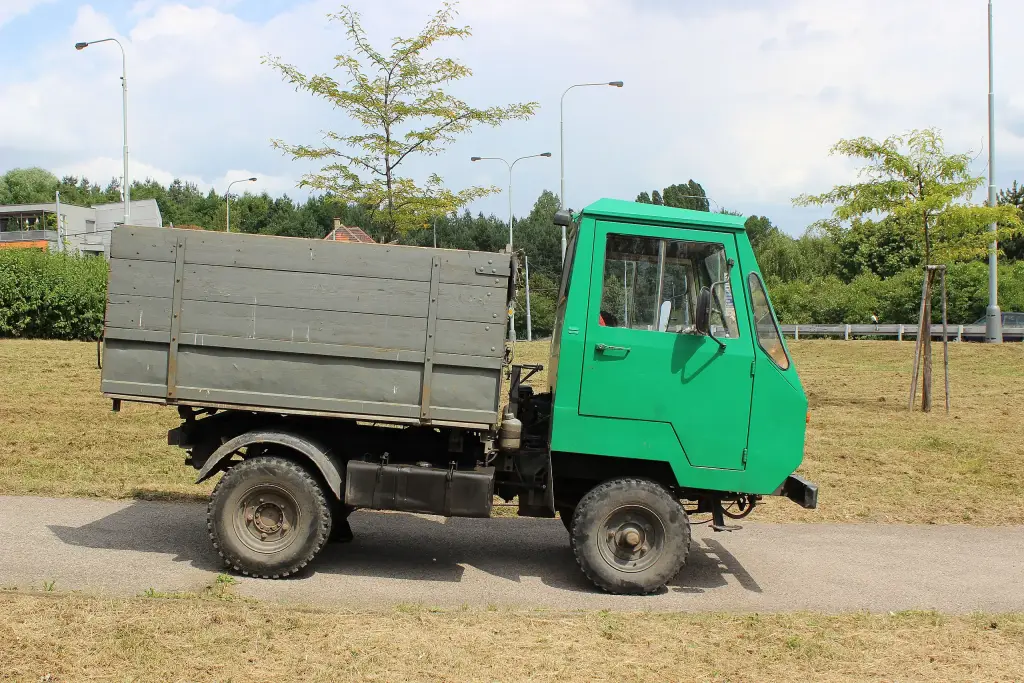
After the Second World War production resumed in 1946 as Gerätebau Waltershausen, and in 1948 the works took the name VEB Fahrzeugwerk Waltershausen, which it kept until privatisation in 1991. The original Dieselameise DK 2002 — DK for Dieselkarre — had been built from 1951 at the VEB Brand-Erbisdorf for factory-yard transport; it had 5.6 PS and was steered by a foot pedal from an open platform. In 1956 production of the DK 3 began at Waltershausen, where it had previously been made at Ludwigsfelde and Brand-Erbisdorf; it came as a flatbed, a tipper and a three-way tipper.
In 1958 the first Multicar was built, the still foot-steered M21, at first under the name DK 4 and from December 1959 under the name Multicar, chosen with the international market in mind. By 1964 14,000 had left the works, and over the following ten years 42,500 vehicles of the M 22 series followed. The M 24 was built until 1978, with 25,659 examples, 48 per cent of them for export.
The M 25 was the great export success: 70 per cent of the vehicles went to Comecon states and to the West. In Britain a two-way vehicle was developed together with Harsco-Permaquip. The M 25 had an IFA-built diesel of 33 kW (45 PS), and production continued in 1991 with a VW engine; about 100,000 were built in all. From the late 1970s the VEB Fahrzeugwerk Waltershausen belonged to the IFA-Kombinat Nutzkraftwagen.
The state-owned works were privatised in 1991, with the former materials director Manfred Windus as the driving force; he was named manager of the year in 1993. The M 26 followed from 1993 to 2010. The Hako-Werke of West Germany took a majority shareholding in 1998, and in 2005 Multicar was merged into Hako and survived as a brand name; since 2013 it has been a product line under the Hako umbrella.
Design and features
- Small and multifunctional: a compact transporter for municipal work, agriculture and forestry rather than a conventional lorry.
- Foot steering: the early M21 was still steered by foot, a direct descendant of the Dieselameise.
- Export success: 70 per cent of M25 production went abroad, including to western markets.
- Continuity: the only vehicle brand of the East German IFA industry still producing vehicles of its own.
Multicar versions
- Dieselameise DK 3 (from 1956): the small diesel cart that preceded the Multicar name.
- M21 (1958–1964): the first Multicar, initially called DK 4, with foot steering.
- M22 (1964–1974): 42,500 built.
- M24 (until 1978): 25,659 built, nearly half exported.
- M25 (to 1991): about 100,000 built with an IFA diesel, later with a VW engine.
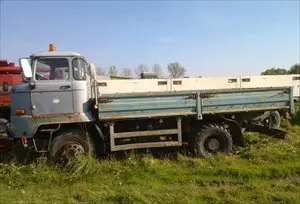
The Multicar was the smallest vehicle of the DDR range, below the Barkas B 1000 and the lorries such as the IFA W 50. More vehicles are in the IFA collection.
Video: Multicar M25 timber transport
Video on YouTube.
Sources
- Multicar, German Wikipedia: company history, model series, production figures
- Multicar, English Wikipedia: production totals, later history