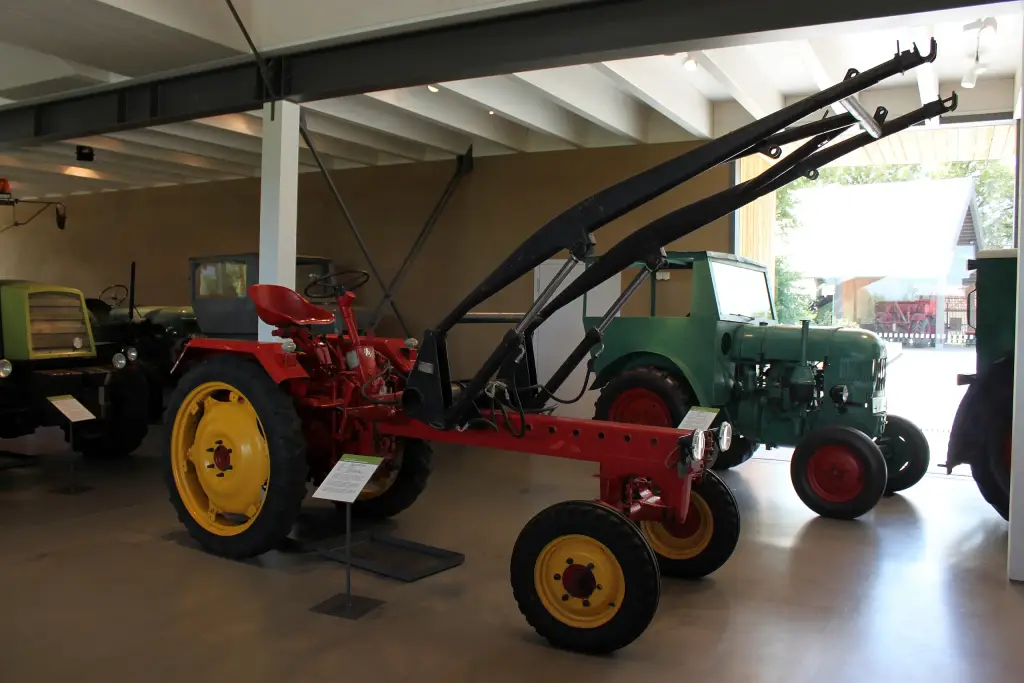
The RS09 — RS standing for Radschlepper, wheeled tractor — carried the brand name Maulwurf, mole, and became one of the most-produced tractors of East Germany and the whole eastern bloc. It was built from 1955 to 1964, first at Schönebeck and later at Haldensleben, and was designed to work in either direction.
IFA RS09 at a glance
| Type | RS09, brand name Maulwurf |
|---|---|
| Later designations | GT109, GT122, GT124, RS09/122, RS09/124 |
| Predecessor | RS08 |
| Production | 1955–1964, small series for a few years after |
| First plant | VEB Traktorenwerk Schönebeck |
| Later plant | VEB Landmaschinenbau Haldensleben |
| Layout | tool carrier in frame construction, engine behind the rear axle |
| Two-cylinder engine | Warchalowski FD 21, 1,021 cm³, 13.2 kW |
| Four-cylinder engine | 4KVD 8 SVL ‘Cunewalder’, 25 PS |
| Gearbox | four speeds in two groups, no separate reverse |
| Brakes | foot brake on the rear wheels, hand lever |
| Nicknames | ‘Nulli’, ‘Molli’, ‘Mull’ |
based on one source (German Wikipedia).
History of the IFA RS09
The RS09 was essentially a further development of the RS08, and like it a tool carrier in frame construction, which allowed a wide variety of implements to be mounted. It was produced from 1955 to 1964 — and in small series for a few years beyond — first at the VEB Traktorenwerk Schönebeck and later at the VEB Landmaschinenbau Haldensleben.
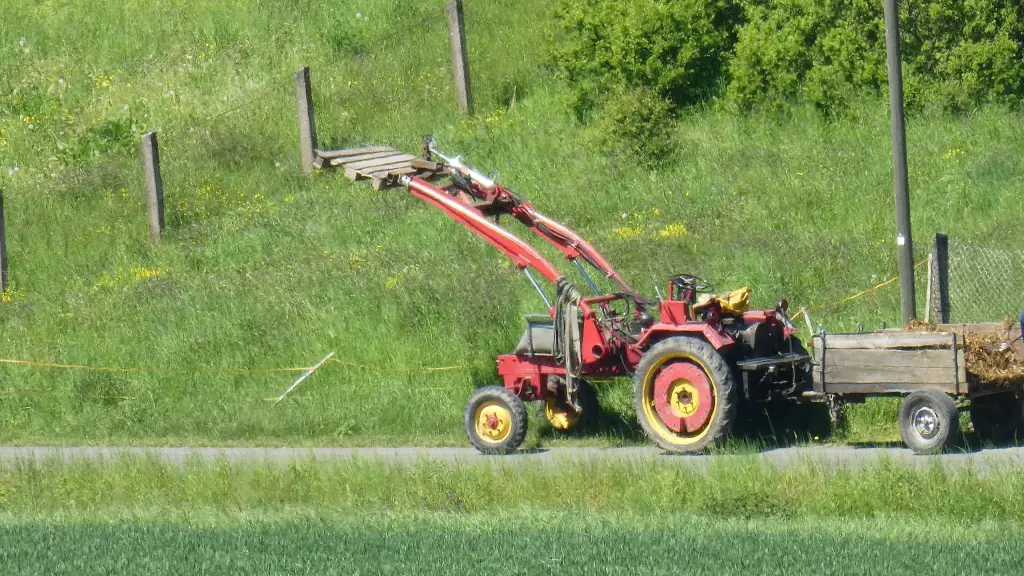
The layout was unusual. The engine sat behind the rear axle and the gearbox ahead of it, so that the rear axle, gearbox and engine formed one unit; the longitudinal frame connected that drive unit with the front axle. There was an unsprung swing axle in front and a rigid axle at the rear. Because the tractor was conceived as a two-direction vehicle, the driver’s seat above the rear axle could be turned through 180 degrees, and the four-speed gearbox in two groups had no separate reverse gear: it could be shifted in either direction of travel, so the tractor went as fast backwards as forwards.
Two basic versions were offered, with a two-cylinder engine (GT122, GT109 or RS09/122) and with a four-cylinder engine (GT124 or RS09/124). A roll-over cab was added later to prevent the tractor turning over on its side. The rear wheels could be braked independently, a differential lock could be engaged, and a three-point hitch could be fitted at the rear; the steering was a Ross type. Over the years the frame, running gear and controls were modified, including a driver’s cab, improved steering with control forces reduced by 50 per cent, and a reduction of 150 kg in unladen weight through light-alloy castings.
The first RS09/122 tractors used an imported air-cooled two-cylinder V diesel from the Austrian firm Warchalowski, the FD 21: four-stroke, direct injection, 85 × 90 mm bore and stroke, 1,021 cm³, 13.2 kW. From 1958 this engine was built under licence at the Dieselmotorenwerk Schönebeck as the FD 21/1 with 11 kW. A revised FD 22 of 1962 was bored out to 90 mm for 1,145 cm³ and 12.1 kW, and from engine number 25001 the same unit was called the 2 KVD 9 SVL with a different injection pump and 13.2 kW.
From 1962 the GT124, by then built at Haldensleben, received the air-cooled 4KVD 8 SVL diesel developed and made at the VEB Motorenwerk Cunewalde — the ‘Cunewalder’. This more powerful tractor with the 25 PS engine caused controversy at the second meeting of the SED central committee in April 1963, when Walter Ulbricht and the economics council disagreed over whether the RS09 should be phased out or built in greater numbers. The outcome was that the tractor continued in developed form and reduced numbers into the 1970s.
Design and features
- Two-direction working: a rotating seat and a gearbox without a separate reverse let the tractor work as fast backwards as forwards.
- Tool carrier: frame construction made it easy to mount different implements for arable work and transport.
- Two engine families: a two-cylinder Warchalowski-based diesel or the four-cylinder ‘Cunewalder’ of 25 PS.
- Independent rear brakes and differential lock: useful on soft ground and in tight turns.
- Widely built: one of the most-produced tractors of the DDR and the eastern bloc.
IFA RS09 versions
- RS09/122, GT109, GT122: two-cylinder versions.
- RS09/124, GT124: four-cylinder version with the Cunewalde engine from 1962.
- Later modifications: roll-over cab, improved steering and light-alloy castings.
The earlier East German tractor was the Pionier RS 01/40. More vehicles are in the IFA collection.
Video: IFA RS 09 starting
Video on YouTube.
Sources
- RS09, German Wikipedia: production, layout, engines, variants