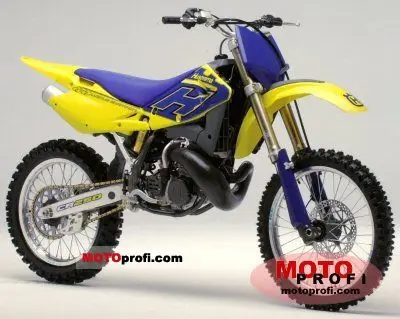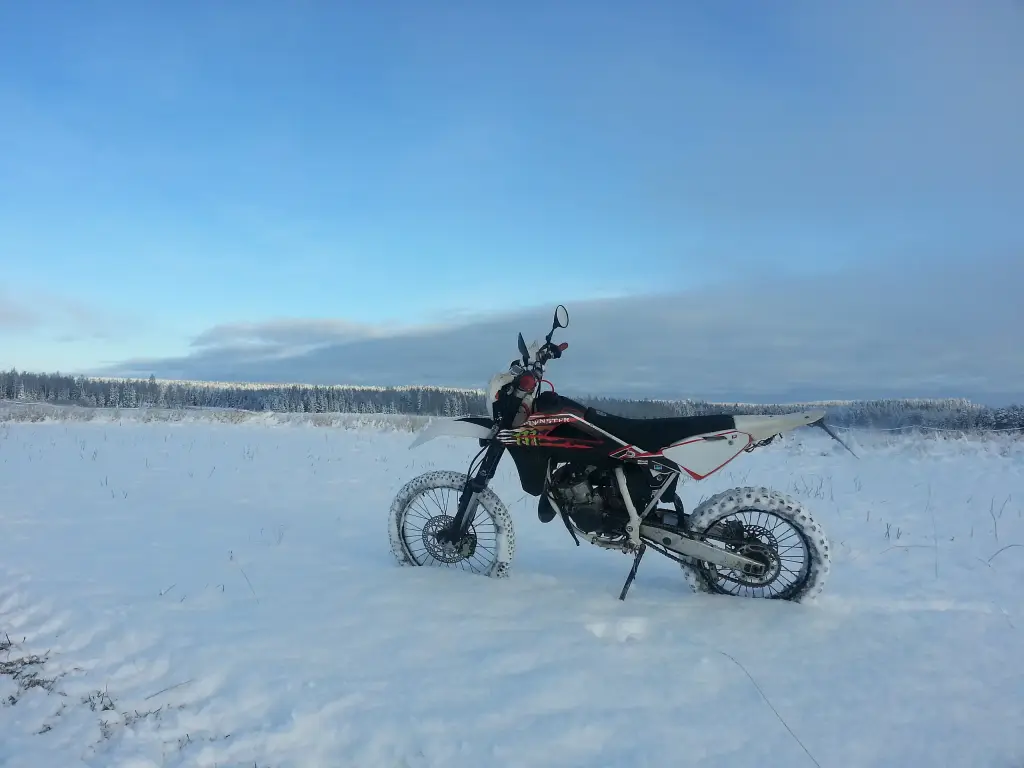
The Husqvarna WR was the firm’s line of two-stroke enduro motorcycles, derived from the motocross CR and prepared by the factory for European enduro. The line was built in Sweden until 1987 and afterwards in Varese, Italy, and it ran from the 125 to the 430, which became the 400 and then the 360.
Husqvarna WR at a glance
| Type | enduro, two-stroke |
|---|---|
| Derived from | Husqvarna CR |
| Export names | WXE for enduro and WXC for cross, 1992–1996, later WR-USA |
| Production | Sweden until 1987, then Varese, Italy |
| Ownership | MV Agusta group 1987, BMW 2008, KTM 2013 |
| Four-stroke enduro line | Husqvarna TE, from 1987 |
| Models | 125, 250, 300 and 360 |
| WR 360 | 1992–2002, developed from the CR 430 and WR 400 |
| WR 300 | from 2008 |
| WR 250 | 2006–2013, the only form of the CR 250 in those years |
| Exhaust valve | H.T.S., Husqvarna Torque System, from 1992 |
Based on one source: the Italian Wikipedia article on the WR line.
History of the Husqvarna WR
Origins
The WR models were enduro motorcycles with two-stroke engines, derived from the cross version, the Husqvarna CR, and prepared by the factory. From 1992 to 1996 the export versions were called WXE for enduro and WXC for cross, later WR-USA. The four-stroke enduro range has been called Husqvarna TE since 1987.
Sweden and Italy
WR production falls into two periods, Swedish and Italian. Husqvarna motorcycles were built in Sweden until 1987, when the MV Agusta group bought the firm and moved all production to Varese. The company was sold to BMW in 2008 and to KTM in 2013, which closed the Varese factories, where SWM motorcycles are now built.
The big-bore models
From 1990 the WR series continued models that were no longer offered in cross form. The CR 430 returned to its original 400 cc and was renamed WR 400; in 1992 it became the 360 as the WR 360, produced until 2002. The 300 cc engine returned in 2008 as the WR 300, and the CR 250 was built only as the enduro WR 250 from 2006 to 2013. The 1992 change to the WR 400 brought the H.T.S. exhaust system, derived from the C.T.S. used on the Cagiva WMX and WRX.
The H.T.S. exhaust valve
After the 1987 takeover Cagiva applied its motocross knowledge from the WMX to the new Husqvarna CR, so until 1994 the WR and CR 125 were technically close to the Cagiva. A completely new cross and enduro range came in 1994 with a new frame and engine and the H.T.S. (Husqvarna Torque System) exhaust valve, which varies the opening of the exhaust port to make up for the usual lack of low-rev torque in a two-stroke. On the 125 of 1995 and 1996 it was designed to open at 6,800 +/- 200 rpm; after a 1997 revision the twin valve, still controlled by a centrifugal governor, opened at 7,500 +/- 200 rpm and stayed in production in that form until 2013. On the 250 the system kept a twin valve until 1999, when it became a single central valve adjustable at opening and closing, revised in 2001 to open at about 6,200 rpm. The 1992 WR/CR 360 used a single valve and from the following year a twin valve like the 250’s, unchanged until the model left the range in 2003.
The WRE
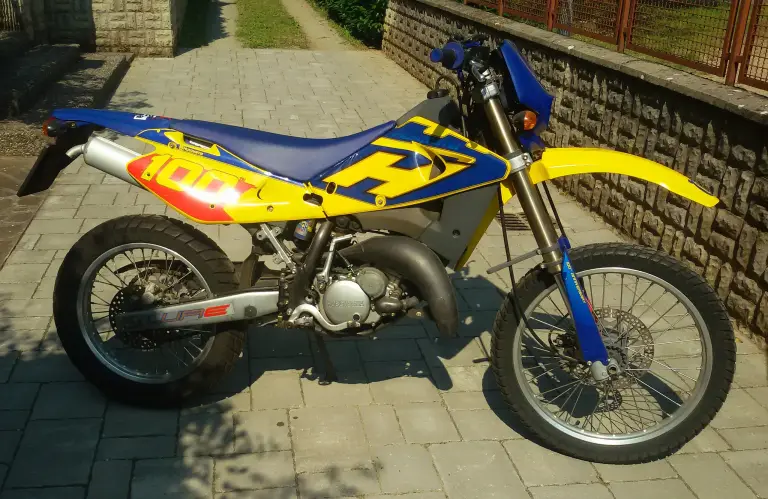
The WR is often confused with the Husqvarna WRE, built only as a 125. Despite the similar name the WRE was a dual-purpose machine for mixed town and light off-road use, aimed at sixteen-year-old riders, with an automatic mixer, pillion footrests and indicators that were optional on the WR.
Design and features
- Enduro two-stroke: derived from the motocross CR and prepared by the factory for European enduro.
- Export names: WXE and WXC from 1992 to 1996, later WR-USA.
- H.T.S. exhaust valve: from 1992, with the 125 opening at 7,500 rpm after the 1997 revision.
- Two production homes: Sweden until 1987 and Varese in Italy afterwards.
- Long model run: the 125, the 250, the 300 and the 360 from the big-bore CR.
Husqvarna WR versions
- WR 125: the smallest enduro model, with the H.T.S. valve.
- WR 250: built from 2006 to 2013, when the CR 250 existed only in enduro form.
- WR 300: the 300 cc engine returned in 2008.
- WR 360: produced from 1992 to 2002, developed from the CR 430 and the WR 400.
- WXE and WXC: the export names of the WR and CR between 1992 and 1996.
The WR was the enduro version of the Husqvarna CR; its road-going 125 relative was the WRE 125, and the supermoto line was the SM. More Husqvarna models are in the Husqvarna collection.
Video: Husqvarna WR 125 Offroad Montage
Video by Simone Rango on YouTube.
Sources
- Husqvarna WR, Italian Wikipedia: history, models, H.T.S. valve, production