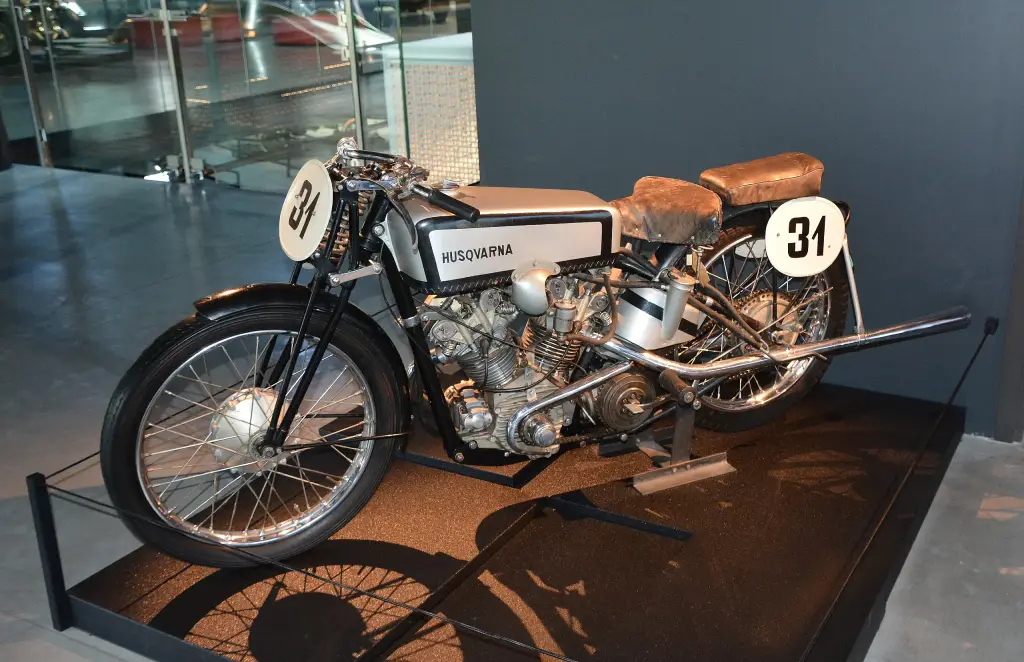
The Husqvarna 500 is a racing motorcycle produced by Husqvarna Motorcycles and used in races from 1930 to 1935. Its 500 cc V-twin engine with hairpin valve springs made its debut at the 1930 Swedish Grand Prix at Saxtorp, and the model won that race four times before Husqvarna stopped racing.
Husqvarna 500 at a glance
| Type | racing motorcycle |
|---|---|
| Maker | Husqvarna Motorcycles |
| Raced | 1930–1935 |
| Engine | 500 cc V-twin, hairpin valve springs |
| Debut | 1930 Swedish Grand Prix, Saxtorp |
| Carburettors | two 25 mm Amal, on the 1932 engines |
| Gearbox | Sturmey-Archer four-speed, chain drive |
| Frame | closed rigid frame, trapezoidal fork |
| Brakes | 180 mm conical drums front and rear |
| Engine casings | Elektron, from 1932 |
| Designer | Folke Mannerstedt, from 1928 |
| End of racing | a fire destroyed almost all racing machines |
Based on one source: the English Wikipedia article on the Husqvarna 500.
History of the Husqvarna 500
Development
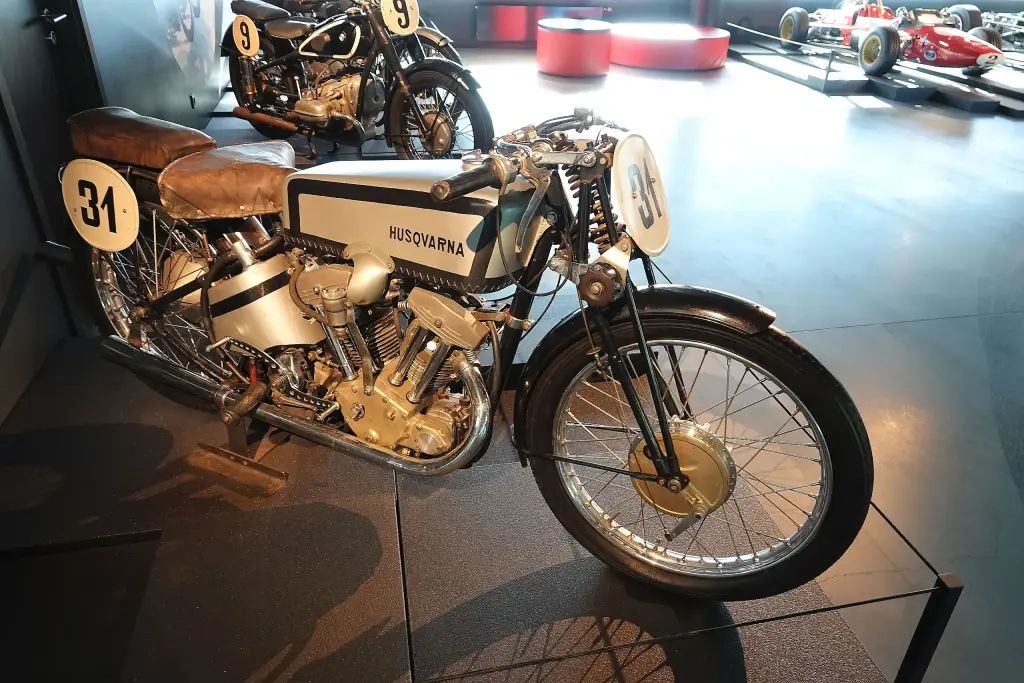
Motorsport development at Husqvarna dates back to Folke Mannerstedt, who began working as a designer at the company in 1928. Experiments with two racing models were under way as early as 1929, and the 500 cc V-twin engine with hairpin valve springs made its debut at the 1930 Swedish Grand Prix in Saxtorp.
Completely new engines were developed in 1932. The machines of that period had Elektron engine casings, two 25 mm Amal carburettors and unusually long exhaust pipes matched precisely in length. Power reached the rear wheel through a Sturmey-Archer four-speed gearbox and a chain. The high-revving engine sat in a closed rigid frame with a trapezoidal fork, and both wheels used 180 mm conical brake drums.
Racing record
Ragnar Sunnqvist won the 1932 Swedish Grand Prix on a Husqvarna 500, with Gunnar Kalén second; Kalén won in 1933 and Sunnqvist again in 1934. That year was disastrous for the firm: both riders retired from the Isle of Man TT and Kalén was killed in a crash at the German Grand Prix. In 1935 Sunnqvist won the Swedish Grand Prix again, on the AVUS, beating BMW and Stanley Woods.
Survivors
A fire destroyed almost all of Husqvarna’s racing machines and the company stopped racing. Very few examples survive in Sweden: a 1935 example is in the Sammy Miller Museum Collection in New Milton, Hampshire, and another is in the German Two-Wheeler and NSU Museum in Neckarsulm.
Design and features
- V-twin engine: 500 cc with hairpin valve springs, debuted at Saxtorp in 1930.
- Elektron casings: the 1932 engines used Elektron for the crankcases.
- Matched exhaust pipes: two unusually long pipes made precisely the same length.
- Sturdy cycle parts: closed rigid frame, trapezoidal fork and 180 mm conical drum brakes.
Husqvarna 500 versions
- 1929 experiments: two racing models tested before the debut.
- 1930 debut: the original V-twin raced at the Swedish Grand Prix in Saxtorp.
- 1932 engines: completely new design with Elektron casings and two Amal carburettors.
- 1935 AVUS bike: the machine on which Sunnqvist took his last Swedish Grand Prix win.
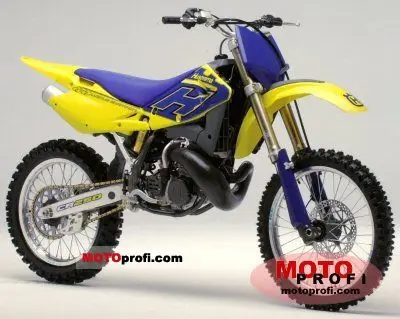
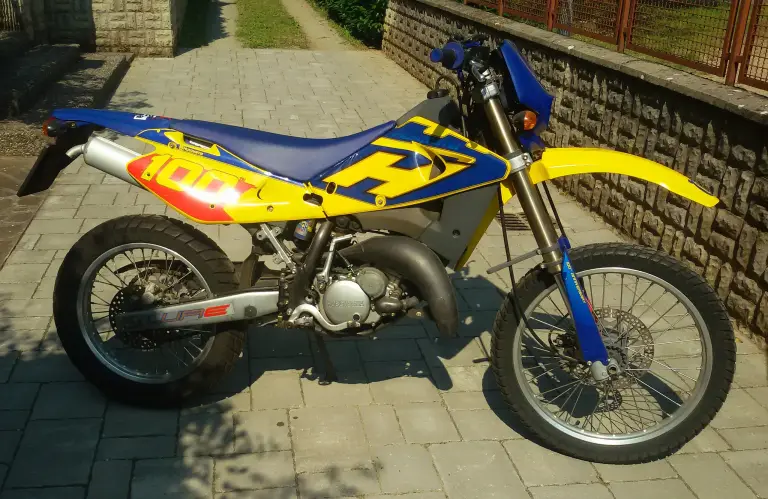
The 500 was Husqvarna’s racing motorcycle of the 1930s. Other Husqvarna machines are in the Husqvarna collection, among them the CR motocross line and the WR enduro line.
Sources
- Husqvarna 500, English Wikipedia: development, racing record, survivors