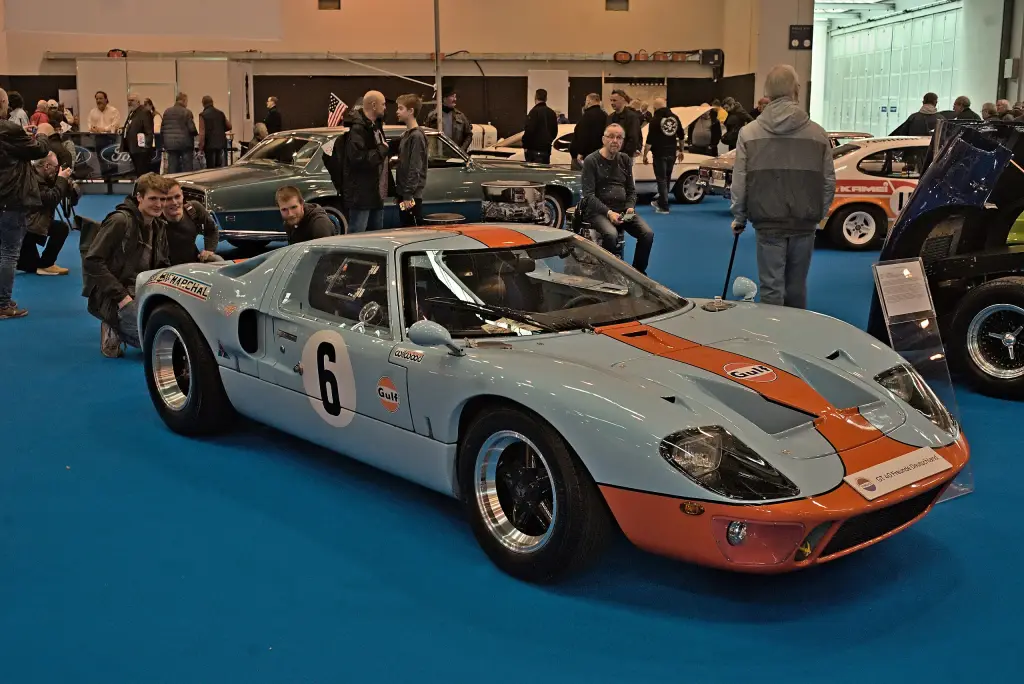

Some of the most extreme road cars ever sold were never meant to be good road cars. They were built because a racing rule demanded that the car on the track also exist in a showroom. This guide explains how that rule worked, what it produced, and how to recognise one of these cars when you meet it.
The short version
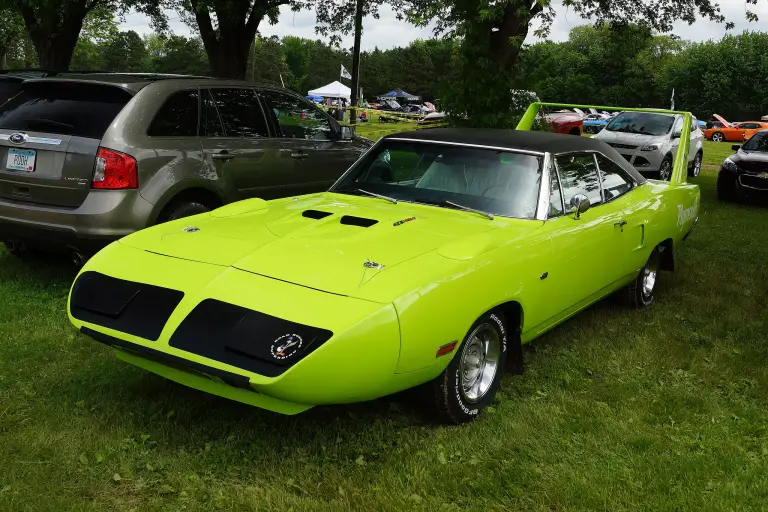
A homologation special is a road car built in the minimum numbers a racing series requires before it lets the racing version compete. The required number ranged from 25 to 2,500 depending on the series. The idea gave us the Ford GT40, the Lancia Delta S4 and the Plymouth Superbird, and it ended when series changed their rules or, in the case of Group B, were abolished.
What homologation means
To homologate a car is to get it officially approved for a class of racing. Many series wanted to race cars that spectators could in principle buy, so they set a minimum number of road-going examples that a manufacturer had to build. In rallying, the World Rally Championship regulations required a manufacturer to build road-going versions of the car in sufficient numbers; Wikipedia calls such cars “homologation special vehicles”. Italian makers have a word for the road version of a racer: Stradale, meaning road-going.
The rule also set out what a road car had to have. For the sports-car rules of the late 1960s, a prototype could be homologated as a Group 4 “sports car” if at least 50 were built within 12 months, and the road-car requirements included a spare wheel, luggage space, an ignition lock, lights and wipers: things found on a street-legal car but not on a pure racer.
The rules and the cars
| Car | Series | What the rule asked for | Road cars made |
|---|---|---|---|
| Ford GT40 Mk I | Group 4 sports cars, 1966 | at least 50 cars | more than 50 built in 1965 |
| Alfa Romeo 33 Stradale | Group 4 sports cars | 50 cars within 12 months | 18, between 1967 and 1969 |
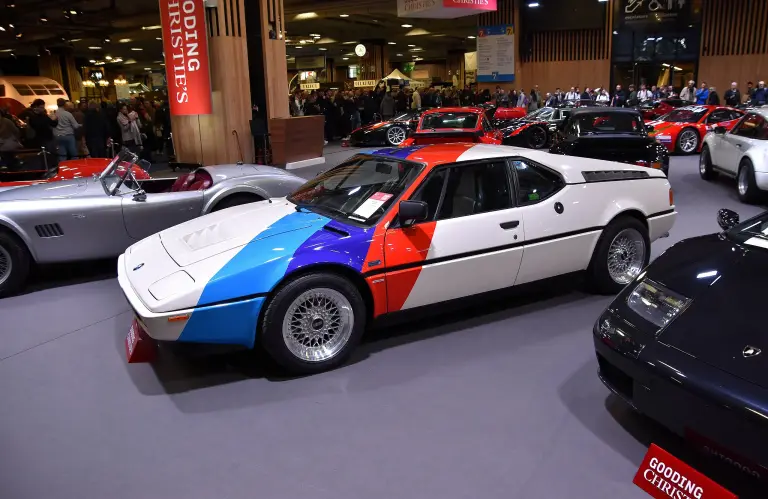
| BMW M1 | Group 5, then Group 4 | 400 road cars | 453 or 460, depending on the source |
| Plymouth Superbird | NASCAR, 1970 | one car for every two dealers: 1,920 for Plymouth | 1,935 delivered to US dealers |
| Ford Mustang Boss 302 | SCCA Trans-Am, 1969 | a road car with a 5-litre (305 cu in) engine | 7,013 sold in 1970 alone |
| Ford RS200 | Group B rallying | 200 road cars | probably 140 to 146 completed |
| Lancia Delta S4 | Group B rallying | 200 road cars | fewer than 100, most likely |
| Ford Escort RS Cosworth | Group A rallying | 2,500 cars | 7,145 over four years |
| Porsche 911 GT1 | GT1 sports cars | 25 road cars | about 20 in 1997 and one in 1998 |
Figures as given in the English Wikipedia articles on each car; where the German article gives a different count, both are shown.
Three ways to meet a rule
Build the full number
The honest route was to build all the cars. Ford sold dozens of GT40 Mk Is in 1965, and because more than 50 existed the FIA homologated the Mk I as a Group 4 sports car for 1966 to 1971. That is how an old design was still allowed to win Le Mans in 1968 and 1969 against the new 3-litre prototypes. For the Escort RS Cosworth Ford built 2,500 cars by 1 January 1993, and kept the large-turbo version in production until June 1994, and the car itself until 1996, because demand was high.
Build the minimum and no more
Others built just enough. Plymouth needed 1,920 Superbirds for NASCAR, and only 135 had the Hemi engine, because the street Hemi was homologated by building the minimum required. The 1970 season was the only year of production. The cars were so extreme that many sat unsold on dealers’ lots as late as 1972, and some were converted into ordinary Road Runners to clear them.
Build fewer, or bend the rule
For Group B, Lancia was to build 200 road versions of the Delta S4 but most likely made fewer than 100. Ford had parts for all 200 RS200s by 1985 but probably completed only 140 to 146, according to the German article on the car. The first 2,500 Escort Cosworths carried a dummy water-injection system under the rear seat, there only to demonstrate to Group A inspectors a capability that the rules required.

A timeline of the rule, 1966 to 1998
- 1966The Ford GT40 Mk I is homologated as a Group 4 sports car, because more than 50 had been made.
- 1967Alfa Romeo shows the 33 Stradale in Paris. Marazzi claims 18 chassis, not the 50 the rule required.
- 1969Dodge builds 503 Charger Daytonas for NASCAR, with a 23-inch wing. Ford develops the Boss 302 for Trans-Am.
- 1970Plymouth builds the Superbird. NASCAR then limits aero cars to 305 cu in and effectively bans them by the end of the year.
- 1978BMW starts selling the M1 after Lamborghini fails to build it.
- 1985Lancia builds the S4 Stradale to homologate its Group B rally car.
- 1986Henri Toivonen and Sergio Cresto die on the Tour de Corse in a Delta S4. The accident leads directly to the abolition of Group B.
- 1992The Ford Escort RS Cosworth goes on sale; 2,500 homologation cars are completed by 1 January 1993.
- 1998A single road-going 911 GT1-98 is built to homologate the new Le Mans car. In 1999 the GT1 class is cancelled.
Dates from the English Wikipedia articles on each car.
Why it ended, and what it left
Homologation specials depended on rules that tracks, sanctioning bodies and manufacturers kept rewriting. After the 1967 Le Mans the sports-car rules capped prototype engines at three litres, which is why 5-litre homologated cars could win again. NASCAR first raised its requirement and then banned the aero cars. Group B was scrapped after 1986, and the car meant to replace the Delta S4, the Group S Lancia ECV, was scrapped with it. The GT1 class of the late 1990s lasted only a few seasons.
What remained were cars that no company would have made on commercial grounds: the Alfa 33 Stradale was the most expensive car on sale to the public in 1968 at US$17,000; the Delta S4 Stradale cost about 100 million lire, five times the price of the next most expensive Delta. They are expensive today because they were rare when new.

How to spot one
- A tiny production run. Dozens or low hundreds of cars, where the maker normally builds thousands, is the first sign.
- Aerodynamics out of proportion. A nose cone and a 23-inch wing on a family Charger could only mean racing; so could the Superbird’s tall wing.
- Odd engine sizes. The Delta S4’s 1,759 cc was chosen because the FIA multiplied forced-induction capacity by 1.4, which put it just under the 2,500 cc class limit.
- A road car that is worse at being a road car. The Escort RS Cosworth Motorsport Base was 40 kg lighter and left out electric windows and air conditioning for rally preparation.
- A badge that says so. Stradale, Straßenversion, Evolution or “Motorsport” on a VIN plate points to the road version of a racer.
Our articles on the Ford GT40, the BMW M1, the Shelby Daytona Coupe, the Ford RS200 and the Plymouth Superbird cover five of them in detail.
Homologation questions and answers
What does homologation mean in motorsport?
Official approval of a car for a racing class, which usually depends on a minimum number of road-going examples being built.
What does Stradale mean?
Italian for road-going. Italian makers use it for a street-legal version of a racing car.
Did the 200 Group B cars ever get built?
Often not. Lancia was to build 200 Delta S4 Stradales but most likely made fewer than 100, and only 140 to 146 RS200s are thought to have been finished, according to the German article.
Why did Group B end?
The fatal crash of Henri Toivonen and Sergio Cresto on the 1986 Tour de Corse led directly to its abolition.
Why was the Superbird built?
To qualify an aerodynamic Road Runner for NASCAR, and to lure Richard Petty back to Plymouth for 1970.
Based on the English Wikipedia articles listed below; the German article on the RS200 supplies the completed-car estimate. I did not cross-check the production figures against manufacturer records.
Sources
- Alfa Romeo 33 Stradale, English Wikipedia: Group 4 and Group 6 background, production numbers, price
- Ford GT40, English Wikipedia: homologation of the Mk I
- BMW M1, English Wikipedia: the 400-car requirement and Procar
- Plymouth Superbird, English Wikipedia: the NASCAR rule and production figures
- Boss 302 Mustang, English Wikipedia: Trans-Am homologation
- Ford RS200, English Wikipedia and German Wikipedia: Group B and completed cars
- Lancia Delta S4, English Wikipedia: twincharging, Stradale, the 1986 accident
- Ford Escort RS Cosworth, English Wikipedia: the 2,500-car batch and the dummy water injection
- Porsche 911 GT1, English Wikipedia: the 25-car rule
- Dodge Charger Daytona, English Wikipedia: the 1969 aero car
- Toyota Celica GT-Four, English Wikipedia: the WRC homologation rule