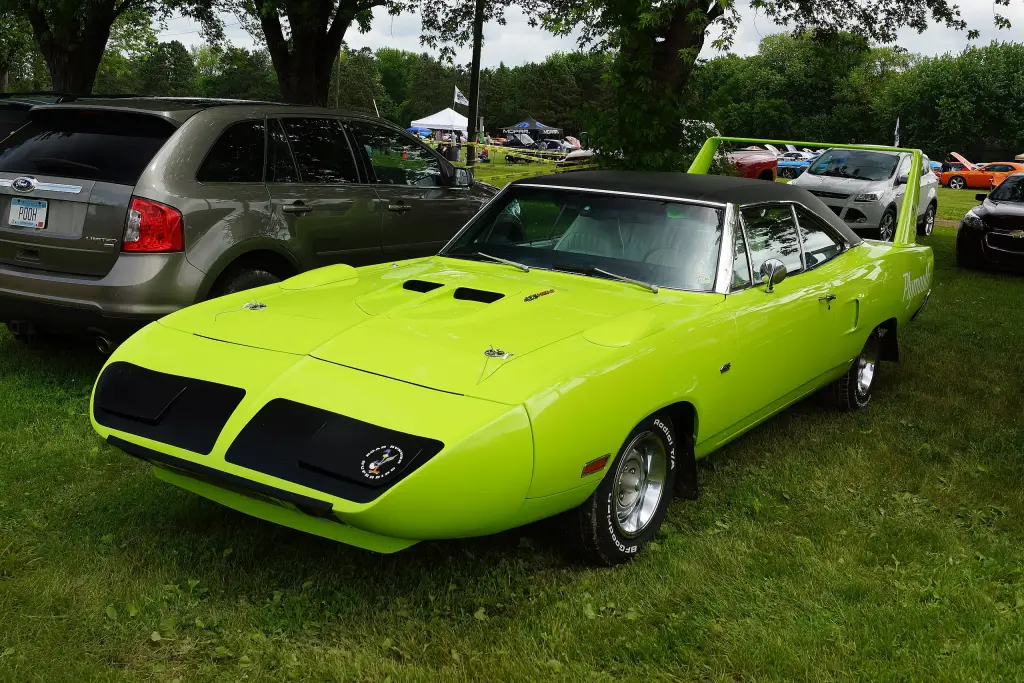
The Plymouth Superbird is a highly modified, short-lived version of the Plymouth Road Runner, sold in 1970 with a protruding nose cone, a tall rear wing and a horn that mimics the Road Runner cartoon’s “beep, beep”. It was Plymouth’s stock car racing design for the 1970 NASCAR season, following the Dodge Charger Daytona of 1969.
Plymouth Superbird at a glance
| Built | 1970 model year only |
|---|---|
| Based on | Plymouth Road Runner |
| Rivals | Ford Torino Talladega and Mercury Cyclone |
| NASCAR requirement | one car for every two US dealers; for Plymouth, 1,920 cars |
| Built (accepted figure) | 1,935 shipped to US dealers, plus 34 to 47 to Canada |
| Hemi | 426 cu in (7.0 L), 425 hp (317 kW), 0–60 mph in 5.5 seconds; 135 built |
| 440 Six Barrel | 440 cu in, three two-barrel carburettors, 390 hp; 716 built |
| 440 single carburettor | 375 hp |
| Nose cone | added nineteen inches to the length of the Road Runner |
| 1970 NASCAR season | Richard Petty won 18 of 40 races and finished fourth in the championship |
This page is based on English Wikipedia and the German Wikipedia article on the Road Runner, which covers the Superbird only in passing.
History of the Plymouth Superbird
The Superbird was developed specifically for NASCAR racing as a modified Road Runner, Plymouth’s follow-on to the Charger Daytona that sister company Dodge had fielded in 1969. The Dodge Charger 500 that began the 1969 season was designed for aerodynamics with wind-tunnel and computer analysis and was later turned into the Daytona with a nose and a tail. The Superbird’s smoothed-out body and nose cone were further refined, and the street car’s fibreglass pop-up headlight covers added nineteen inches to the Road Runner’s length. The rear wing was mounted on tall vertical struts that put it into less disturbed air, which increased downforce. A story that its height was set to let the boot lid open is an urban myth: the height was set to clear the roofline so that the wing sat in clean air.
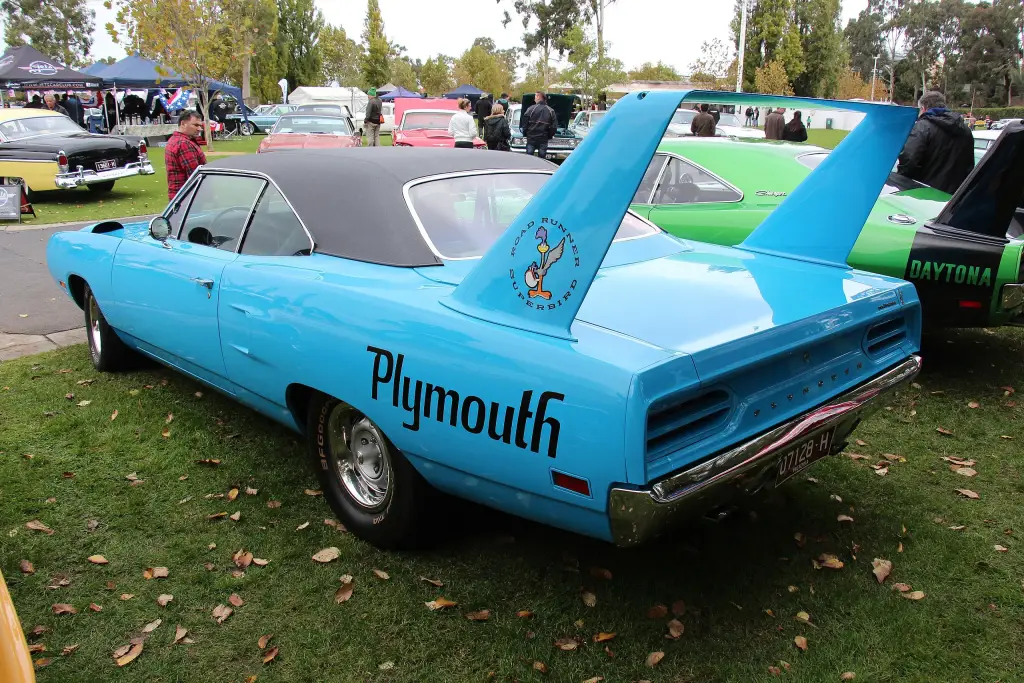
NASCAR’s homologation rules demanded that raced cars be sold to the public in minimum numbers. For 1970 it raised the requirement from 500 cars to one for every two manufacturer’s dealers in the United States, which for Plymouth meant 1,920 Superbirds. A ban on the aero cars, combined with tightening emissions rules and a spike in insurance for high-performance cars, meant 1970 was the only production year.
Engines and numbers
There were three engine options: the 426 Hemi V8 with 425 hp, the 440 Super Commando Six Barrel with 390 hp and the 440 Super Commando with a single four-barrel carburettor and 375 hp. The 440 was cheaper to produce, and the street Hemi was homologated by building only the minimum required; just 135 Superbirds had it. Chrysler memos of September 1969 show staff preparing for 1,920 cars, though published figures say as many as 2,783 were built; the figure generally accepted is 1,935 delivered to US dealers.
On the street the nose and wing were very distinctive, but the aerodynamic gains hardly mattered, and the 1970 Road Runner was actually quicker over the quarter mile because of the downforce of the Superbird’s nose and wing. Only at speeds above 60 mph did the changes bring any benefit.
NASCAR
In autumn 1968 Richard Petty had left Plymouth’s NASCAR team for Ford’s, and the Superbird was designed partly to lure him back for 1970. He did very well against strong Ford opposition, winning 18 of the 40 races he entered, adding nine other top-fives and placing fourth in the overall championship, after missing seven races through injury. NASCAR’s 1971 rules limited the aero cars to 305 cu in or more weight, which left them uncompetitive; Ford’s answer, an aero-nosed Torino King Cobra, was abandoned.
An unpopular shape
The styling was too extreme for many customers, who preferred the regular Road Runner, and many Superbirds sat unsold on dealers’ back lots as late as 1972. Some were converted to ordinary 1970 Road Runners to clear them from the lot.
Design and features
- Nose: a fibreglass nose cone with pop-up headlamp covers.
- Wing: a tall rear wing on vertical struts, standing in clean air.
- Horn: one that mimics the cartoon Road Runner’s “beep, beep”.
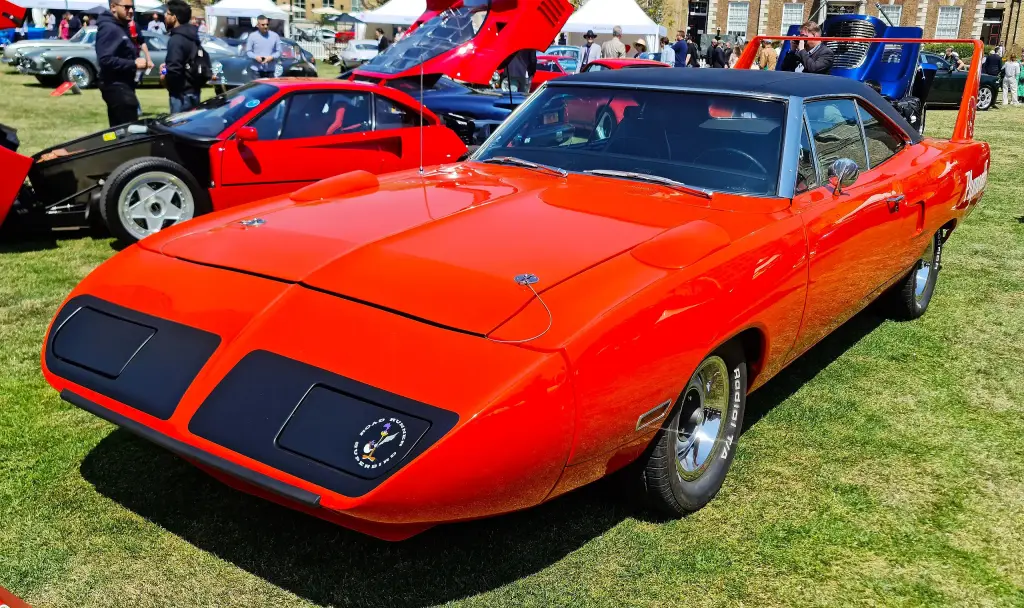
Plymouth Superbird versions
- 426 Hemi: 425 hp, 135 built.
- 440 Six Barrel: 390 hp, about 716 built.
- 440 four-barrel: 375 hp, the rest of the production.
The Superbird grew out of the Plymouth Road Runner. More cars are in our Plymouth collection.
Sources
- Plymouth Superbird, English Wikipedia: history, engines, production, NASCAR
- Plymouth Road Runner, German Wikipedia: background of the Road Runner