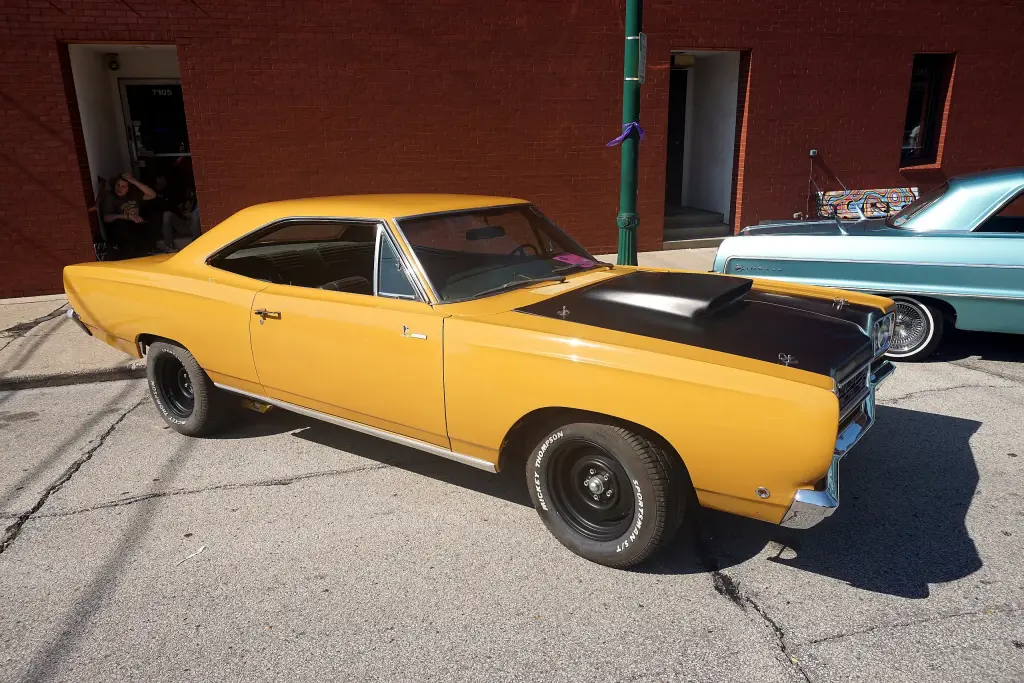
The Plymouth Road Runner is a muscle car introduced by Chrysler in the United States for the 1968 model year and sold under its Plymouth brand. Based on the Belvedere, it combined a powerful engine with a spartan trim level and a price that undercut ever more expensive muscle cars such as the Pontiac GTO and Plymouth’s own GTX.
Plymouth Road Runner at a glance
| Maker | Plymouth (Chrysler Corporation) |
|---|---|
| Introduced | 1968 model year |
| Platform | Chrysler B platform, three generations |
| Standard engine | 383 cu in V8, 335 bhp |
| Optional engine | 426 cu in Hemi, 425 bhp, a $714 option |
| Gearbox | four-speed manual standard, TorqueFlite automatic optional |
| Bodies, 1968 | two-door pillared coupe, later a two-door hardtop |
| 1968 sales | about 45,000 against a forecast of 20,000 |
| 1969 award | Motor Trend Car of the Year |
| End | a Volare trim package from 1976, discontinued in 1980 |
History of the Plymouth Road Runner
The name
Plymouth paid Warner Bros.-Seven Arts $50,000 for the right to use the Road Runner name and likeness from the Wile E. Coyote cartoons, and another $10,000 to develop the “beep, beep” horn. The car itself was a back-to-basics mid-size performance model on the Chrysler B platform, the same base as the Belvedere and Satellite.
1968
The earliest 1968 cars were two-door pillared coupes, with a two-door hardtop added later in the model year. The interior was deliberately spartan, with a basic vinyl bench seat and no carpets in early cars, and few options: power steering, front disc brakes, AM radio, air conditioning and automatic transmission. The floor shifter for the four-speed had only a rubber boot and no console so that a bench seat could be used. The standard engine was the exclusive “Roadrunner” 383 cu in V8 with a four-barrel carburettor, rated at 335 bhp, which came from using the radical camshaft of the 440 Super Commando and a higher 10.5:1 compression. Cars ordered with air conditioning received the 330 bhp version instead, because the hotter cam did not produce enough vacuum for the system. For $714 buyers could have the 426 cu in Hemi with twin four-barrels, rated at 425 bhp. The four-speed manual was standard and the three-speed TorqueFlite automatic optional. Plymouth expected to sell about 20,000 cars and sold roughly 45,000, third among muscle cars behind the Pontiac GTO and the SS-396 Chevelle, which prompted Dodge to launch its own version, the Super Bee, in mid-1968.
1969 and 1970
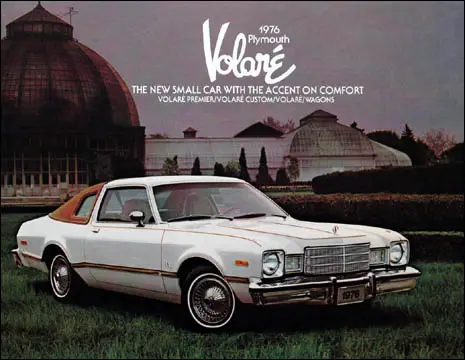
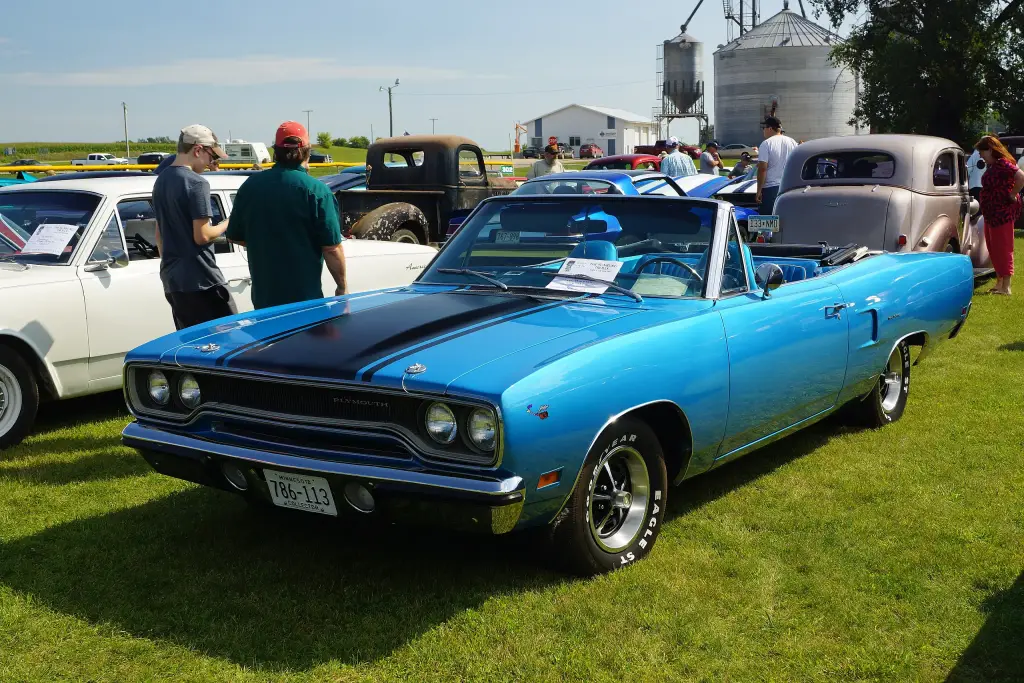
The 1969 model kept the same look with small changes to the grille, taillights and side marker lights, optional bucket seats and new decals, and it added a convertible, of which 2,128 were built, all with the 383 except ten with the Hemi. The Air Grabber option of that year bolted a fibreglass duct under the bonnet, feeding twin vents with red screens and controlled by a lever labelled “Carb Air”. At mid-year came the 440 Six Barrel option, with three two-barrel Holleys, a black lift-off fibreglass bonnet with four pins, a large scoop and a Dana 60 rear axle; about 1,432 were built. The Road Runner was named Motor Trend Car of the Year for 1969, and domestic production across the three body styles reached 81,125 with another 3,295 for Canada and export. The 1970 cars had new front and rear styling, a cloth and vinyl bench seat and larger single-piston Kelsey-Hayes disc brakes. Later the name became a trim package on the compact Volare for 1976, with no special performance, and it was dropped in 1980.
Design and features
- Price over polish: a big engine in a plain car, cheaper than the GTO and the GTX.
- 383 standard: the 335 bhp Roadrunner V8, with the 425 bhp Hemi as a $714 option.
- Spartan cabin: vinyl bench seats, no console and few options, with carpets not even fitted at first.
- Air Grabber: a dash-controlled cold-air intake from 1969.
Plymouth Road Runner versions
- Road Runner 383 (1968–1970): the standard car, pillared coupe or hardtop.
- Road Runner convertible (1969): 2,128 built, ten of them with the Hemi.
- 440 Six Barrel (1969): the mid-year A12 option with a lift-off bonnet and Dana axle.
- Volare Road Runner (1976–1980): the name applied as a trim package without special performance.
The Road Runner was the cheaper alternative to the GTX and shared its body with the Satellite. More cars are in the Plymouth collection.
Video: Test Driving 1969 Plymouth Road Runner 383 V8 4 BBL Four Speed
Video by RamblinAround on YouTube.
Sources
- Plymouth Road Runner, English Wikipedia: origins, engines, 1968-1970 details, sales