
Electric cars are not a new idea. A man rode one through Paris in 1881, one passed 100 km/h in 1899, and by 1900 they made up a large share of the cars on American roads. Then petrol won, and it took more than a century for batteries to catch up. This guide follows the idea from the first motors to the Nissan Leaf, and explains why it lost and why it came back.
The short version
The first usable electric cars appeared in the 1880s and 1890s, and they were popular in cities until about the 1910s. A cheap petrol car, the electric starter and better roads then ended their run. Interest returned after the oil crises of the 1970s and 1980s, but only lithium-ion batteries in the 2000s gave electric cars a range of 200 miles. The Tesla Roadster of 2008 and the Nissan Leaf of 2010 started the modern era.
Before the car: motors and batteries
An electric car needs two things, a motor and a battery that can be recharged, and they arrived separately. In the late 1820s the Hungarian priest Ányos Jedlik built an early electric motor and a small model powered by it. In 1835 Professor Sibrandus Stratingh of Groningen and his assistant Christopher Becker built a small-scale electric car that ran on non-rechargeable cells. Recharging only became possible in 1859, when the French physicist Gaston Planté invented the lead–acid battery, and in 1881 Camille Alphonse Faure improved it so much that it could be made on an industrial scale.
1881–1900: the first electric cars
What is probably the first human-carrying electric vehicle with its own power source was tested on the Rue Valois in Paris on 19 April 1881 by the inventor Gustave Trouvé. He fitted a small Siemens motor and the new rechargeable battery to an English tricycle, and could not patent the result. Thomas Parker built an electric car in Wolverhampton in 1884, though the only record is a photograph from 1895, and the German engineer Andreas Flocken built the Flocken Elektrowagen in 1888, which Wikipedia calls the first real electric car.
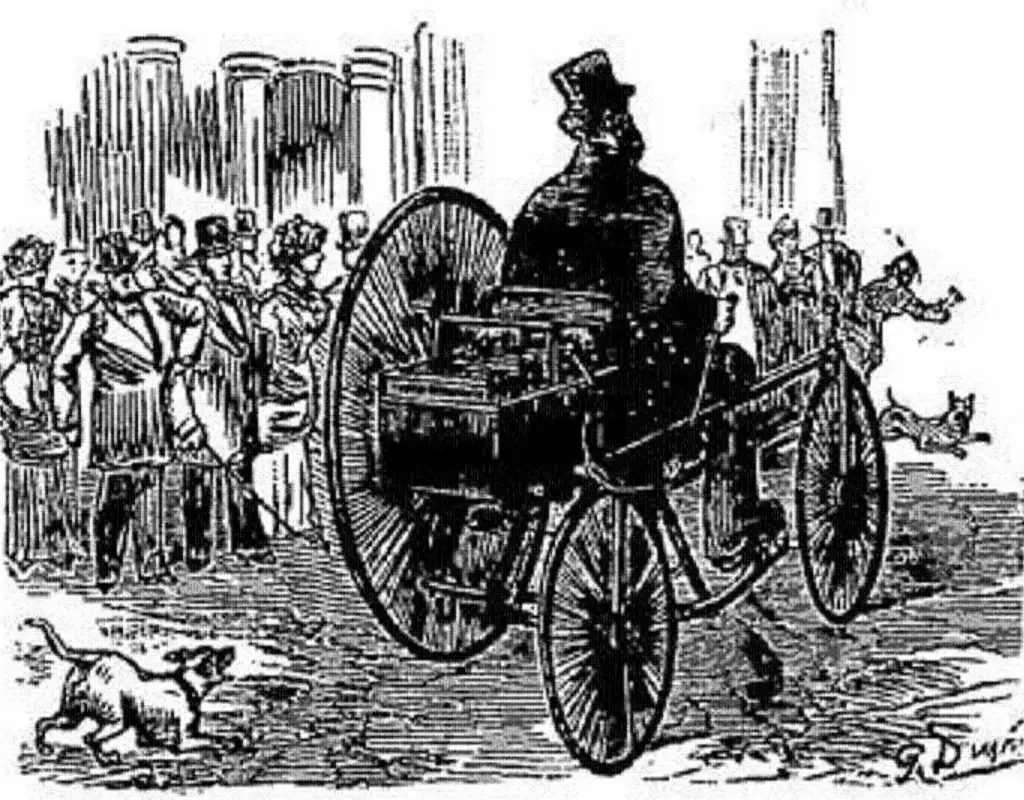

- 1881Gustave Trouvé tests an electric tricycle in Paris on 19 April.
- 1888Andreas Flocken builds the Elektrowagen in Germany.
- 1890–91William Morrison of Des Moines, Iowa, builds the first American electric car, a six-passenger wagon that reaches 23 km/h.
- 1897Walter Bersey’s electric cabs, nicknamed “Hummingbirds” for their noise, start in London, and 12 electric hansom cabs begin running in New York.
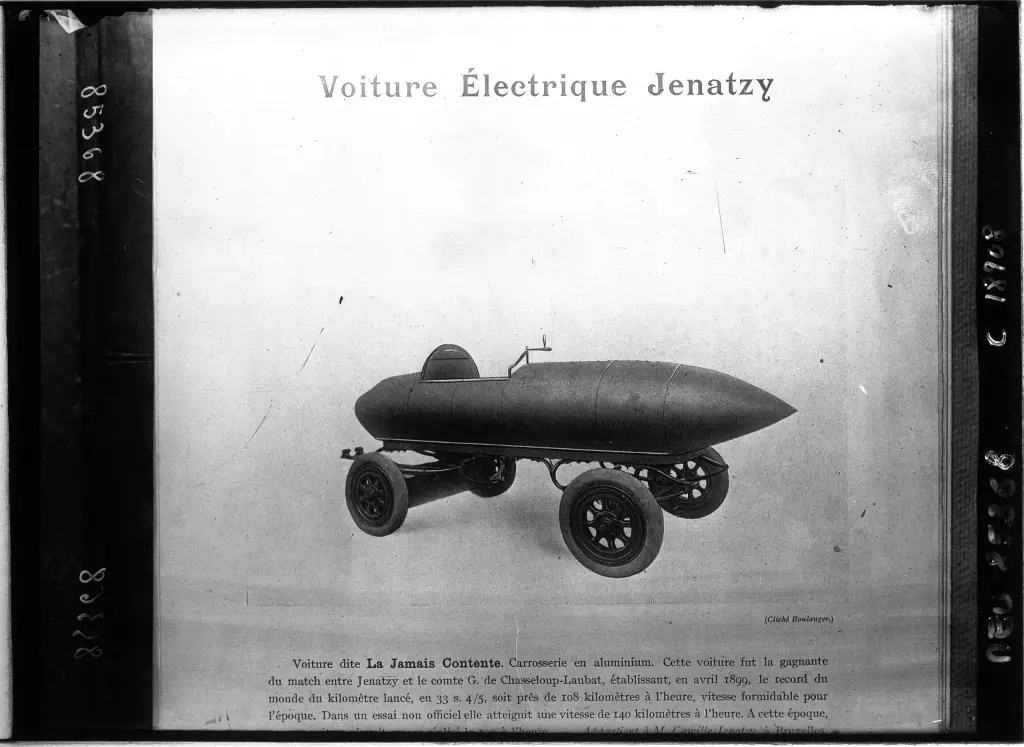
- 1899Camille Jenatzy passes 100 km/h in La Jamais Contente on 29 April.
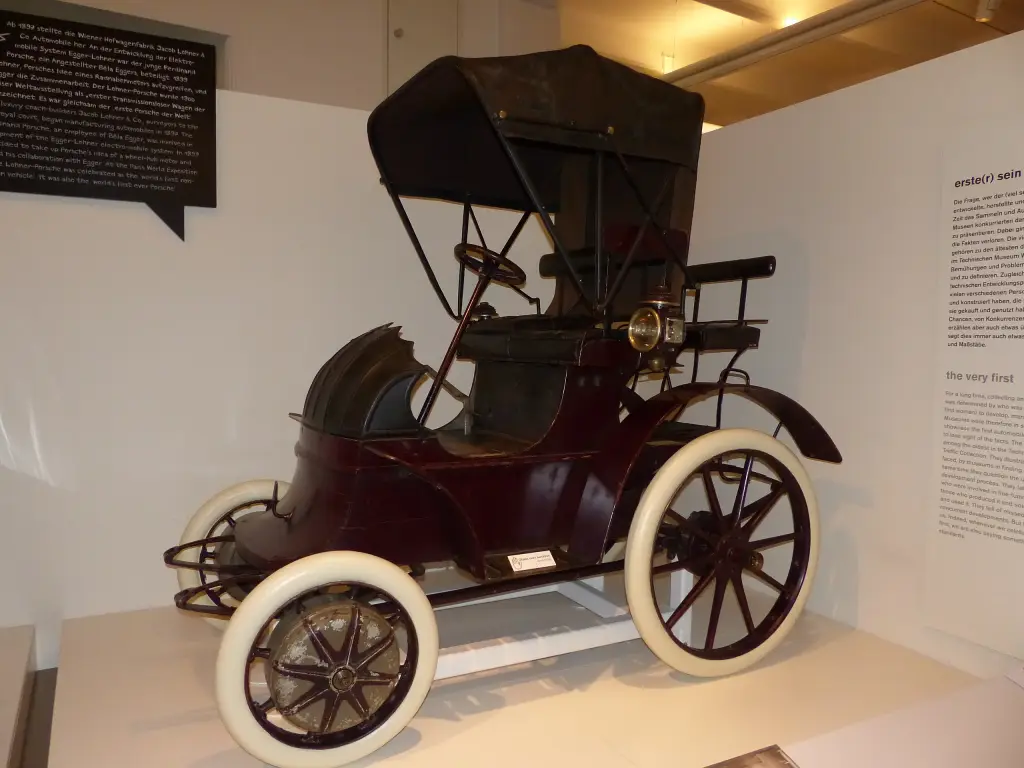
Electric cars held the land speed record until about 1900. On 29 April 1899 Camille Jenatzy broke the 100 km/h barrier in his rocket-shaped La Jamais Contente, reaching 105.88 km/h (65.79 mph). Ferdinand Porsche designed and built an electric car with a motor in each wheel hub, which also set records in the hands of its owner E. W. Hart; you can read about it in our article on the Lohner-Porsche.


1900–1920: the golden age
Electric cars had real advantages. They had none of the vibration, smell and noise of petrol cars, needed no gear changes and no hand crank, and, unlike steam cars, which needed up to 45 minutes to start on a cold morning, were ready at once. They were popular with wealthy customers as city cars, where their short range mattered least, and were often sold as luxury cars for women, which may have given them a stigma among male buyers. In 1900, by one count in Wikipedia’s history of the electric vehicle, 40 per cent of American cars were steam, 38 per cent electric and 22 per cent petrol (the article’s introduction gives 28 per cent for electric, so the exact share is uncertain). Studebaker entered the car business with electric cars in 1902, and President Woodrow Wilson toured Washington in a Milburn Light Electric. Sales peaked in the early 1910s, and more than 300 manufacturers were listed in the United States until 1942.
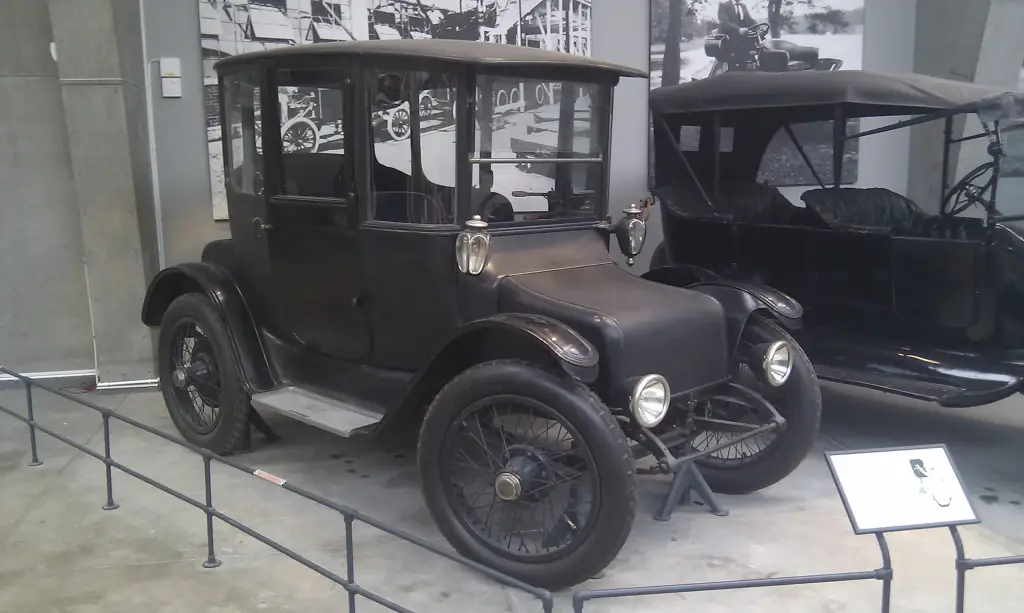

Range and charging were the problems even then. A battery-exchange idea was proposed as early as 1896, and from 1910 to 1924 the Hartford Electric Light Company’s GeVeCo service let owners buy electric trucks without batteries and take their power from exchangeable ones, covering more than 6 million miles.
1920–1960: why petrol won
By the 1920s better roads created a need for greater range than an electric car could offer, and the discovery of large oil reserves made petrol cheap. An electric car was limited to 24–32 km/h and 50–65 km, while petrol cars could go farther and faster. Petrol cars also solved their own faults: Charles Kettering’s electric starter in 1912 removed the dangerous hand crank, the muffler of 1897 cut the noise, and Henry Ford’s mass production brought prices down. By 1912 an electric car cost almost double a petrol car. The industry had effectively disappeared a decade after the 1920s, apart from jobs where short range did not matter: Yale’s electric forklift trucks in 1923, and the British milk floats, which for most of the 20th century made up the majority of the world’s battery electric road vehicles.
A late attempt was the Henney Kilowatt of the late 1950s, based on the French Renault Dauphine. Its 72-volt version had a top speed near 96 km/h and could run for nearly an hour, but it cost about twice as much as the petrol Dauphine and production ended in 1961.
1960s–1990s: false starts
The energy crises of the 1970s and 1980s brought renewed interest. The Enfield 8000 of 1973 reached small-scale production, with 112 built, and on 31 July 1971 an electric vehicle became the first crewed vehicle to drive on the Moon, the Lunar Roving Vehicle of Apollo 15, with a motor in each wheel. But the Sinclair C5 failed, and companies that converted existing cars sold few of them because of cost and short range.
The turning point was California. In the early 1990s the California Air Resources Board pushed for zero-emission vehicles, and General Motors, which had shown the Impact concept at the 1990 Los Angeles Auto Show, built the EV1. Other makers offered the Honda EV Plus, the Toyota RAV4 EV, the Ford Ranger EV and the Nissan Altra, the first production electric car with lithium-ion batteries. But the EV1 could only be leased, on closed-end leases, and most electric cars were withdrawn from the market. Toyota sold the last 328 RAV4 EVs to the public until 22 November 2002.
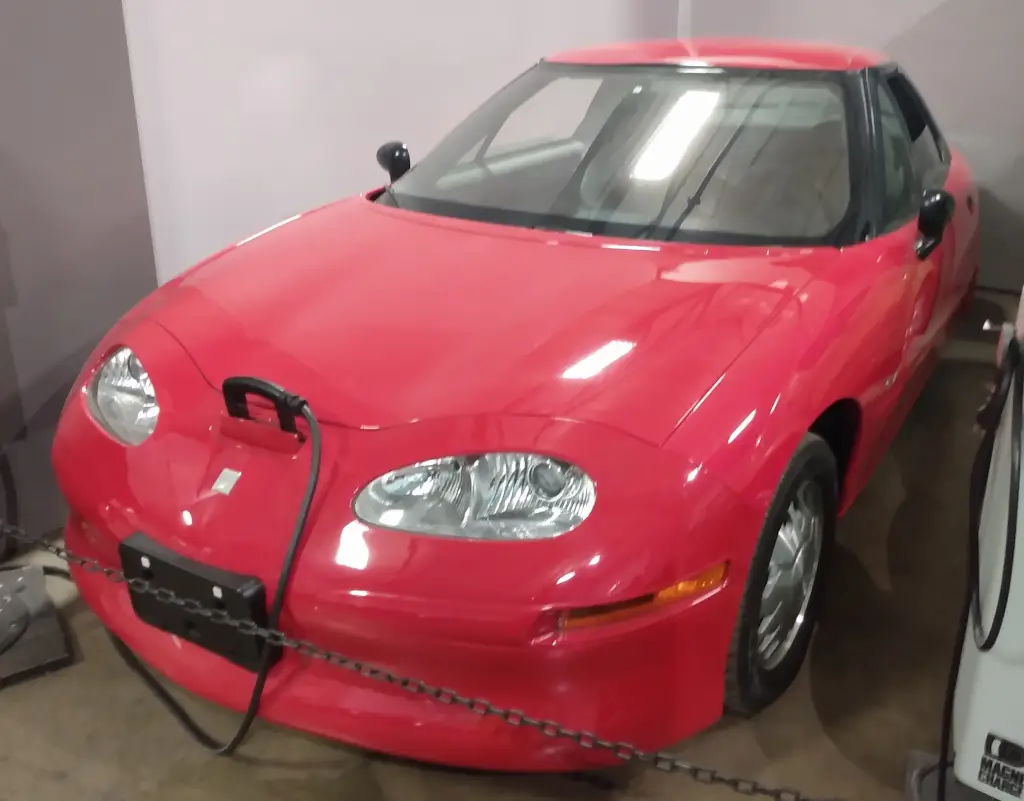

The lessons of this period are in our articles on the Chevrolet EV1 and the Honda EV Plus.
2008–2016: the modern era
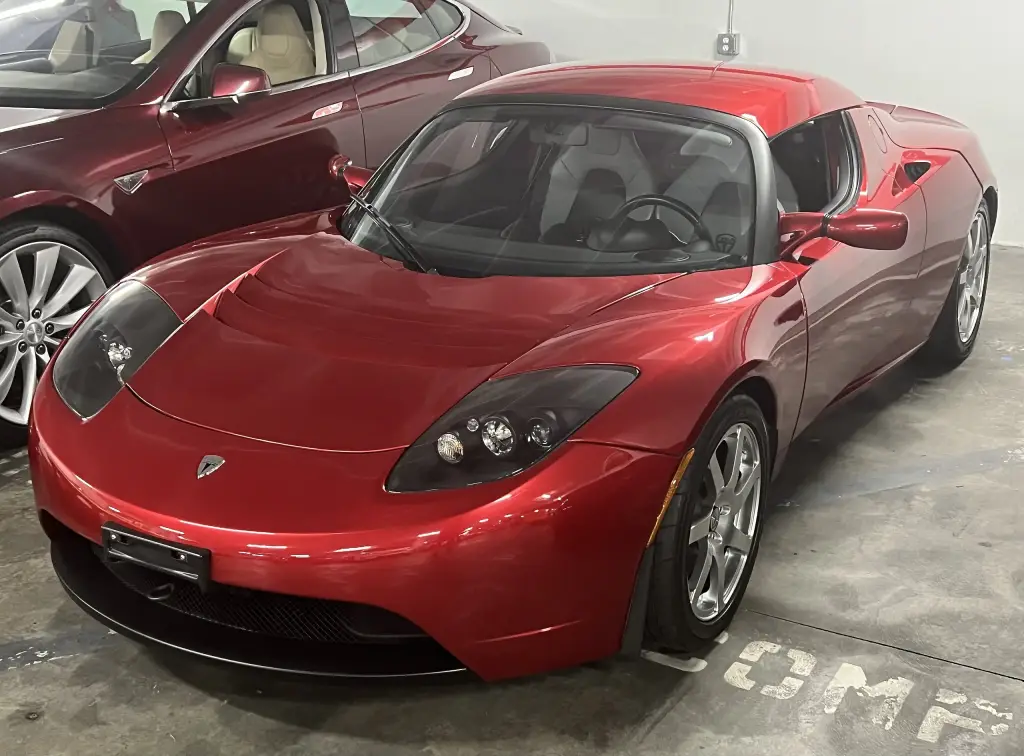
The modern era began with a small California start-up. Tesla began developing the Roadster in 2004 and delivered it from 2008; it was the first production all-electric car to travel more than 320 km (200 miles) per charge. About 2,450 Roadsters were sold in over 30 countries by December 2012, using Lotus Elise gliders under a contract for 2,500. GM’s vice-chairman Bob Lutz said later that the Roadster “was the crowbar that helped break up the log jam”.

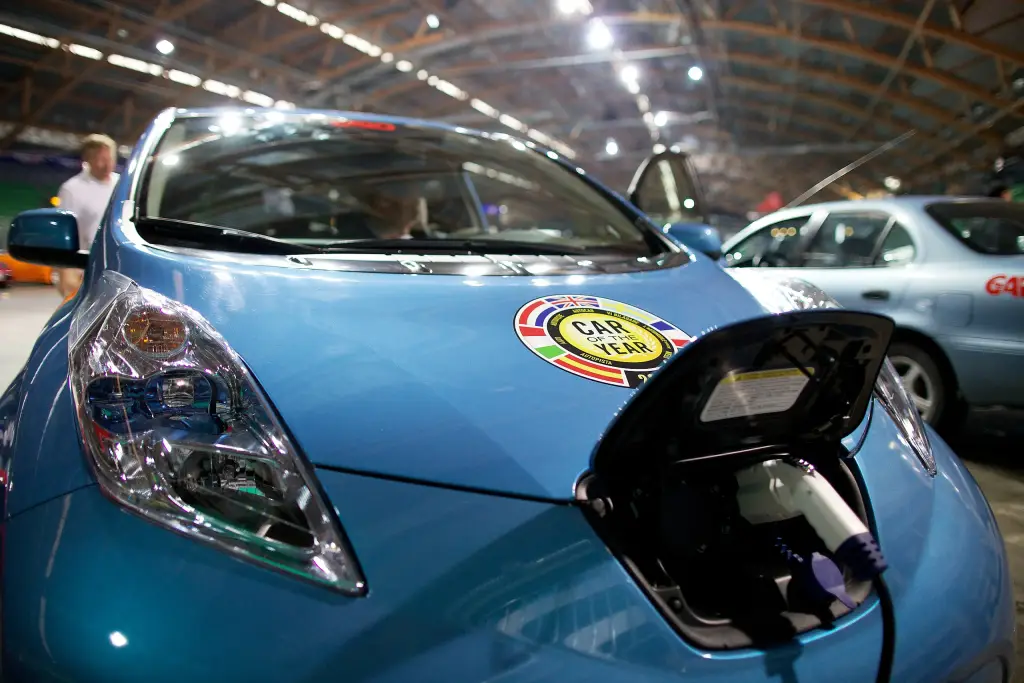
The Mitsubishi i-MiEV went on sale in Japan in July 2009 and in February 2011 became the first electric car to sell more than 10,000 units. The Nissan Leaf, launched in December 2010, was the first modern all-electric five-door family hatchback built for the mass market by a major manufacturer, and by December 2015 it had sold more than 200,000 units, the world’s best-selling highway-capable electric car. The Tesla Model S went on sale in the United States on 22 June 2012. Not everything worked: the battery-swapping company Better Place filed for bankruptcy on 26 May 2013, after spending about US$850 million on infrastructure.

In 2016 two cars aimed at the mass market arrived. The Tesla Model 3 was unveiled on 31 March 2016 at a price from US$35,000 and a range of 345 km, and the Chevrolet Bolt EV, shown as a concept in 2015, went on sale in late 2016 with a range of more than 200 miles. Read more in our articles on the Nissan Leaf, the Tesla Roadster, the Tesla Model S and the Mitsubishi i-MiEV.
Milestones at a glance
| Year | Vehicle | What it showed |
|---|---|---|
| 1881 | Trouvé tricycle | a person could be carried by a battery-powered motor |
| 1899 | La Jamais Contente | 105.88 km/h, the first road vehicle over 100 km/h |
| 1912 | Petrol car with an electric starter | the hand crank is gone, and an electric car costs almost double |
| 1971 | Lunar Roving Vehicle | an electric vehicle driven on the Moon |
| 1990s | GM EV1 and the CARB cars | factory electric cars, but on leases only |
| 2008 | Tesla Roadster | more than 320 km (200 miles) per charge |
| 2010 | Nissan Leaf | the first mass-market all-electric family hatchback |
How to read an electric car’s range
- Ask which test. The same car has different numbers on different cycles. The Jaguar I-Pace launched at 470 km on the European WLTP cycle and 377 km on the American EPA cycle.
- Check the battery size. The same model can come with several, as the Chevrolet Bolt did with 60 and 66 kWh packs, which moved its EPA range from 238 to 259 miles.
- Look at the charge speed, not only the range. Hyundai says the 800-volt Ioniq 5 adds 100 km of WLTP range in five minutes at the right charger, while a 7 kW home wallbox needs about 10 hours to take an I-Pace from empty to 80 per cent.
- Expect the real number to vary. Edmunds measured 439 km from the Audi e-tron GT, above its EPA rating of 383 km, and 304 miles from the Ford Mustang Mach-E.
Electric car history: questions and answers
Who built the first electric car?
There is no single answer. Jedlik built a model in the 1820s, Stratingh and Becker a small car in 1835, Trouvé what is probably the first human-carrying electric vehicle in 1881, and Flocken the first “real” electric car in 1888.
Were electric cars ever popular?
Yes. In 1900 they were a large share of American cars, and sales peaked in the early 1910s.
Why did they disappear?
Cheap petrol, better roads, the electric starter and mass-produced petrol cars made electrics look expensive and short-ranged by the 1920s.
What was the first modern mass-market electric car?
The Nissan Leaf of December 2010 is described as the first modern all-electric five-door family hatchback produced for the mass market by a major manufacturer.
Which car first travelled more than 200 miles per charge?
The Tesla Roadster was the first production all-electric car to travel more than 320 km (200 miles) per charge.
Based on the English Wikipedia article on the history of the electric vehicle; the range examples come from our own articles on the Jaguar I-Pace, Chevrolet Bolt, Hyundai Ioniq 5, Audi e-tron GT and Ford Mustang Mach-E, which draw on their English Wikipedia articles. I did not cross-check the historical figures against other sources, and Wikipedia gives two different shares for electric cars in the United States in 1900.
Sources
- History of the electric vehicle, English Wikipedia: origins, golden age, decline, revival, the Roadster, i-MiEV and Leaf
- Chevrolet Bolt, English Wikipedia: the 2016 car, battery sizes and range
- Jaguar I-Pace, English Wikipedia: WLTP and EPA range, charging times
- Hyundai Ioniq 5, English Wikipedia: 800-volt charging
- Audi e-tron GT, English Wikipedia: EPA range and the Edmunds test
- Ford Mustang Mach-E, English Wikipedia: the Edmunds range test