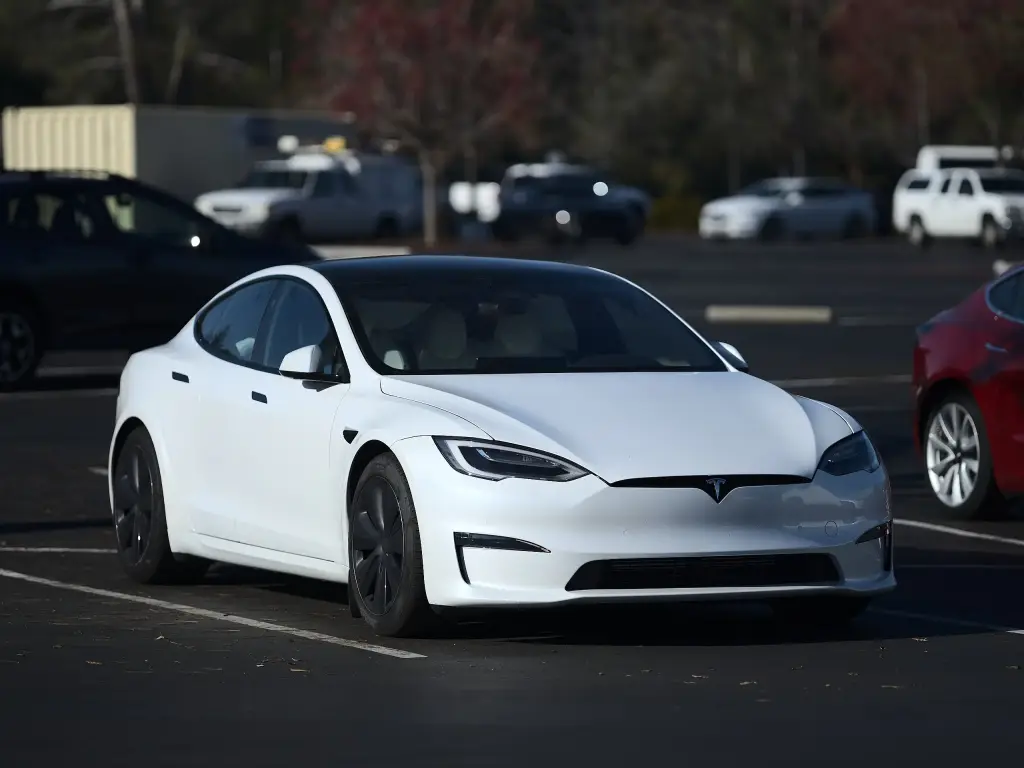
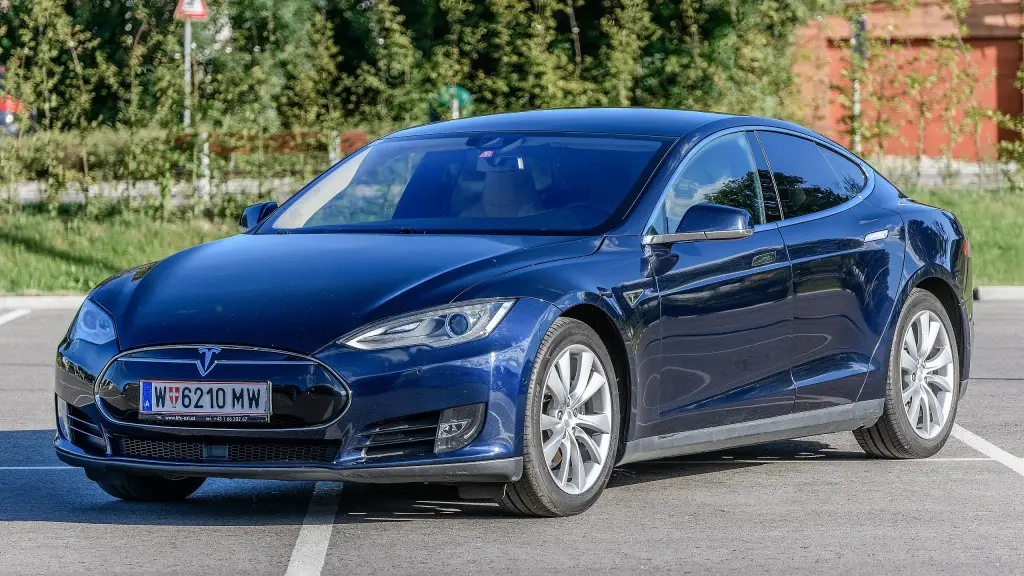
The Tesla Model S is a battery-electric, four-door full-size car that Tesla produced from 2012 to 2026. It was the company’s second vehicle, and it has been described as one of the most influential electric cars in the industry, winning the Motor Trend Car of the Year award in 2013.
Tesla Model S at a glance
| Maker | Tesla Motors, Fremont, California |
|---|---|
| Production | 2012–2026 |
| Class | battery-electric four-door full-size car |
| Project name | WhiteStar, from about 2007 |
| Prototype shown | March 2009, Hawthorne, California |
| Construction | mostly aluminium; 30 per cent of components shared with the Model X |
| European final assembly | Tilburg, Netherlands, 2013–2021 |
| Major updates | 2016 and 2021 |
| Driver assistance | Autopilot introduced in 2015 |
| Top version | three-motor Plaid, from the 2021 update |
| Production ended | May 2026 |
Based on one source: the English Wikipedia article on the Tesla Model S.
History of the Tesla Model S
WhiteStar
In January 2007 Tesla Motors opened a facility in Rochester Hills, Michigan, employing sixty people to work on new projects, including a four-door sedan. Development began under the codename WhiteStar, and Tesla planned two powertrain options: a battery-electric version with an all-electric range of 200 miles (320 km), and a hybrid with a range extender that could travel 40 to 50 miles (64 to 80 km) on electric power before a small petrol engine recharged the batteries, giving a total range of 400 miles (640 km). At the GoingGreen conference in September 2008 Elon Musk announced that the company would build battery-electric vehicles only.
In 2007 Musk appointed Henrik Fisker, known for his work with Aston Martin, as lead designer of WhiteStar. Fisker signed a contract worth 875,000 dollars to design a “sleek, four-door sedan” priced from 50,000 to 70,000 dollars and ready between late 2009 and early 2010. Tesla employees who saw his designs reacted negatively, and when Musk rejected them Fisker attributed the decision to the project’s constraints. Fisker soon started his own company and showed the Fisker Karma in 2008; Musk sued him for stealing Tesla’s ideas, but Fisker won the case in November 2008, and an arbitrator ordered Tesla to pay his legal fees.
Design and engineering
A small team of Tesla engineers test-drove a Mercedes-Benz CLS and E-Class at a dealership, preferred the CLS’s styling and used it as the baseline for the Model S. They bought a CLS, took it apart, modified the battery pack of a Tesla Roadster, cut out the CLS floor and integrated it with the pack; after three months they had a battery-electric CLS with 120 miles (190 km) of range that weighed more than the Roadster.
In August 2008 Musk hired Franz von Holzhausen, formerly a designer at Mazda, as lead designer. Von Holzhausen was unimpressed by Fisker’s sketches and clay models, and by 2008 he had designed the production car’s exterior; to save money Tesla put its design centre inside a factory used by SpaceX, another company owned by Musk. The engineers extended the wheelbase of their development CLS by four inches (10 cm). A prototype of the Model S was shown in March 2009 in Hawthorne, California, and in 2010 Tesla bought a factory in Fremont, California, previously owned by General Motors and Toyota. Series manufacture began at the Tesla Fremont Factory in June 2012.
Production and updates
The Model S is built mostly of aluminium and shares 30 per cent of its components with the Model X, the crossover that arrived in 2015. Tesla carried out final assembly for European markets at its facilities in Tilburg, Netherlands, between 2013 and 2021. The car went through several updates, the most prominent in 2016 and 2021; they usually brought changes to the motor’s power or torque, revised exterior elements and refreshed interiors. Tesla introduced Autopilot, a partial vehicle automation system, in 2015, and the 2021 update added the high-performance three-motor Plaid. Production of the Model S ended in May 2026.
Reception
The Model S won Motor Trend’s Car of the Year award in 2013 and was named the world’s best-selling plug-in electric vehicle in 2015. Time put it among the Best Inventions of the Year in 2012 and among the 10 Best Gadgets of the 2010s in 2019, Car and Driver included it in its best cars of the year in 2015 and 2016, and in 2014 The Daily Telegraph called it a “car that changed the world”. Road & Track later argued that with the Plaid and features such as the yoke steering wheel Tesla had turned the Model S into “perhaps one of the worst” cars in the world.
Design and features
- Aluminium body: a full-size saloon built mostly of aluminium, with 30 per cent of its components shared with the Model X.
- Autopilot: a partial vehicle automation advanced driver-assistance system, introduced in 2015.
- Regular updates: motor power, exterior and interior revised in 2016 and 2021.
- Plaid: the three-motor high-performance version that came with the 2021 update.
- Fremont production: series manufacture at the factory Tesla bought from GM and Toyota in 2010.
Tesla Model S versions
- Model S (2012): the original battery-electric saloon.
- European final assembly (2013–2021): cars completed at Tilburg in the Netherlands.
- 2016 update: revised motors, exterior and interior.
- Plaid (2021): the high-performance three-motor version.
- 2021 update: the last major revision before production ended in 2026.
The Model S followed the Tesla Roadster, Tesla’s first car, and it shares part of its structure with the Model X. More Tesla models are in the Tesla collection.
Sources
- Tesla Model S, English Wikipedia: development, design, production, updates, reception