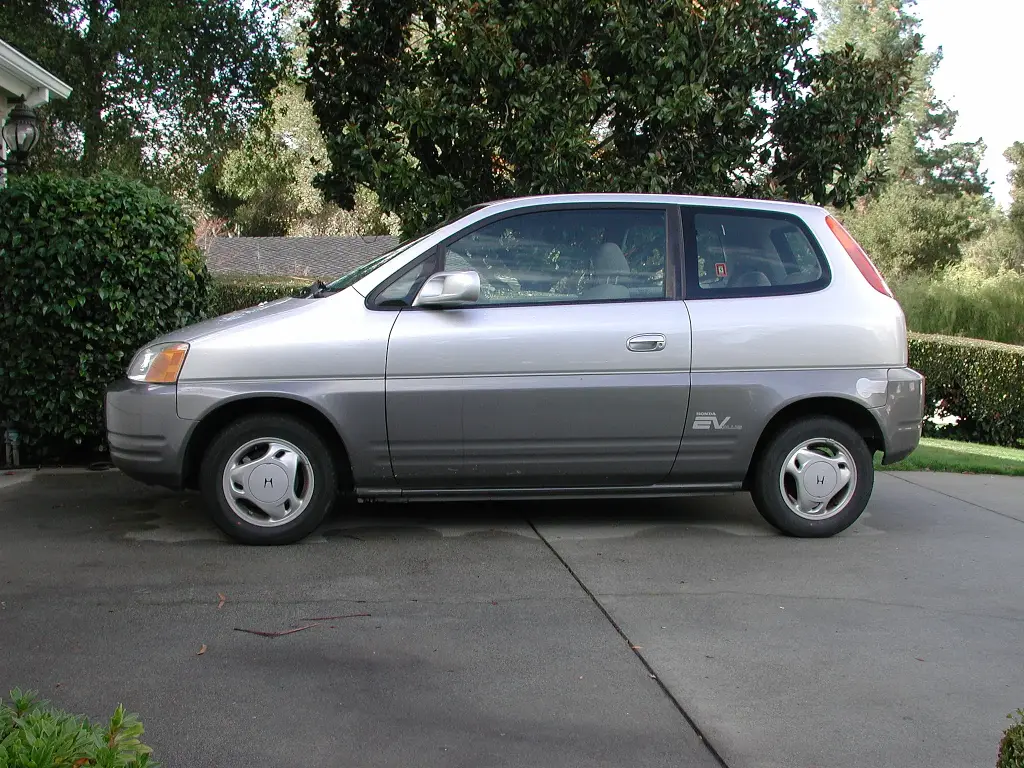
The Honda EV Plus was an experimental electric vehicle and the first battery electric vehicle from a major automaker that did not use lead-acid batteries. Roughly 340 were produced and released, and production ended in 1999 after Honda announced its first hybrid, the Insight.
Honda EV Plus at a glance
| Type | four-seat battery electric car |
|---|---|
| Production | 1997–1999, about 340 built |
| Built at | Takanezawa, Japan |
| Motor | DC brushless, 49 kW (66 hp) at 8,750 rpm, 203 lb·ft (275 N·m) |
| Battery | nickel–metal hydride, 28.7 kWh, 486 kg |
| Drive | front-wheel drive, single-speed transmission with reverse |
| Top speed | 80+ mph (130 km/h) |
| 0–30 mph | 4.9 s |
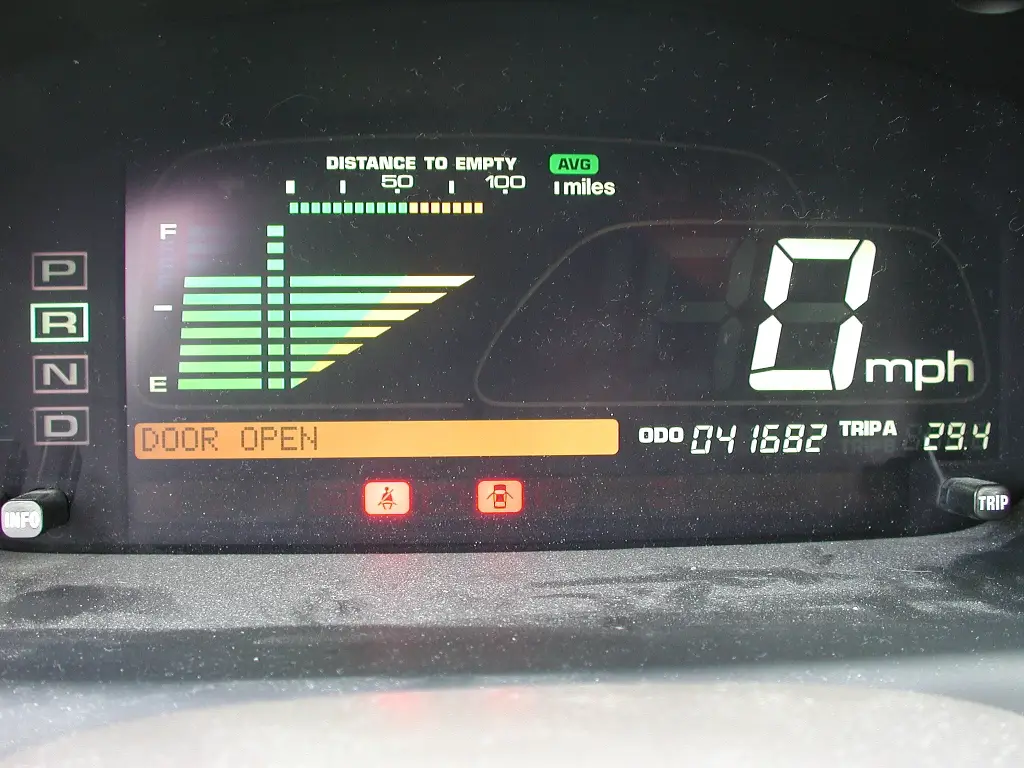
| Range | 60 to 80 mi (97 to 129 km) according to Honda at launch |
| Charging | 8 hours on 240 V, 35 hours on 120 V emergency charger |
| Colours | dark green, bronze, silver |
History of the Honda EV Plus
Honda began developing an electric vehicle in April 1988, inspired in part by the General Motors Sunraycer, which won the 1987 World Solar Challenge. The first team had four people, and Honda was the last Japanese automaker to start electric work. California’s Zero Emission Vehicle mandate of late 1990, requiring 2% of sales to be ZEVs from 1998, pushed Honda to put about 100 employees on full-scale development early in 1991.
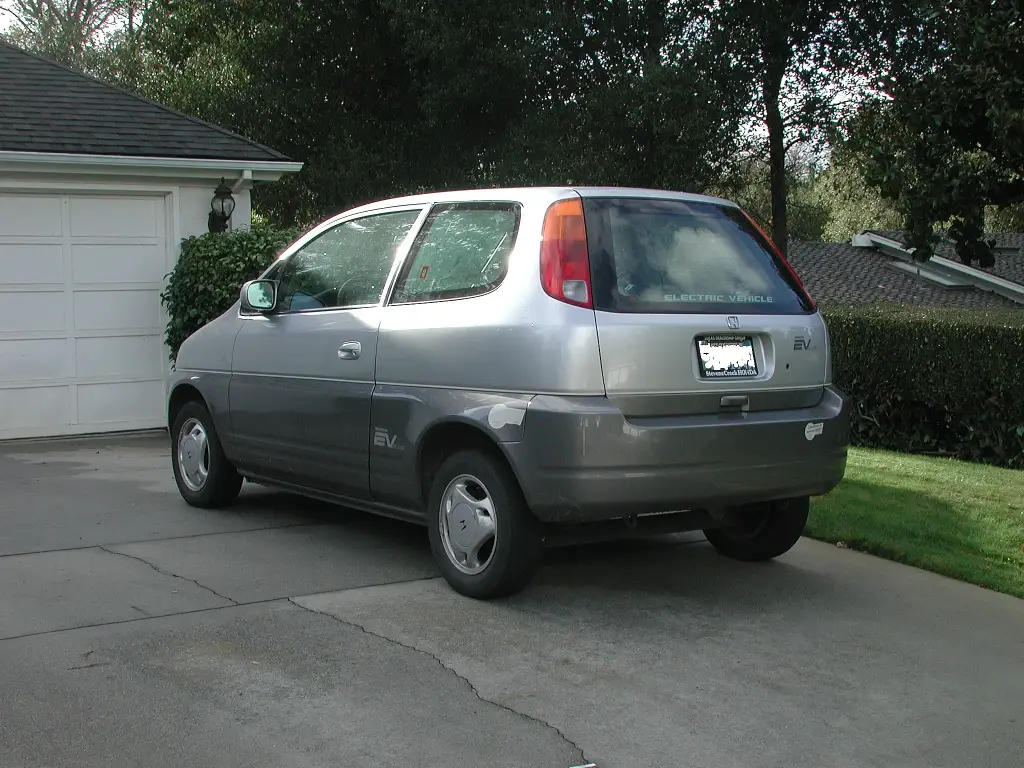
A first prototype built on a Civic hatchback with lead-acid batteries ran in July 1991, but project leader Junichi Araki rejected it as a shameful compromise, and the team refocused on making a good electric vehicle with no compromises. Honda began developing its own DC brushless motor, then built the EV-X concept shown in Tokyo in 1993 and ten Civic-based CUV-4 test cars, driven 80,000 miles with California utilities Pacific Gas & Electric and Southern California Edison. Their range of only 25 to 31 miles convinced Honda that lead-acid was unsuitable.
A prototype EV Plus was assembled in December 1995, production was approved in January 1996, and the first production car left the line at Takanezawa in April 1997. It was built to meet California’s zero-emission rules, like the General Motors EV1, and tested the pancake-style motor, control units and nickel–metal hydride battery later used in Honda hybrids. Returned chassis were rebuilt into the first Honda FCX fuel cell vehicles.
Design and features
- Charging: on-board conductive charging with the Avcon connector; 80% restored in two hours on a 240 V charger.
- Efficiency: regenerative braking, passive battery balancing, AC and heat pump climate control.
- Comfort: power windows and locks, CD player, remote air conditioning from the key fob and an electrically heated windscreen.
- Cold weather: an oil-fired 7 kW cabin heater that, to meet California ZEV rules, only worked below 40 °F (4 °C).
Honda EV Plus versions
- EV Plus (1997–1999): the production car, about 340 built.
- CUV-4 (1994–1996): ten converted Civics used for lead-acid testing.
- Honda FCX: fuel cell cars rebuilt from returned EV Plus chassis.
More Honda models are in our Honda collection, for example the FR-V.
Honda EV Plus questions and answers
How many EV Plus cars were built?
Roughly 340.
What was new about its battery?
It was the first battery electric car from a major automaker without lead-acid batteries; it used nickel–metal hydride.
What was its range?
Honda cautioned that real driving range was 60 to 80 miles (97 to 129 km).
Why did production stop?
Honda announced its first hybrid, the Insight, and ended the EV Plus in 1999.
Sources
- Honda EV Plus, English Wikipedia: development, specifications, production
- Honda FCX, German Wikipedia: the FCX built on the EV Plus