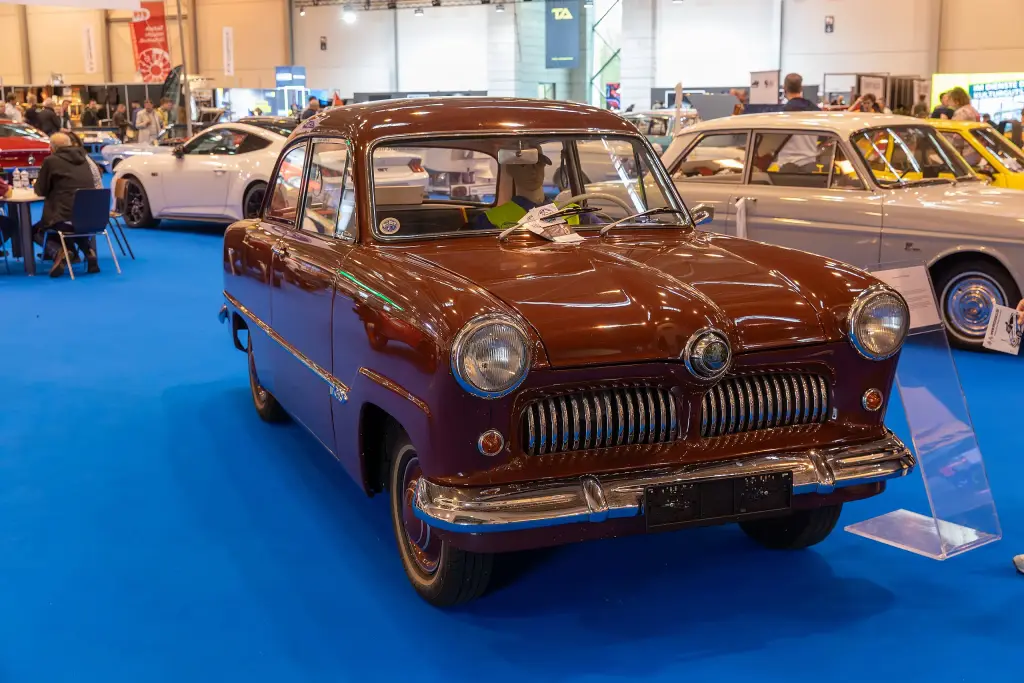
The Ford Taunus is a family car manufactured and marketed by Ford Germany throughout Europe, and occasionally sold in North America. Introduced in 1939 and sold over numerous generations through the 1994 model year, it was named after the Taunus mountain range in Germany.
Ford Taunus at a glance
| Maker | Ford Germany |
|---|---|
| Introduced | 1939 |
| Last model year | 1994 |
| Name from | the Taunus mountain range |
| G93A (1939–1942) | 7,128 pre-war cars built |
| G73A (1948–1952) | 76,590 post-war cars built |
| M-series (1952–1968) | 12M, 15M, 17M, 20M and 26M |
| The “M” | said to stand for Meisterstück, masterpiece |
| From 1970 | built on the same basis as the Cortina Mk III |
| Later years | Cortina and Taunus sold as rebadged variants |
This page is based on English Wikipedia only.
History of the Ford Taunus
The first Taunuses
The Taunus G93A was a development of the Ford Eifel, using the same 1,172 cc four-cylinder engine in a longer chassis with a streamlined body, and it was the first German Ford with hydraulic brakes. Introduced in 1939, production stopped in 1942 because of the war and began again in November 1948 after the British occupation ended. In total 7,128 pre-war Taunuses were built, including estates and light vans, followed by 76,590 post-war G73A cars.
Every German Ford was a Taunus
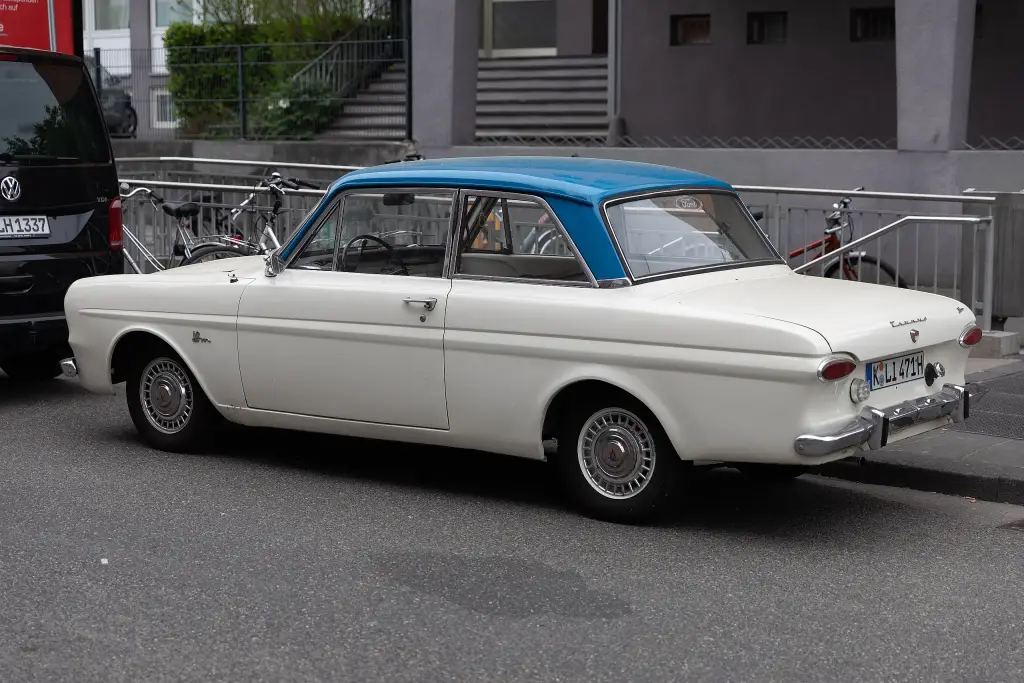
From 1952 to 1968 all German Fords were called the Taunus, using the model names 12M, 15M, 17M, 20M and 26M; in some Scandinavian markets a 10M badge was used briefly on a better-equipped export version of the early car. The M is said to stand for Meisterstück, or masterpiece, though that word was already registered by another German maker. Taunus was also sometimes used as the brand name in export markets, particularly where British and North American Fords were also on sale.
Taunus and Cortina become one car
Models from 1970 on were built using the same basic construction as the Cortina Mk III in Britain, and later the two cars were rebadged variants of each other, differing mainly in which side the steering wheel was on. The Taunus name lasted until the 1994 model year, when the Sierra and then the Mondeo had taken over the mid-size role in Europe.
Design and features
- German Ford: the name for Ford’s European family car from 1939.
- M-series: the 12M, 15M, 17M, 20M and 26M of 1952 to 1968.
- First hydraulic brakes: the G93A was the first German Ford with them.
- Twin of the Cortina: the two cars became rebadged versions of each other.
Ford Taunus versions
- Taunus G93A (1939–1942): the pre-war car, 7,128 built.
- Taunus G73A (1948–1952): the post-war version, 76,590 built.
- 12M, 15M and 17M (1952–1968): the M-series models.
- 20M and 26M: the larger six-cylinder cars of the same series.
- Cortina-based Taunus (from 1970): the shared European design.
The Taunus became the twin of the British Cortina and was replaced in Europe by the Sierra. More Ford vehicles are in the Ford collection.
Sources
- Ford Taunus, English Wikipedia: introduction, M-series, Cortina link, name