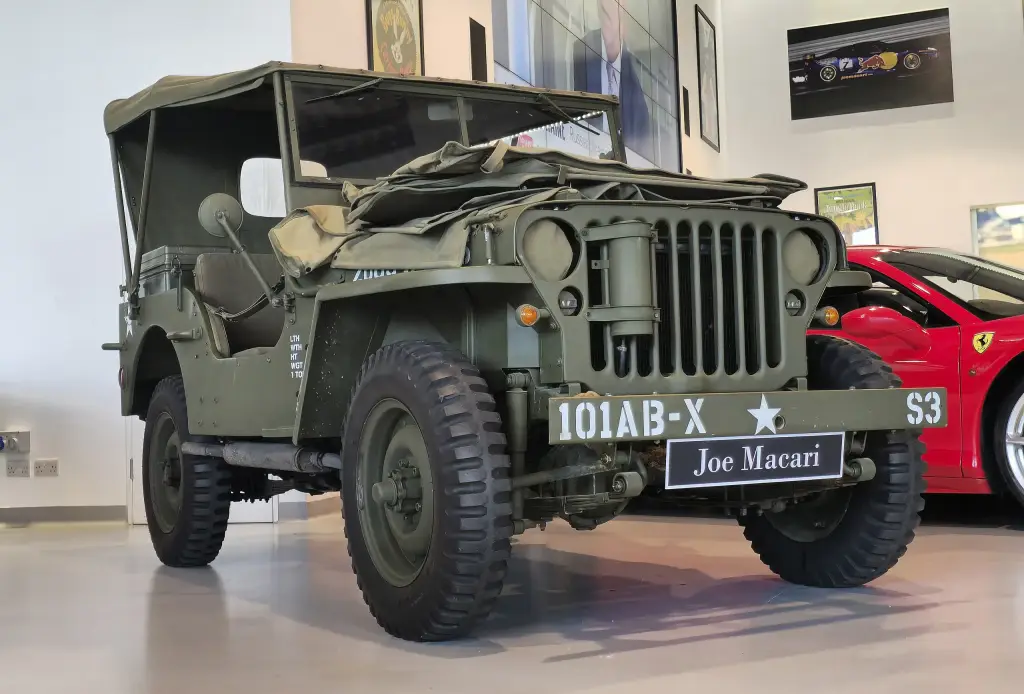
The Ford GPW was Ford’s version of the quarter-ton, four-wheel-drive Army truck that became known as the jeep. It was built to the same standardized design as the Willys MB from 1941 to 1945, and together the two makes accounted for over 600,000 vehicles.
Ford GPW at a glance
| Maker | Ford Motor Company, for the U.S. Army |
|---|---|
| Production | 1941–1945 |
| Official name | U.S. Army truck, ¼-ton, 4×4, command reconnaissance |
| Supply number | G-503 |
| Built with | the Willys MB, to one standardized design |
| Total jeeps | over 600,000 |
| Share of U.S. wartime trucks | about a quarter of all support motor vehicles |
| Supplied to allies | about 50,000 quarter-ton jeeps to the Soviet Union |
| Later versions | M38, M38A1, then the M151 from 1960 |
| Civilian legacy | Willys CJ-2A from 1945 |
This page is based on English Wikipedia only; the source page is on the Willys MB, which covers the Ford GPW as the same vehicle.
History of the Ford GPW
One design, two makers
The Willys MB and the Ford GPW were both formally the U.S. Army truck, quarter-ton, four-wheel-drive, command reconnaissance, and are better known as the Willys Jeep or simply the jeep. Over 600,000 were built to a single standardized design for the United States and its allies between 1941 and 1945, which also made the jeep the world’s first mass-produced four-wheel-drive car, built in six-figure numbers. Built by two companies to the same drawings, the Ford cars were interchangeable with the Willys ones, which was the whole point of the standardized programme.
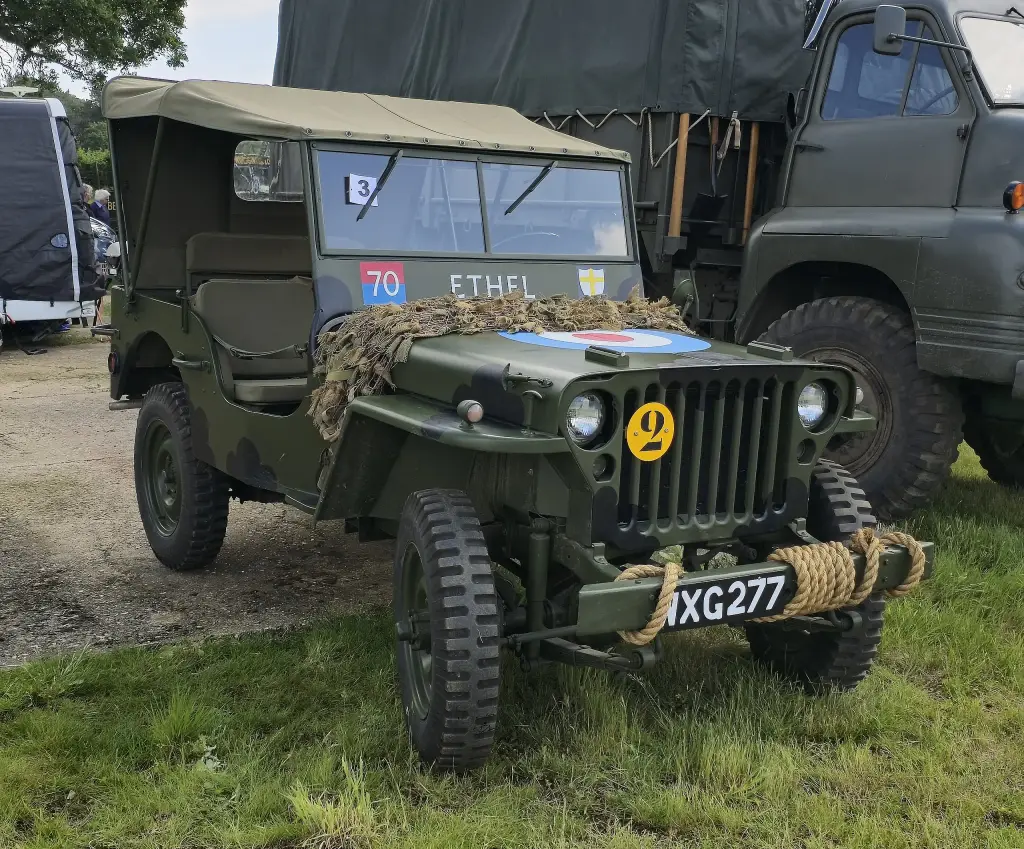
The workhorse
The quarter-ton jeep became the primary light multi-role vehicle of the U.S. military and its allies. With about 640,000 built, jeeps made up a quarter of the military support motor vehicles the United States produced during the war, and almost two-thirds of its light four-wheel-drive vehicles when counted with the Dodge WC series. The jeep replaced horses, other draft animals and motorcycles in every role, from messaging and cavalry units to supply trains, and soldiers adapted it in the field to almost any task. Historian Charles K. Hyde wrote that it became the iconic vehicle of the war, and Eisenhower recorded that most senior officers counted it among the five pieces of equipment most vital to the Allied success in Africa and Europe. General George Marshall called it “America’s greatest contribution to modern warfare”.
After the war
Jeeps were provided in large numbers to the Soviet Union, about 50,000 quarter-ton cars, against a German production of just over 50,000 Kübelwagens. The jeep served on through the Korean War, was updated as the M38 and M38A1 in 1949 and 1952, and was completely redesigned by Ford as the M151 of 1960. In 1945 Willys turned the MB into the civilian CJ-2A, the world’s first mass-produced civilian four-wheel-drive car, and the Jeep name became a brand of its own. In 1991 the MB was designated an International Historic Mechanical Engineering Landmark.
Design and features
- Standardized design: Ford and Willys cars were built to the same drawings.
- Quarter-ton class: the light multi-role vehicle of the Allied armies.
- Mass production: over 600,000 jeeps, the first mass-produced four-wheel-drive car.
- Long afterlife: the basis of the civilian CJ and the later Jeep brand.
Ford GPW versions
- Ford GPW (1941–1945): Ford-built version of the standardized jeep.
- Willys MB: the Willys version of the same design.
- M38 and M38A1: the post-war updates of 1949 and 1952.
- M151 (1960): Ford’s complete redesign for the next generation.
- Willys CJ-2A (1945): the first civilian version.
The Ford GPA was the amphibious version of this jeep, and the wartime programme led on to Ford’s post-war F-Series trucks. More Ford vehicles are in the Ford collection.
Sources
- Willys MB, English Wikipedia: GPW production, standardization, service, legacy