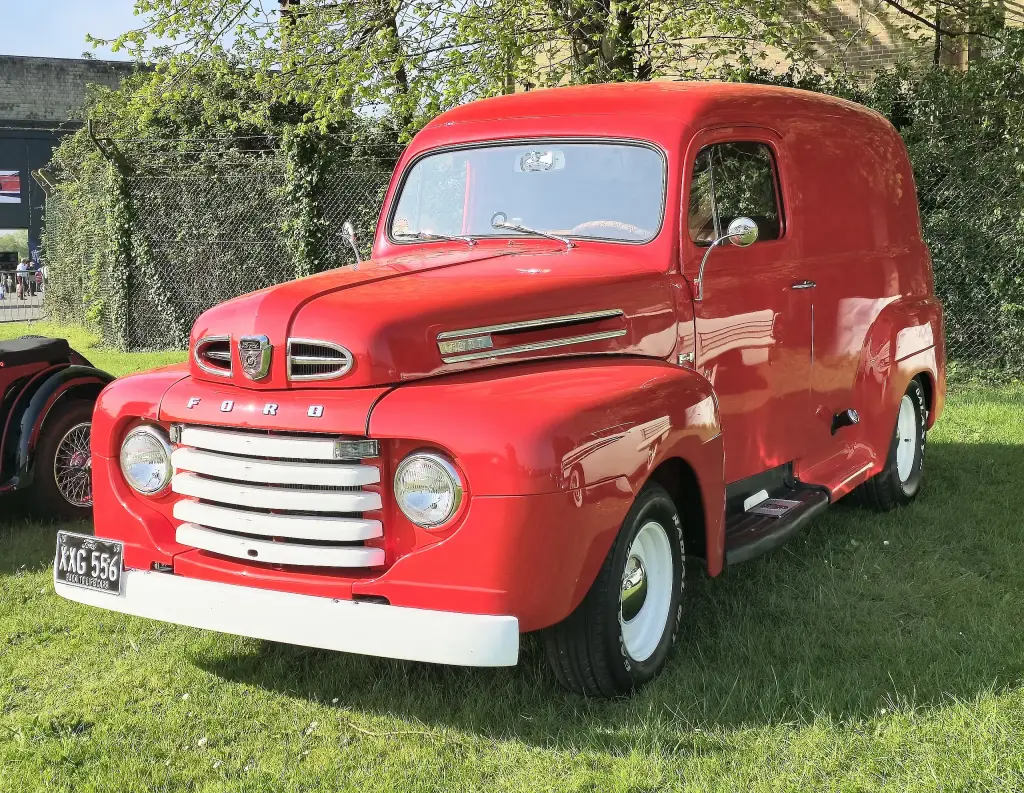
The Ford F-Series is a line of full-size pickup trucks built since the 1948 model year. It has been the best-selling pickup in the United States since 1977 and the best-selling vehicle of any kind there since 1981, and more than 43 million have been sold worldwide.
Ford F-Series at a glance
| Maker | Ford Motor Company |
|---|---|
| Production | since model year 1948 |
| First generation | 1948–1952, the Bonus-Built |
| First ratings | eight weight classes |
| 1953 rename | F-1 became F-100, F-2 and F-3 merged into F-250, F-4 became F-350 |
| F-150 | introduced for 1975 |
| Super Duty | F-250 to F-450 and chassis cabs, from 1999 |
| First factory four-wheel drive | 1959 |
| Twin I-Beam front suspension | from 1965 |
| Best seller | pickup since 1977, all vehicles since 1981 |
| Total sold | over 43 million worldwide |
This page is based on English Wikipedia only.
History of the Ford F-Series
The Bonus-Built of 1948
The first-generation F-Series, known as the Ford Bonus-Built, was introduced in 1948 to replace the car-based pickup line of 1942. It was sold in eight weight ratings with pickup, panel truck, parcel delivery, cab-over-engine, conventional truck and school-bus chassis body styles. For 1953 the second generation brought greater dimensions, better engines and an updated chassis, and the naming changed to the three-number system still used today: the half-ton F-1 became the F-100, the F-2 and F-3 were combined into the three-quarter-ton F-250, and the F-4 became the one-ton F-350. Conventional trucks took the numbers F-500 to F-900, while the cab-over models became the C-Series.
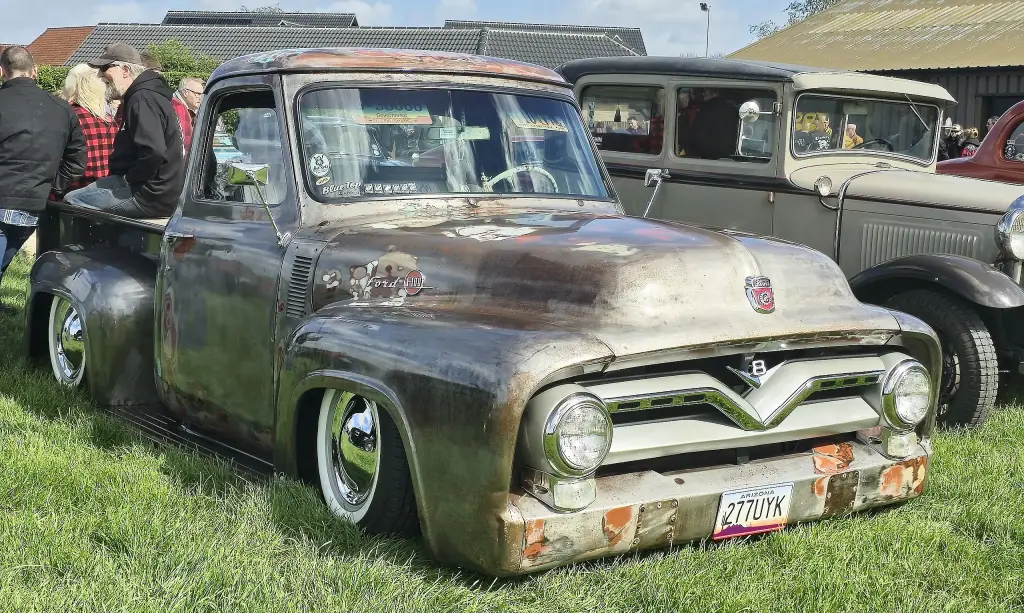
From separate wings to Twin I-Beam
The third generation of 1957 modernised the truck with front wings integrated into the body and the smooth Styleside bed; the cab-over F-Series was dropped in favour of the tilt-cab C-Series, and in 1959 Ford began building factory four-wheel-drive pickups. The 1961 to 1966 generation was longer and lower, and from 1961 to 1963 Ford offered a unibody design with cab and bed integrated, which proved unpopular and was dropped. The 1965 redesign brought a completely new platform with Twin I-Beam front suspension, used on the F-150 until 1996 and still used today on two-wheel-drive F-250 and F-350 trucks. A 300 cubic inch six was added in 1965, and the Ranger name first appeared as a high-level styling package for F-Series pickups.
The modern range
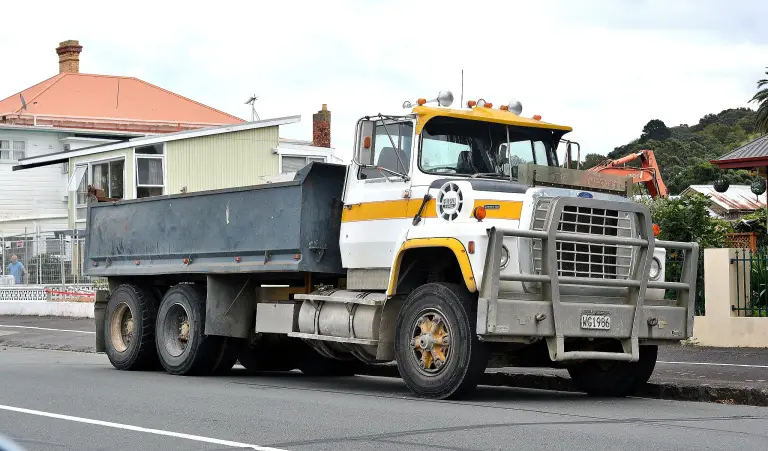
The F-150 arrived in 1975 and became the entry-level model from 1984, taking over from the F-100, which had held that place since 1953. The Super Duty series came for 1999 with the F-250 to F-450, chassis cabs and the F-450 to F-750 commercial trucks. The F-Series has also provided the platform for Ford’s large SUVs, among them the Bronco, the Expedition and the Excursion, and it has been sold through Mercury as the M-Series in Canada and by Lincoln as the Blackwood and Mark LT. The F-150 is now in its fourteenth generation, introduced for 2021, and the line is built at four plants in the United States.
Design and features
- Longest-running nameplate: in production since 1948.
- America’s best seller: the top-selling pickup since 1977.
- Twin I-Beam suspension: introduced in 1965 and still used on some models.
- Many bodies: pickup, panel, chassis-cab and even school-bus chassis in the early years.
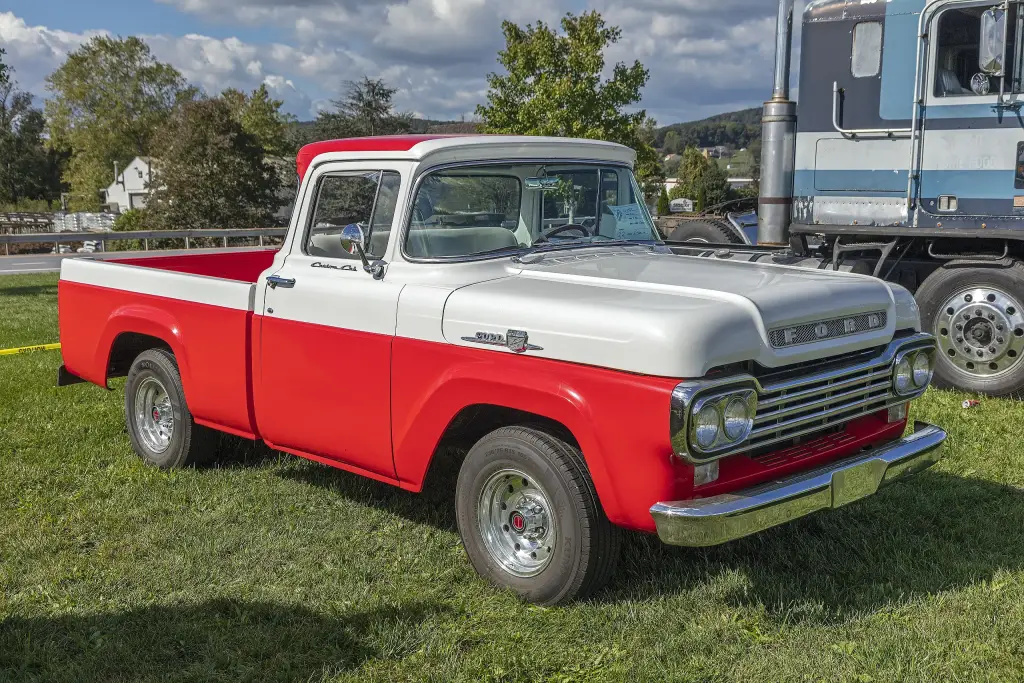
Ford F-Series versions
- F-1 (1948–1952): the original half-ton.
- F-100 (1953–1983): the entry-level half-ton for three decades.
- F-250 and F-350: the three-quarter-ton and one-ton models.
- F-150 (from 1975): the most popular version of the line.
- Super Duty (from 1999): the heavier F-250 to F-450 range.
- Lightning and Raptor: the high-performance road and off-road versions.
The F-Series was the basis of the Bronco and the Excursion, and its medium-duty versions led to the L series. More Ford vehicles are in the Ford collection.
Sources
- Ford F-Series, English Wikipedia: generations, model names, sales records