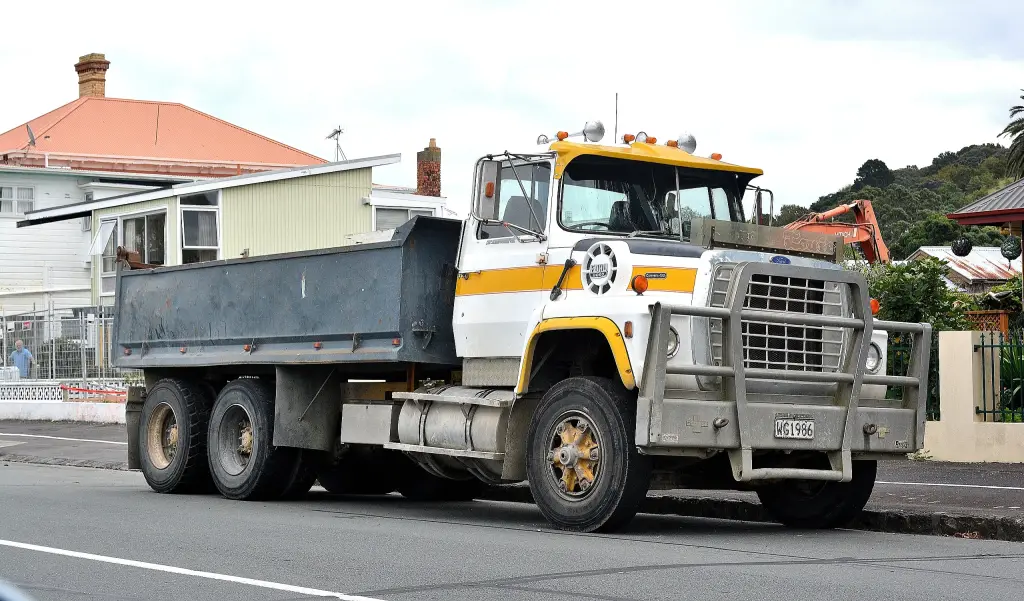
The Ford L series was a range of commercial trucks assembled and marketed by Ford between 1970 and 1998. The first dedicated Class 8 conventional truck the company developed, it was known as the “Louisville Line” after the Kentucky plant that built it, and it was sold as everything from a rigid truck to a long-haul tractor.
Ford L series at a glance
| Maker | Ford, Kentucky Truck Assembly, Louisville |
|---|---|
| Production | 1970–1998 |
| Class | 6 to 8 |
| Nickname | Louisville Line |
| Replaced | Ford N series and F-900/1000 Super Duty |
| First generation | 1970–1995 |
| Second generation | 1996, when Louisville became the official name |
| Flagship | Ford Aeromax, the aerodynamic tractor |
| Models | L, LN, LNT, LT, LTL, LTS and W series |
| After 1996 | sold to Freightliner, built as Sterling until 2009 |
This page is based on English Wikipedia only.
History of the Ford L series
Building up to a dedicated heavy truck
After the C-series low-cab COE of 1957, Ford moved its heavy trucks away from F-Series derivatives. In 1961 the Super Duty F-Series gained a heavier chassis and the H-Series heavy truck appeared, derived from the C-Series with a higher cab on a new chassis and a forward-mounted axle, nicknamed the “Two-Story Falcon”; its optional Cummins NH inline-six was the first factory-installed diesel in a Ford truck. The N-Series short-hood conventional followed for 1963, and in 1966 the H-Series was replaced by the W-Series Class 8 COE, a clean-sheet design sold only with diesel engines and available with an all-aluminium cab.
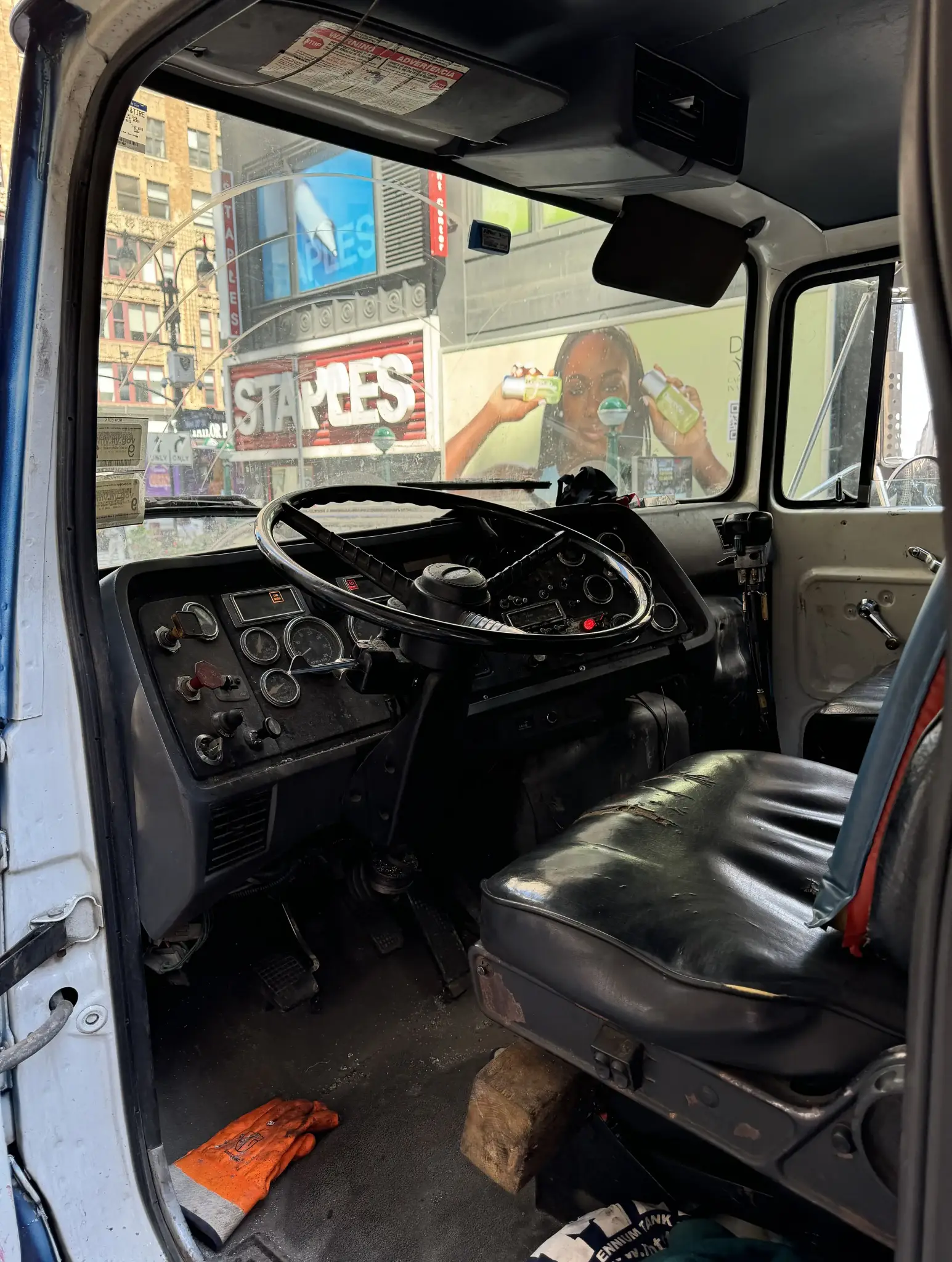
The Louisville Line
At the end of the 1960s Ford built Kentucky Truck Assembly in Louisville, which opened in 1969 while Louisville Assembly moved entirely to cars. At the same time the company set out to combine the N-Series and the heavy F-Series into one new line, and the L in L series stands for Louisville. The new trucks had a larger cab and a front-hinged hood of the kind used by the Mack R-series, Kenworth W900 and Peterbilt 352. The L series was produced in Louisville alongside the medium-duty F-Series and at times the C-Series COE, in both rigid and tractor form, and the aerodynamic Aeromax served as the flagship of both generations.
The end and the Sterling years
For its second generation, introduced in 1996, the Louisville nickname became the official name of the model line. After Ford sold its heavy-truck business to Freightliner in 1996, production of the second-generation L series passed to Freightliner during 1998, and the trucks continued under the Sterling Trucks nameplate until 2009.
Design and features
- Louisville Line: named after the Kentucky plant that built it.
- Wide range: rigid trucks, tractors and everything between in Classes 6 to 8.
- Aeromax flagship: the aerodynamic long-haul version of both generations.
- Many models: L, LN, LNT, LT, LTL, LTS and the W series COE.
Ford L series versions
- L series (1970–1995): the first generation conventional trucks.
- Aeromax: the aerodynamic flagship tractor.
- W series: the Class 8 COE of 1966, replaced by the L series.
- Louisville (1996): the second generation with the nickname as its name.
- Sterling (1998–2009): the same trucks under Freightliner ownership.
The L series replaced the C series heavy trucks and was replaced in the light and medium classes by models such as the LCF. More Ford vehicles are in the Ford collection.
Sources
- Ford L series, English Wikipedia: background, Louisville Line, generations, sale