The Ford C series was a range of cab-over trucks built by Ford from 1957 to 1990. It was Ford’s first tilting-cab COE truck, it was sold from Class 5 to Class 8, and its rarely changed shape made it one of the most familiar American trucks of its era.
Ford C series at a glance
| Maker | Ford Motor Company |
|---|---|
| Production | 1957–1990 |
| Type | cab-over-engine (COE) truck |
| Earlier COE models | C series of 1948–1956, based on the F-Series |
| Plants | Louisville Assembly, then Kentucky Truck Assembly from 1969 |
| Classes | Class 5 to Class 8 GVWR |
| Models | C-500 to C-900, diesel versions with an extra zero |
| Notable variant | H series of 1961–1966, Class 8 COE |
| Main uses | rigid trucks, tractors and fire apparatus |
| Replacement | CF8000 from 1986, Cargo alongside |
| End of production | 1990 |
This page is based on English Wikipedia only.
History of the Ford C series
From F-Series cab-over to its own truck
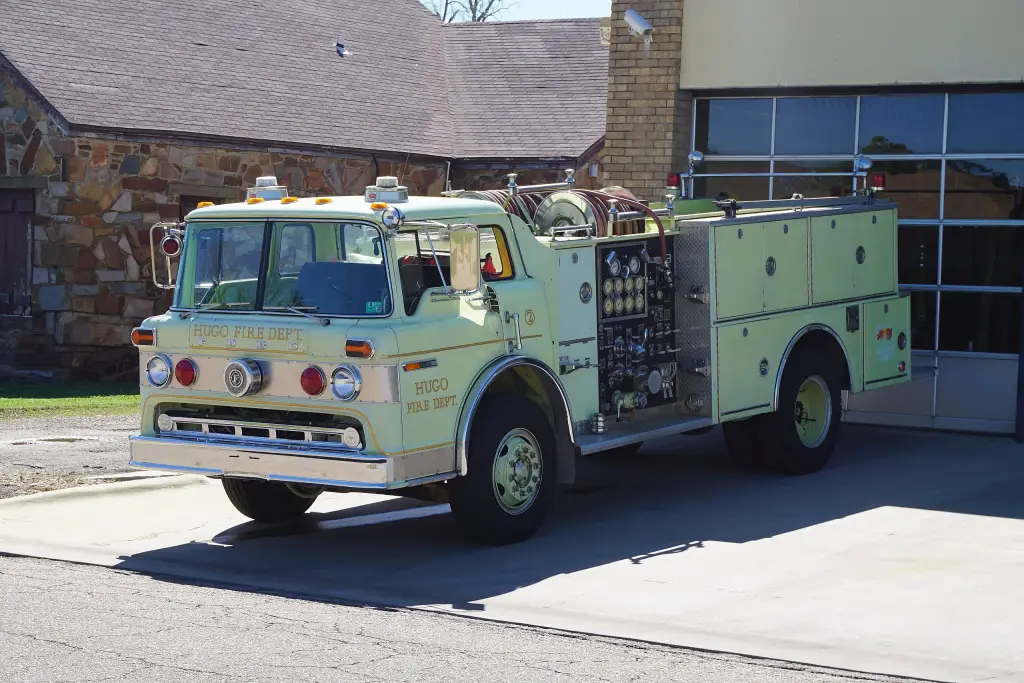
Ford had built cab-over trucks since 1948 as COE versions of the F-5 to F-8, redesignated the C series for 1953 in models from C-500 to C-900, with diesel versions carrying an extra zero. For 1957 Ford gave the cab-overs their own design, separate from the rest of the truck range: a small grille near the front bumper with a four-pointed star at each end, the word FORD below the windscreen and a cog-and-lightning-bolt crest between the headlights. The C series kept that logo longer than any other Ford truck.
Hardly changing at all
Like the Checker Marathon or the Volkswagen Beetle, the C series changed very little over its life, and most updates are visible only in badging. Between 1958 and 1960 it used a quad-headlight fascia, popular with fire departments that used the extra bezels for flashers, before returning to single headlights in 1961, when a Super Duty model and a small sleeper cab were added. Diesel versions arrived in 1963. Side-marker regulations in 1968 brought the new cowl insignia to the doors, where it stayed until 1990, and the blue oval reached the C series in 1984. The Canadian Mercury version ended after 1972.
The H series and the end
In 1961 Ford added the H series, a Class 8 COE with the cab mounted much higher and the front axle moved forward under the driver, leaving room for a larger grille and turning the front wheel cut-outs into underfloor lockers; it lasted until 1966. The Ford Cargo of 1981 was meant to replace the C series, and from 1986 it was sold in North America too, built in Brazil, but the C series stayed popular in niche roles and the two lines ran side by side. The last C series trucks were built in 1990 after 33 model years, and in 1997 Ford sold the Cargo and Louisville/Aeromax lines to Freightliner.
Design and features
- Tilting cab: Ford’s first COE truck with a cab that tilted for engine access.
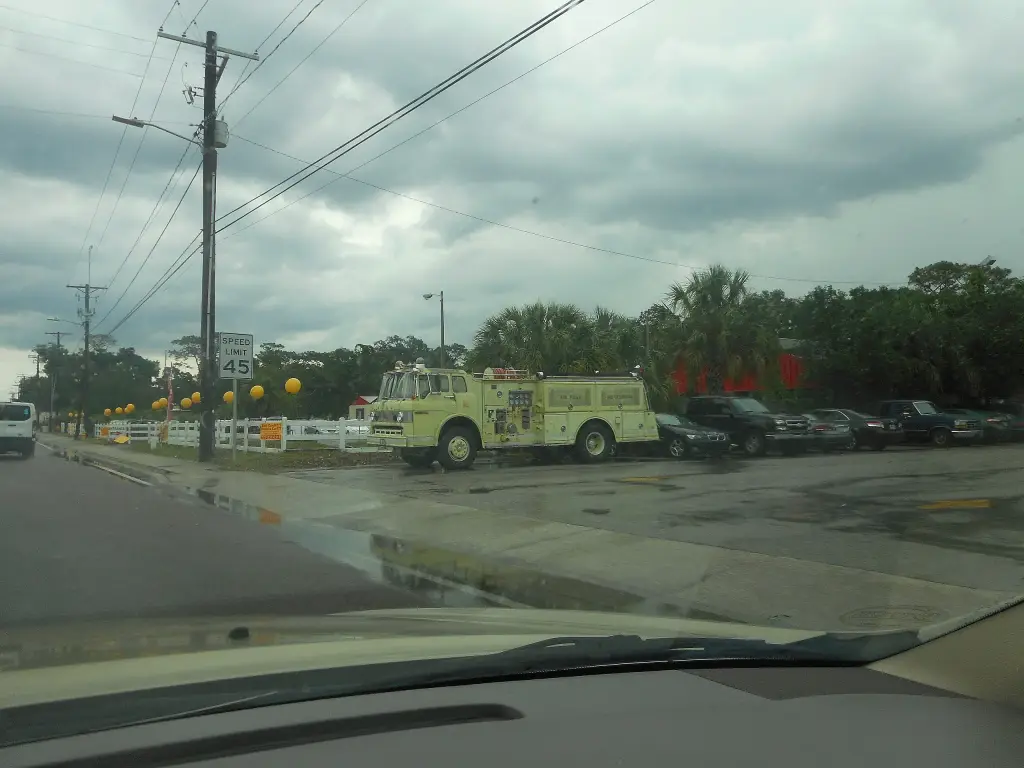
- Fire-apparatus favourite: a common base for American fire engines.
- Long production: 33 model years in Louisville with only minor changes.
- Big engine list: from Ford petrol sixes and Super Duty V8s to Caterpillar, Cummins and Detroit diesels.
Ford C series versions
- C-500 to C-900: the 1953 range of F-Series-based cab-overs.
- 1957 C series: the first with its own cab design.
- H series (1961–1966): the high-cab Class 8 version.
- Diesel models: badged with an extra zero, such as C-8000 and C-9000.
- CF8000 (1986): the intended replacement.
The C series was Ford’s medium and heavy cab-over alongside the conventional L series and the light F-Series. More Ford vehicles are in the Ford collection.
Sources
- Ford C series, English Wikipedia: history, models, engines, H series