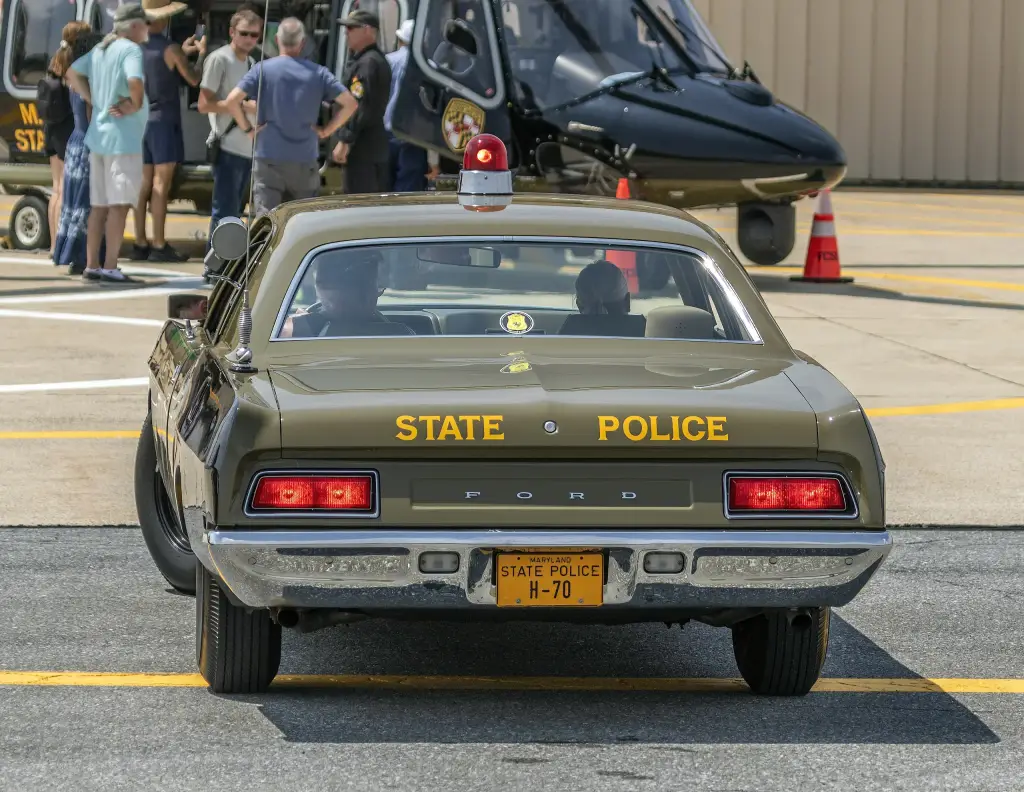
The Ford Custom was an automobile built by Ford in the United States, Canada and Australia in several periods between 1949 and 1981. Its meaning changed with each period: at first it was the top trim, later it was the base car sold mostly to police and taxi fleets.
Ford Custom at a glance
| Maker | Ford, United States, Canada and Australia |
|---|---|
| Years in use | 1949–1981, with gaps |
| 1949–1951 | top trim of the Ford range, Custom Deluxe for 1950 |
| 1952–1956 | the name became Customline, in the middle of the range |
| 1957–1959 | base Custom and value Custom 300 |
| 1960–1963 | name not used; base cars badged Ford 300 in 1963 |
| 1964–1972 | Custom and Custom 500, mostly fleet cars |
| Engines | six or small-block V8, up to a 427 for fleet buyers |
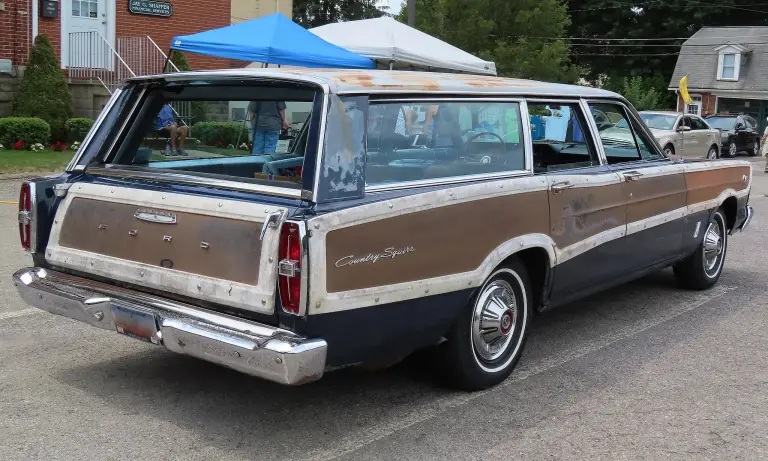
| Wagon | the Ranch Wagon used the same trim |
| Canadian Custom 500 | sold to retail buyers until 1981 |
This page is based on English Wikipedia only.
History of the Ford Custom
The top of the range in 1949
The Custom nameplate appeared for 1949 as the top trim of Ford’s first post-war redesign, the shoebox Ford, on a 114-inch wheelbase and a 196.8-inch overall length for 1950. For 1950 the name became Custom Deluxe, and for 1952, when the range was reshuffled, it became Customline in the middle position between the new Mainline and the Crestline.
Custom and Custom 300
The Custom name came back for 1957 alongside a new Custom 300 series, both sitting below the Fairlane and Fairlane 500. The base Custom was the bottom of the range, sold mainly to fleets, while the Custom 300 was aimed at value-conscious buyers; between them they replaced the Mainline and the Customline. The Custom 300 became the base model for 1958 and was dropped for 1960. After a gap in which the Fairlane and base Galaxie filled the bottom of the range, the Custom returned in 1964 as the economy line, again in two series, Custom and better-trimmed Custom 500.
Police, taxi and Canada
Most Customs and Custom 500s of the 1960s went to police and taxi fleets, though anyone could buy one as basic transport. They usually had a straight six or a small-block V8, but the full range of engines up to a 425-horsepower 427 and any transmission were available to law-enforcement and performance customers who wanted the lightest car possible. Six-cylinder engines and manual gearboxes were dropped in 1973, after which every full-size Ford had a V8 of at least 351 cubic inches and a SelectShift automatic. The Custom was dropped after 1972 and the Custom 500 carried on, becoming a fleet-only model in the United States from 1975 but remaining on sale to retail buyers in Canada until 1981. Ford Australia built the Custom Fordor from September 1949 and the Custom 300 from 1959 to 1962.
Design and features
- Moving name: top trim, mid-range model and base fleet car at different times.
- Fleet favourite: police and taxi buyers made up most Custom sales in the 1960s and 1970s.
- Big engine choice: from a six to the 427 V8 for special orders.
- Ranch Wagon: the station wagon version with the same trim.
Ford Custom versions
- Custom (1949–1951): the top trim of the shoebox Ford.
- Customline (1952–1956): the mid-range version of the name.
- Custom and Custom 300 (1957–1959): base and value models.
- Custom (1964–1972): the economy line, mostly for fleets.
- Custom 500: the better-trimmed version, sold in Canada until 1981.
- Australian Custom Fordor and Custom 300: locally built versions.
The Custom was the bottom of the full-size range below the Fairlane and Galaxie, and it shared its body with the 1949 Ford. More Ford vehicles are in the Ford collection.
Sources
- Ford Custom, English Wikipedia: periods, trims, engines, Australian production