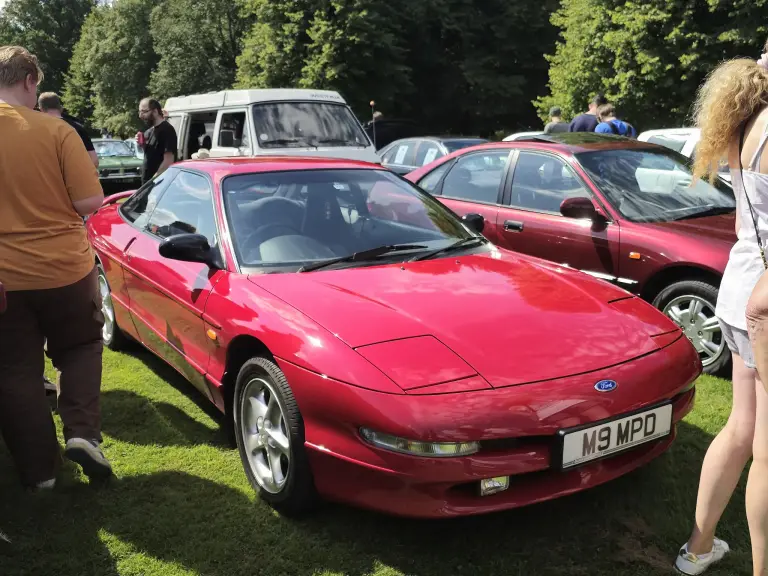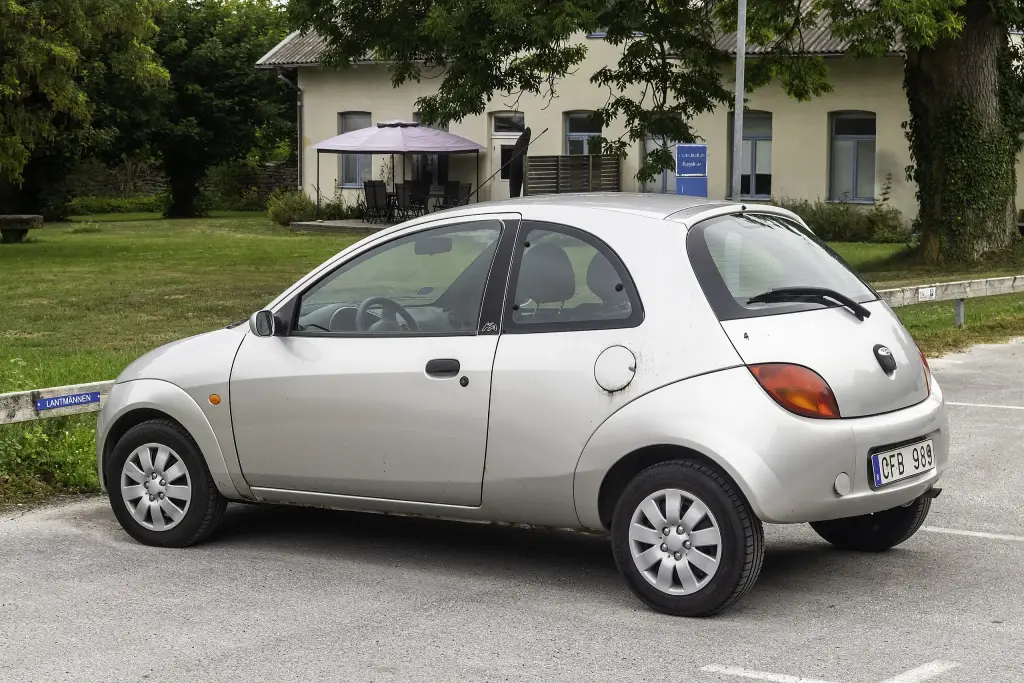
The Ford Ka was a small car manufactured by Ford from 1996 to 2021 over three generations. The first two were city cars, the third a subcompact, and the original of 1996 wrapped Fiesta mechanicals in a radical New Edge body.
Ford Ka at a glance
| Maker | Ford, Almussafes, Valencia |
|---|---|
| Production | 1996–2021 |
| Generations | three |
| First generation code | BE146 |
| Launched | 11 September 1996 |
| Base | Ford Fiesta Mk 3 platform |
| First engine | 1,300 cc Endura-E overhead-valve four |
| From 2002 | Duratec overhead-cam engine |
| Bodies | three-door hatchback, plus StreetKa convertible and SportKa |
| Second generation | 2008, built by Fiat in Tychy, Poland |
| Third generation | 2014, five-door hatchback and four-door sedan |
This page is based on English Wikipedia only.
History of the Ford Ka
A cheap Ford with a brave face
The first Ka was introduced on 11 September 1996 as a small, low-cost addition to the range. Developed under the code BE146, it used the Mk 3 Fiesta platform with a completely different exterior, borrowing from Ghia’s Saetta show car, a roadster by Filippo Sapino, and it reached production with only minor changes from the concepts. Large one-piece moulded bumpers and wheel arches made it durable and easy to repair, and it was built on the existing Fiesta line at Almussafes in Valencia to keep investment low. The chief programme engineer was Kevin O’Neill and the designer was Chris Svensson, who had drawn a similar shape at the Royal College of Art in 1992. The New Edge styling, overseen by Jack Telnack and executed by Claude Lobo, provoked mixed reactions when the car was new.
How it drove
Beyond the styling, the Ka was praised for its handling, like its Fiesta and Puma sisters: under Richard Parry-Jones the suspension and steering settings allowed hard cornering and high grip. At launch it was a single model with options including air conditioning, power steering, a height-adjustable driver’s seat, an adjustable rear seat with head restraints, a passenger airbag, central locking and electric windows; anti-lock brakes only became an option in January 1997. The main drawback was the 1,300 cc Endura-E overhead-valve engine, a derivative of the Valencia unit used in earlier Fiestas and based on the 1960s Kent design. It had enough torque for relaxed driving but was not modern, and in 2002 it was replaced by an overhead-cam Duratec with better economy and refinement.
Later generations
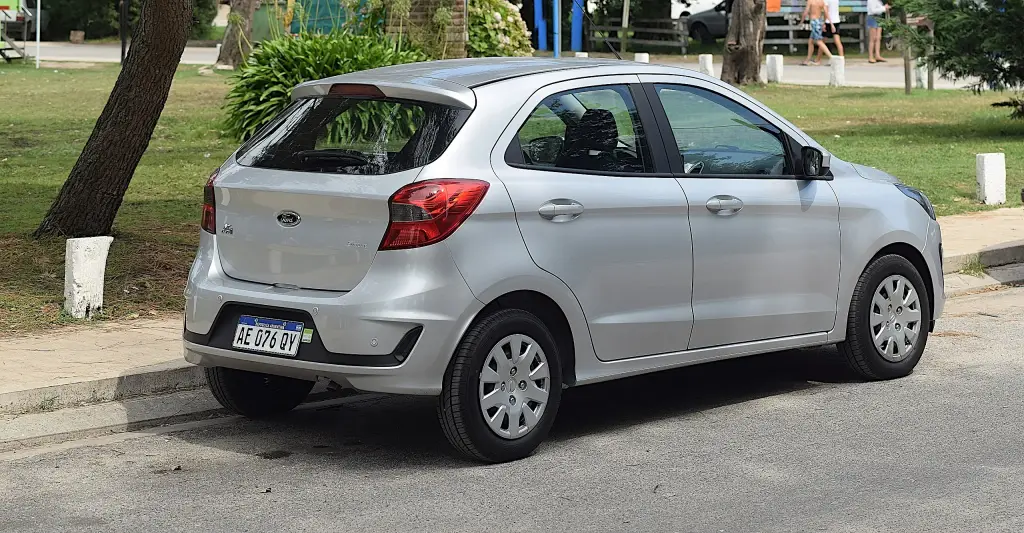
The first two generations were three-door hatchbacks, and the first also offered a two-door convertible sold as the StreetKa and a sporting hatch, the SportKa. The second generation of 2008 was produced by Fiat in Tychy, Poland. The third generation of 2014 was a five-door hatchback and a four-door sedan, first sold only in Brazil and later in India, Italy, Mexico, Spain, South Africa, Argentina and Poland. European sales ended in 2020 and Brazilian production in 2021. Ford’s press office has used three different pronunciations of the name, but according to Auto Trader the company’s senior staff say it as “Ka as in cat”.
Design and features
- New Edge styling: a bold small-car shape that divided opinion in 1996.
- Fiesta underneath: the Mk 3 platform and running gear.
- Good handling: praised by the motoring press for grip and cornering.
- StreetKa and SportKa: convertible and sporting versions of the first generation.
Ford Ka versions
- Ka Mk 1 (1996–2008): the original New Edge city car.
- StreetKa: the two-door convertible.
- SportKa: the sporting hatchback.
- Ka Mk 2 (2008): built by Fiat in Poland.
- Ka Mk 3 (2014): five-door hatchback and four-door sedan.
The Ka was based on the Fiesta and sat below it in Ford’s European range. More Ford vehicles are in the Ford collection.
Sources
- Ford Ka, English Wikipedia: generations, first-generation design and engines, name