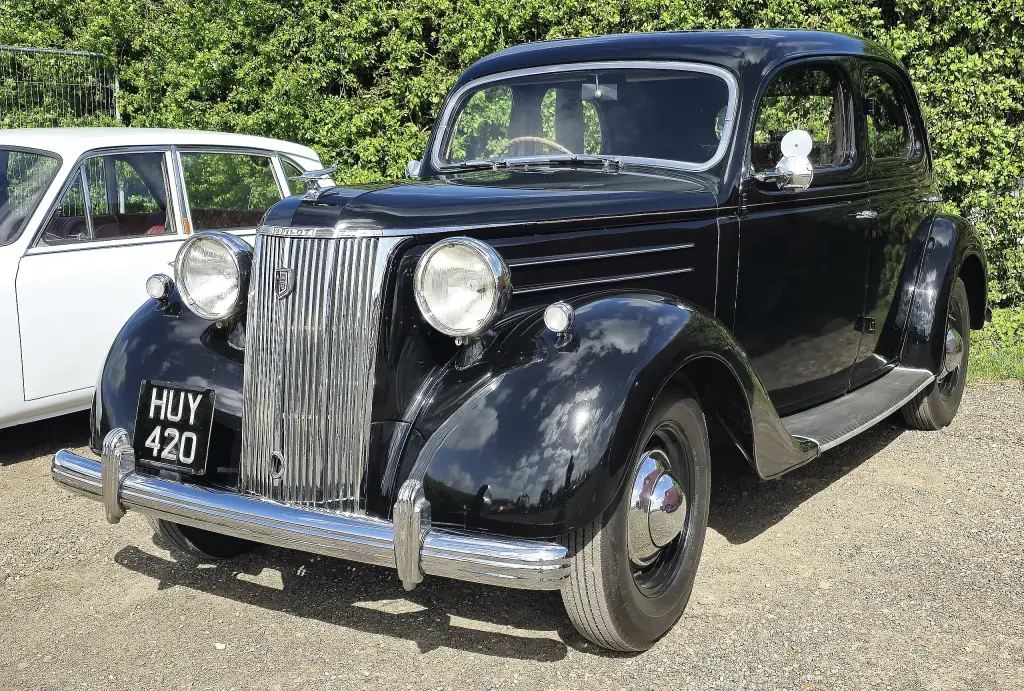
The Ford Pilot, model E71A, was a medium-sized car built by Ford UK from August 1947 to 1951. It was the first large post-war British Ford, and it was effectively replaced in 1951 by the Zephyr Six and the Consul, with V8 Pilots withdrawn gradually during that year.
Ford Pilot at a glance
| Maker | Ford UK, Dagenham |
|---|---|
| Production | August 1947 – 1951 |
| Built | 22,155 |
| Engine | 2,535 cc side-valve V8, 66 bhp |
| Chassis | pre-war 22 hp Model 62 |
| Gearbox | three-speed, column change |
| Steering | Marles worm and roller box |
| Front brakes | hydraulic |
| Rear brakes | cable-operated |
| Electrics | 6-volt Lucas |
| Performance | 0–60 mph in 21 seconds, 80 mph, 18 mpg |
| Replaced by | Ford Zephyr Six and Consul |
This page is based on English Wikipedia only.
History of the Ford Pilot
A V8 for post-war Britain
The Pilot was based on the pre-war 22 hp Model 62 chassis and was offered from 1947 with a 2,535 cc side-valve V8 of 21 fiscal horsepower and 66 bhp, which had the same stroke as the 3,621 cc 30 hp V8 but a smaller bore. Dagenham cast its own version of the American 1937 Model 78 block with many differences: one frost plug at the rear of each side below the heads, the firing order cast into the heads, a long-snouted crankshaft for double-pulley truck fan belts, flanged big-end bearings and a pear-shaped sump hole for the Lucas starter, plus exhaust manifolds of a freer design than the American originals. The larger E71 30 hp version of 3,622 cc produced 81 bhp and was also used in Thames trucks.
Old-fashioned even when new
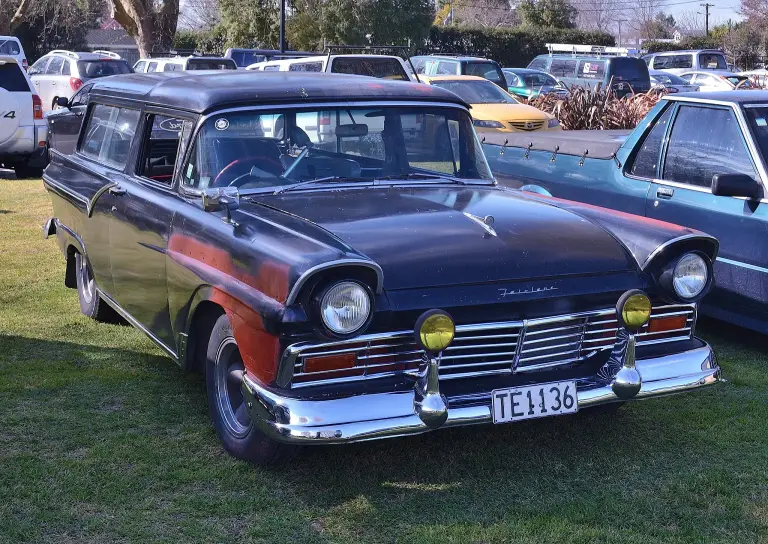
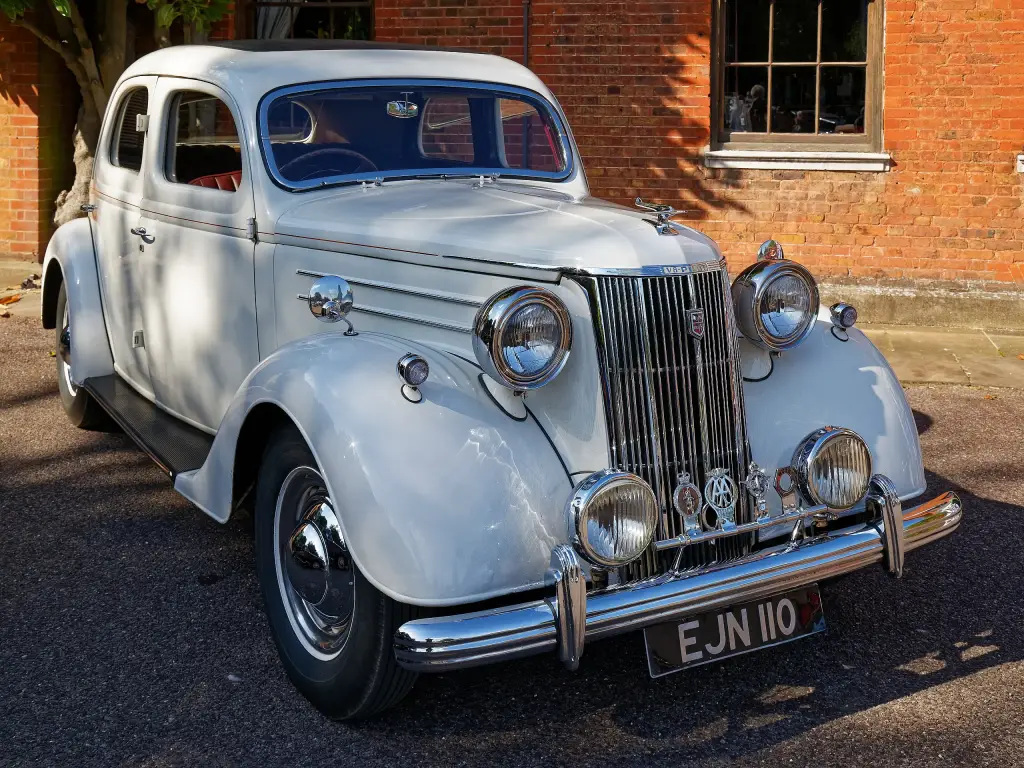
The Pilot had a three-speed gearbox with a column gear lever and Marles worm-and-roller steering. It was considered old-fashioned even when new, but its front brakes were hydraulically operated while the rear brakes were worked by cables. Electrics were 6-volt Lucas, a twin exhaust was standard for a better sound, and the wide-stud 16-inch wheels were the same as on 1936 to 1939 American cars. Most Pilots were four-door saloons based on the 1935 American Model 48, but estate “woodie” versions were also built. The chromed brass windscreen could be opened for ventilation on its top hinge, leather upholstery was standard, the window frames and dashboard were Bakelite, trafficator indicators were fitted, and a hydraulic four-jack system was optional.
Slow but comfortable
The Pilot had vacuum-driven wipers fed through a reservoir tank, so they kept working under load where American cars without one slowed or stopped. It was reputed to accelerate from 0 to 60 mph in 21 seconds, reach 80 mph and return 18 miles per imperial gallon. Production ended in 1951 when Ford replaced the Pilot with the Zephyr, after 22,155 cars.
Design and features
- Side-valve V8: 2,535 cc and 66 bhp from a British cast of the 1937 American block.
- Mixed brakes: hydraulic at the front, cable-operated at the rear.
- Opening windscreen: chromed brass, hinged at the top for ventilation.
- Twin exhaust: standard equipment for a better sound.
Ford Pilot versions
- Pilot saloon (1947–1951): the main four-door body.
- Pilot estate: the shooting-brake “woodie” version.
- E71 30 hp cars: the larger V8 shared with Thames trucks.
The Pilot was replaced by the Zephyr and Consul, which brought modern unitary construction to Ford of Britain. More Ford vehicles are in the Ford collection.
Sources
- Ford Pilot, English Wikipedia: engine, chassis, equipment, production