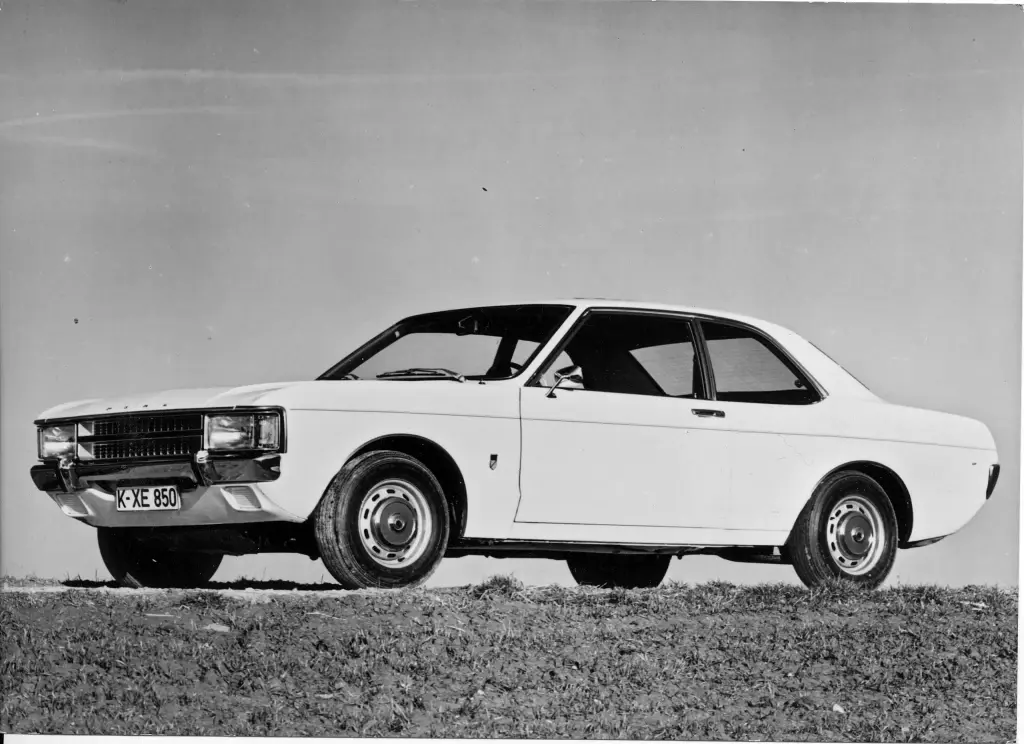
The Ford Consul was built by Ford of Britain from 1951 to 1962 as the four-cylinder base model of the Zephyr range, and the name was revived from 1972 to 1975 for the cheaper versions of the Granada. Between those two lives it also covered a family of smaller Consul-badged cars, including the Cortina.
Ford Consul at a glance
| Maker | Ford of Britain, then Ford of Britain and Ford of Germany |
|---|---|
| First production | 1951–1962 |
| Second production | 1972–1975 |
| First model code | EOTA |
| First engine | 1,508 cc four, 47 bhp |
| Mark II engine | 1,703 cc four, 59 bhp |
| Body | four-door saloon, estate by Abbott, convertible by Carbodies |
| Suspension | first British production car with MacPherson struts |
| 1953 road test | 72 mph, 0–60 mph in 28 seconds, £732 |
| Mark II road test | 79.3 mph, 0–60 mph in 23.2 seconds, £781 |
| Later life | lower-priced Ford Granada, built in Cologne |
This page is based on English Wikipedia only.
History of the Ford Consul
The Consul EOTA of 1951
The 1,500 cc four-cylinder Consul was first shown at the 1950 London Motor Show and put Ford of Britain into the family saloon market. With the Zephyr it was the first British Ford with unitary construction, and it was the first British production car to use MacPherson strut front suspension. Its 1,508 cc overhead-valve engine gave 47 bhp, the clutch was hydraulic and the gearbox still had three speeds with synchromesh on second and top only. Most cars were four-door saloons styled by George Walker of Ford in the United States, with estates by Abbott and, from 1953, a Carbodies convertible whose body needed a large X-frame welded into the floor pan to replace the strength lost with the roof.
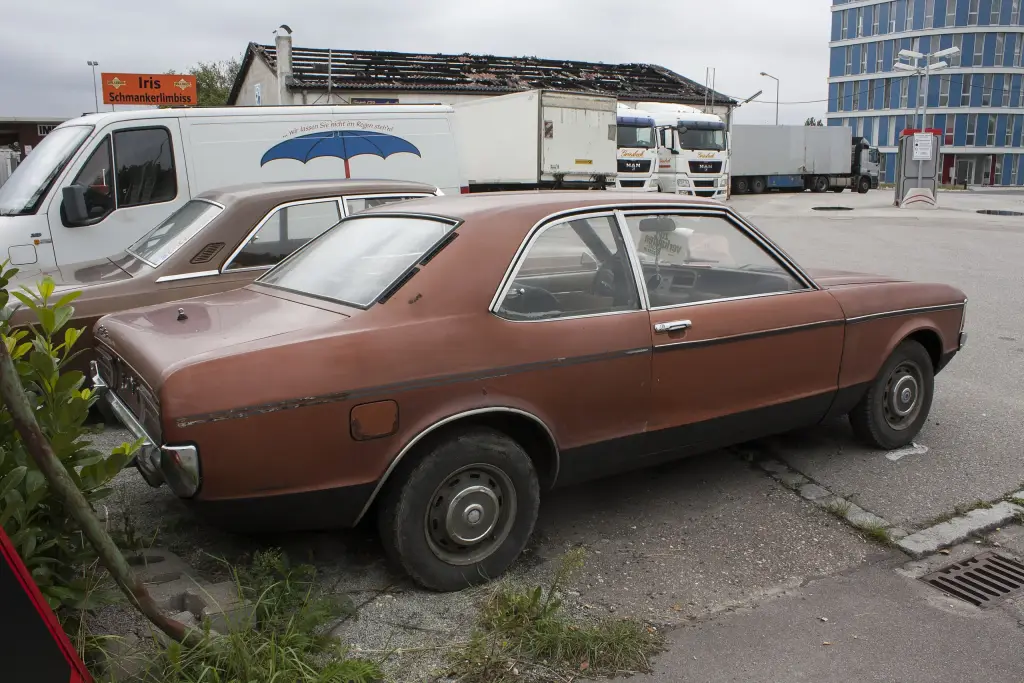
The Mark II of 1956
The second Consul, coded 204E, kept its place as the four-cylinder member of the Zephyr range and shared that car’s basic shell, but had a longer wheelbase, a 1,703 cc engine of 59 bhp and a complete restyle that borrowed from the 1956 Thunderbird and Fairlane. The 1959 “lowline” version lowered the roof and brought redesigned rear lights and stainless-steel trim, while front disc brakes with a vacuum servo became an option in 1960 and standard in 1961. The name became the Consul 375 in mid-1961, and Australia built utility and estate versions. A Consul Mark II was the car in which the singer Eddie Cochran died in 1960, not a London taxi as is often said.
Consul as a family and as a Granada
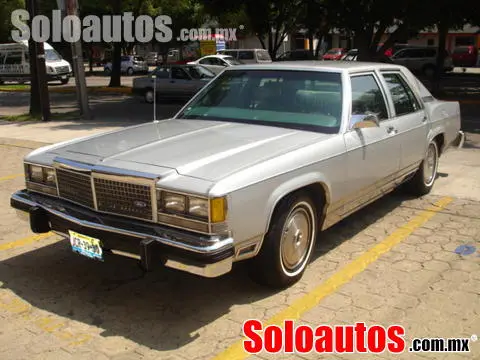
When the Consul was replaced in 1962 the badge moved to a range of smaller cars: the Consul Classic, the Consul Capri and the Consul Cortina, the last of which lost the Consul tag in 1964 and went on to become a best-seller. The name returned in April 1972 for the lower-priced, lower-specification versions of the new Granada, developed jointly by Ford Britain and Ford of Germany and built in Cologne. That Consul lasted until 1975, when the Granada absorbed it.
Design and features
- Modern for 1951: unitary construction, overhead valves, hydraulic clutch.
- MacPherson struts: the first British production car with this front suspension.
- Three bodies: saloon, Abbott estate and Carbodies convertible.
- Name with several lives: Zephyr base model, small-car range and Granada trim.
Ford Consul versions
- Consul EOTA (1951–1956): the original 1,508 cc four-door.
- Consul convertible: Carbodies conversion with a reinforced floor.
- Consul Mark II (1956–1962): bigger engine and new body, lowline from 1959.
- Consul 375 (1961–1962): the final version of the Mark II.
- Consul Classic, Capri and Cortina: the smaller cars that used the name from 1961.
- Consul (1972–1975): the cheaper Granada.
The Consul was the four-cylinder sister of the Zephyr, and its name later covered the Cortina and the Granada. More Ford vehicles are in the Ford collection.
Sources
- Ford Consul, English Wikipedia: models, engines, road tests, later use of the name