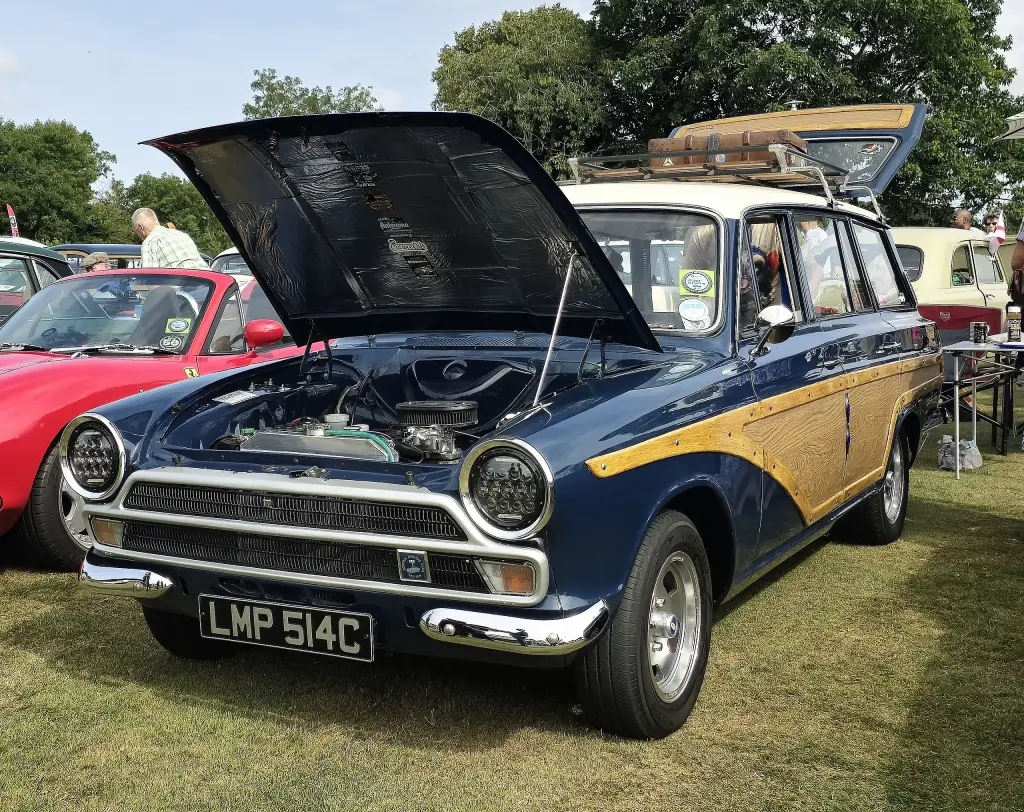
The Ford Cortina was a medium-sized family car built in several body styles from 1962 to 1982. It was the best-selling car in the United Kingdom in the 1970s, and by 1976 it had become identical to the German Ford Taunus.
Ford Cortina at a glance
| Maker | Ford of Britain |
|---|---|
| Production | 1962–1982 |
| Generations | five, Mk I to Mk V |
| Launch | 20 September 1962 |
| Project name | Archbishop |
| Chief designer | Roy Brown Jr. |
| First engines | 1,198 cc, then 1,498 cc four |
| First bodies | two- and four-door saloon, five-door estate |
| Also assembled | New Zealand, South Africa, Australia |
| Twin model | Ford Taunus from 1970 |
| Replaced by | Ford Sierra in 1982 |
| Named after | Cortina d’Ampezzo, Italy |
This page is based on English Wikipedia only; the source article is long and this page uses its opening and the Mark I section.
History of the Ford Cortina
A car for the masses
Ford of Britain developed the Cortina at Dagenham under the project name “Archbishop”, with Roy Brown Jr., the designer of the Edsel, as chief designer after his move to Britain. The car was aimed at buyers of the Morris Oxford Farina and Vauxhall Victor and was launched on 20 September 1962, built to be cheap to buy, cheap to run and simple to produce. Ford of Germany’s front-wheel-drive layout for the Taunus P4 was rejected in favour of a conventional rear-wheel-drive arrangement. The car was first sold as the Consul Cortina and took the plain Cortina name after a modest facelift in 1964.
The Mark I
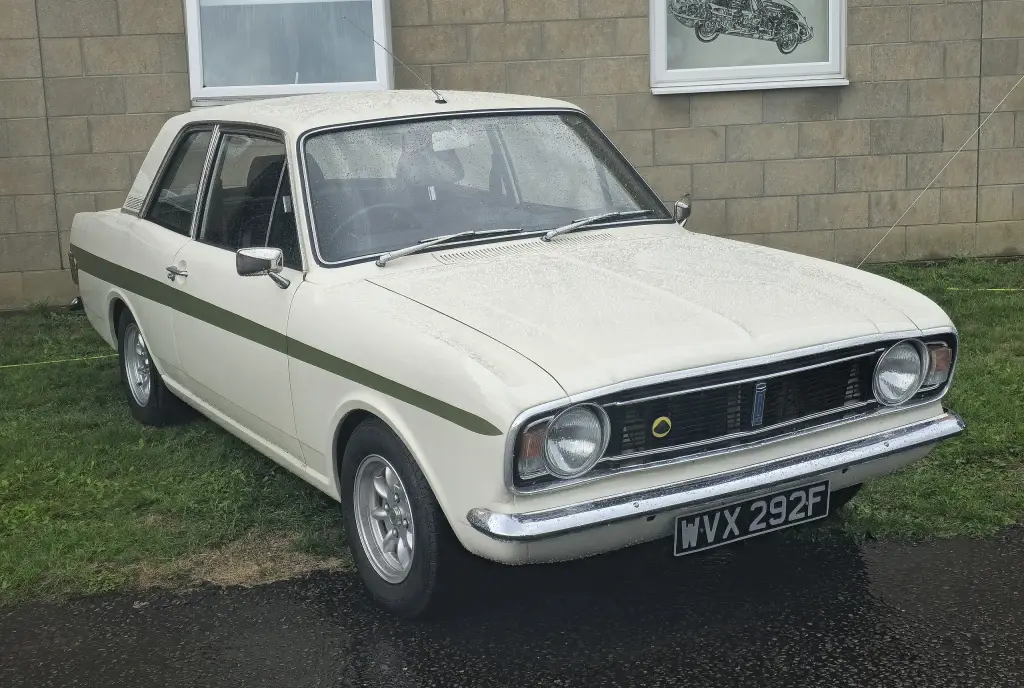
The first Cortinas came with a 1,198 cc three-bearing engine derived from the Anglia’s 997 cc unit, joined in January 1963 by a 1,498 cc five-bearing engine in the Cortina Super. The GT arrived in spring 1963 with lowered suspension and 78 bhp, against 60 bhp for the 1500 Super. Bodies were two- and four-door saloons and, from March 1963, a five-door estate, with Standard, Deluxe, Super and GT trims. Two versions of the Mark I were built: the 1a with elliptical front side lights and the 1b with a new grille and rectangular lamps. The Lotus Cortina, a two-door in white with a green side flash, used a 1,558 cc twin-cam Lotus engine and aluminium panels.
Five generations and the Taunus
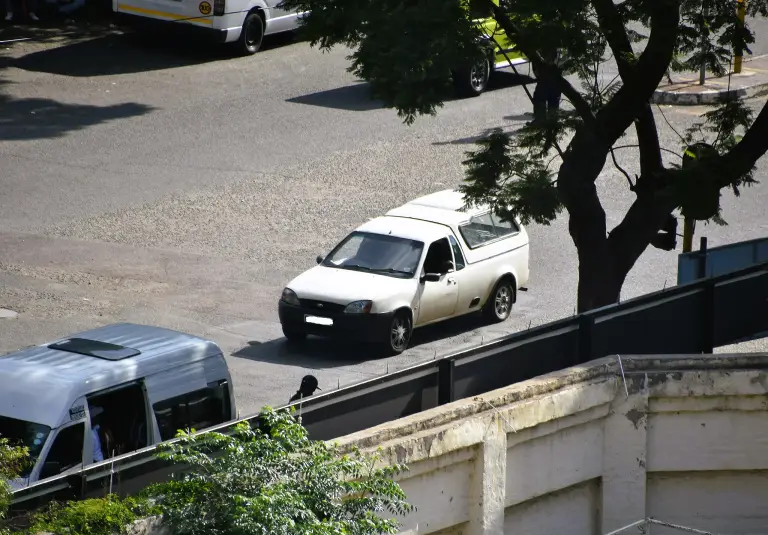
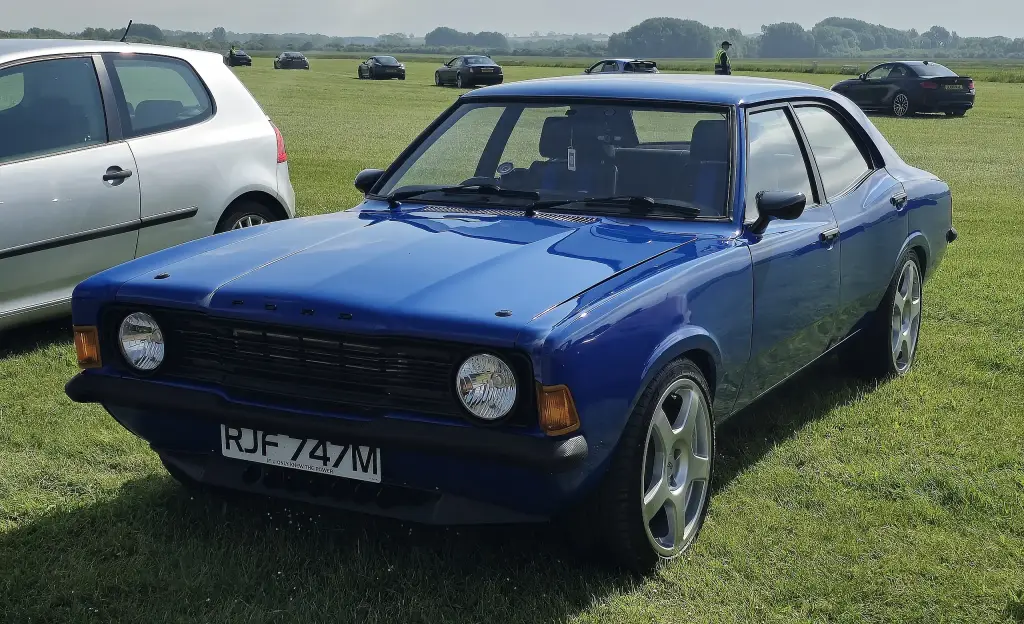
The Cortina ran through five generations, although the last was officially a facelift of the Mk IV sold as the Cortina 80. From 1970 it shared its platform with the German Taunus, part of Ford’s attempt to merge its European operations, and by the time the revised Taunus appeared in 1976 the two cars were identical. The Cortina was replaced by the Sierra in 1982. In Asia and Australasia it gave way to the Mazda 626-based Telstar, while Ford New Zealand built the saloon until 1983 and the estate until 1984, and South African assembly continued until 1984 with the pickup lasting to 1987.
Design and features
- Simple engineering: rear-wheel drive and pushrod four-cylinder engines.
- Many body styles: two- and four-door saloons, estates and the Lotus Cortina.
- British best seller: the most popular car in the UK during the 1970s.
- European twinning: identical to the Taunus from 1976.
Ford Cortina versions
- Cortina Mk I (1962–1966): 1,200 and 1,500 engines, Standard to GT trims.
- Cortina Lotus: twin-cam Lotus engine and aluminium panels.
- Cortina Mk II to Mk IV: the later generations, increasingly shared with the Taunus.
- Cortina 80: the final facelift of the Mk IV, sold to 1982.
- South African pickup: built until 1987.
The Cortina was the base of the Capri and was replaced by the Sierra, while its estate and saloon versions were joined by the smaller Escort. More Ford vehicles are in the Ford collection.
Sources
- Ford Cortina, English Wikipedia: development, Mark I, generations, replacements