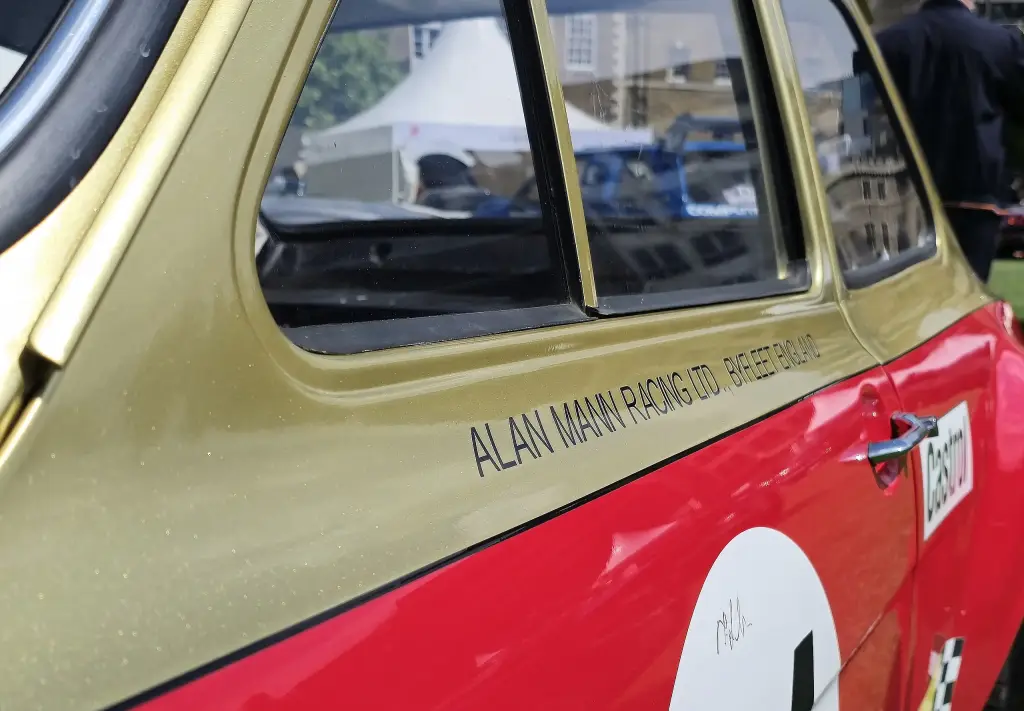
The Ford Escort was a small family car built by Ford of Europe from 1968 to 2004. Six generations sat on three platforms: the rear-wheel-drive Mk I and Mk II, the front-wheel-drive Erika Mk III and Mk IV, and the final Mk V and Mk VI. It was frequently the best-selling car in Britain during the 1980s and 1990s.
Ford Escort at a glance
| Maker | Ford of Europe |
|---|---|
| Production | 1968–2004 |
| Generations | six, on three platforms |
| Mk I and Mk II | rear-wheel drive, 1968–1980 |
| Mk III and Mk IV | Erika front-wheel drive, 1980–1992 |
| Mk V and Mk VI | CE-14 platform, 1990–2002 |
| Launch debut | Brussels Motor Show, January 1968 |
| First plants | Halewood (England), Genk (Belgium) |
| First engines | 1.1 and 1.3 litres, Kent crossflow |
| UK sales | over 4.1 million in 33 years |
| Successor | Ford Focus from 1998 |
This page is based on English Wikipedia only.
History of the Ford Escort
The Mark I
The first use of the Escort name was for a reduced-specification version of the Ford Squire, an estate version of the Anglia 100E, but the real Escort arrived at the end of 1967 in Britain and Ireland and made its show debut at the Brussels Motor Show in January 1968, replacing the Anglia. It was the first passenger car developed by the merged Ford of Europe. British cars were built at Halewood from late 1967 and left-hand-drive cars at Genk from September 1968; the continental cars differed slightly, with different front suspension and steering settings, dual-circuit brakes and wider wheel rims. Production moved to Saarlouis in 1970. The Escort had rear-wheel drive, MacPherson struts, a live rear axle on leaf springs and was the first small Ford with rack-and-pinion steering.
Two million and a Coke bottle
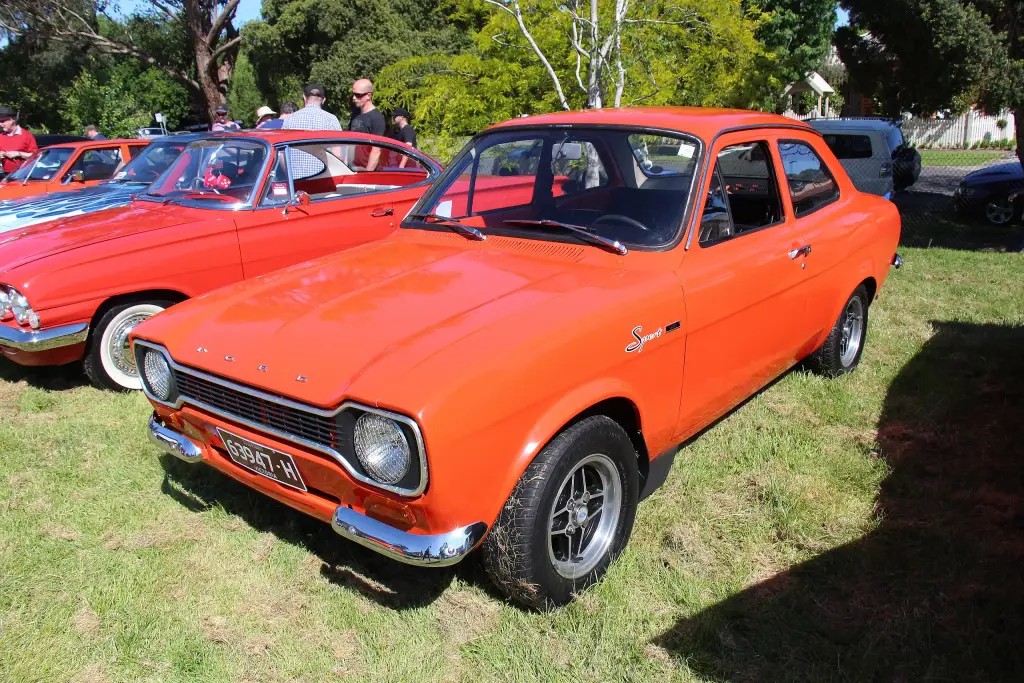
The Mk I carried Detroit-inspired “Coke bottle” styling and a dogbone grille. It came as a two-door saloon, a two-door estate from March 1968, a panel van from April 1968 and a four-door saloon from 1969, with 1.1 and 1.3-litre Kent crossflow engines and a 940 cc unit for Italy and France. A 1300GT had a tuned engine with a Weber carburettor, uprated suspension and extra instruments, and there were also a Sport and an executive 1300E. In June 1974 Ford announced the two-millionth Escort, a milestone no other Ford model outside the United States had reached, and 60 per cent of those cars had been built in Britain.
Front-wheel drive and the end
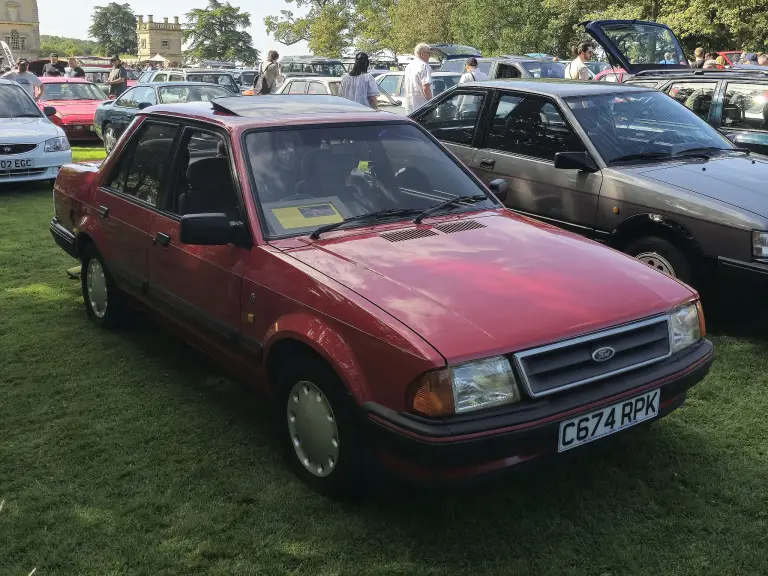
The Mk III of 1980 moved the Escort to the front-wheel-drive Erika platform, and the Mk IV followed on the same base. The Mk V and Mk VI of the 1990s used the newer CE-14 platform. The Focus arrived in 1998 and gradually took over, with the panel van version of the Escort lasting until 2002 in favour of the Transit Connect. Ford revived the name in 2014 for a car based on the second-generation Focus, sold in China.
Design and features
- Rack-and-pinion steering: the first small Ford to use it.
- Three platforms: rear-wheel drive, Erika and CE-14 through six generations.
- British favourite: often the best-selling car in Britain in the 1980s and 1990s.
- GT and Sport versions: tuned 1.3-litre engines with Weber carburettors.
Ford Escort versions
- Escort Mk I (1968–1974): saloon, estate, panel van and 1300GT.
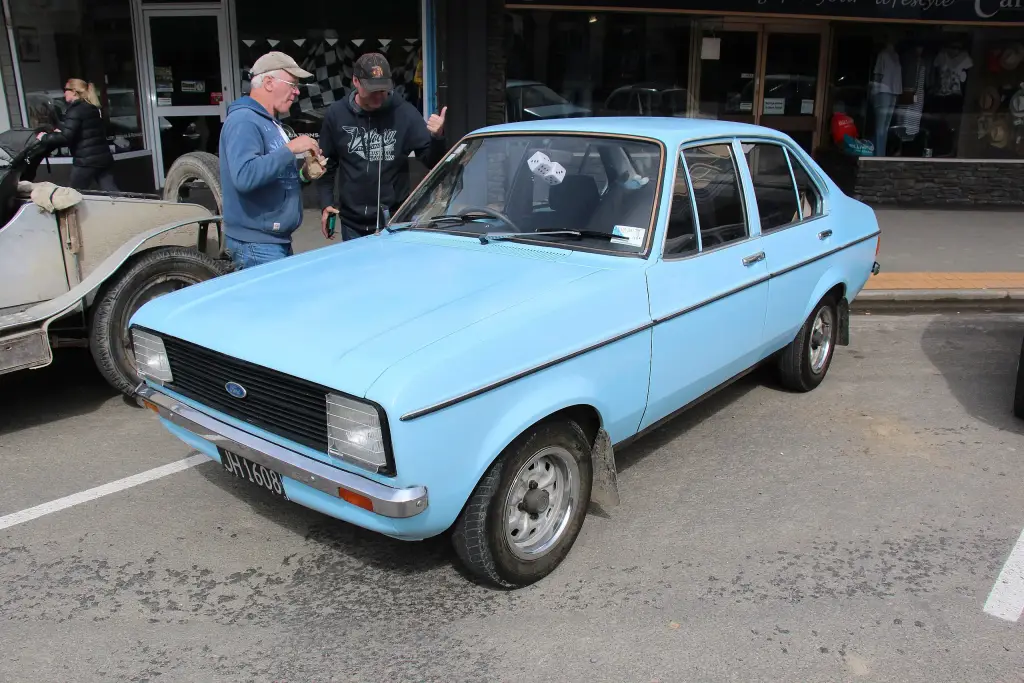
- Escort Mk II (1975–1980): the last rear-wheel-drive generation.
- Escort Mk III and Mk IV (1980–1992): front-wheel drive on the Erika platform.
- Escort Mk V and Mk VI (1990–2002): the CE-14 generation.
- Chinese Escort (from 2014): a Focus-based model for that market.
The Escort replaced the Anglia and was itself replaced by the Focus. More Ford vehicles are in the Ford collection.
Sources
- Ford Escort (Europe), English Wikipedia: generations, Mark I, production