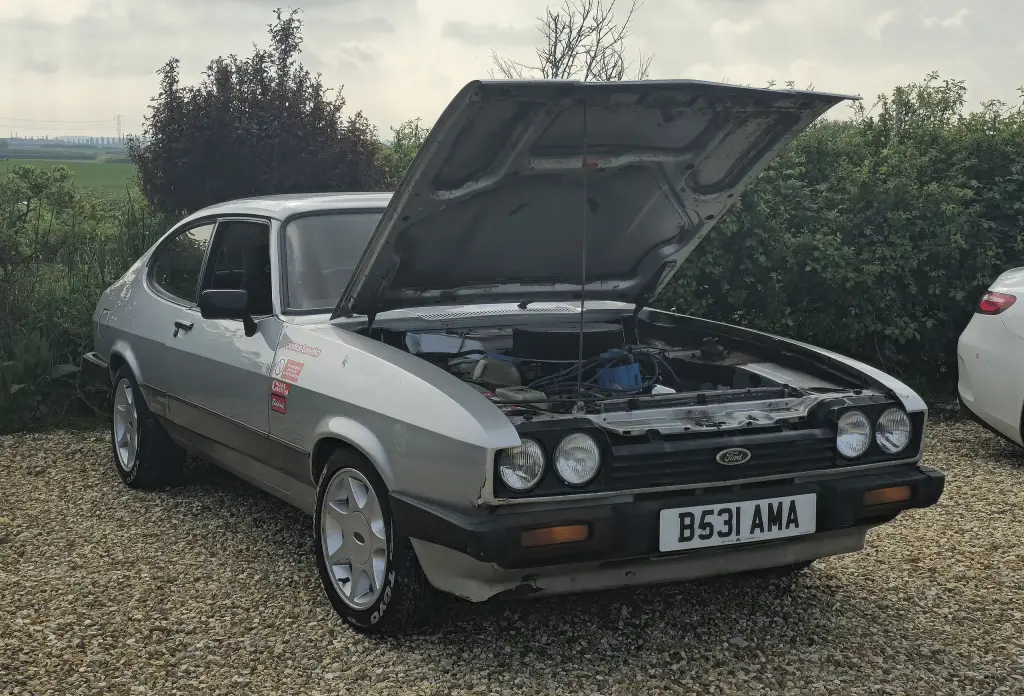
The Ford Capri was a fastback coupe built by Ford of Europe from 1968 to 1986. Designed by Philip T. Clark, who had worked on the Mustang, it used the mechanical parts of the Cortina and was meant to repeat in Europe the success Ford had found in America with its pony car.
Ford Capri at a glance
| Maker | Ford of Europe |
|---|---|
| Production | 1968–1986 |
| Designer | Philip T. Clark |
| Basis | Ford Cortina Mk II mechanicals |
| Debut | Brussels Motor Show, January 1969 |
| Plants | Halewood, Genk, Saarlouis, Cologne |
| Engines | Kent and Taunus fours, Essex and Cologne V6s |
| Top of range | 3000 GT, then RS2600 and RS3100 |
| Sales | nearly 1.9 million |
| Effective replacement | Ford Probe, from 1994 in Europe |
| Name | from the Italian island of Capri |
This page is based on English Wikipedia only.
History of the Ford Capri
Mk I: a pony car for Europe
Production began in November 1968 and the car was unveiled at the Brussels Motor Show in January 1969, with sales starting the next month. It was built on Cortina running gear, with a live rear axle on leaf springs and short radius rods, MacPherson struts at the front and rack-and-pinion steering from the Escort. During development it was called Colt, a name Ford could not use because Mitsubishi had trademarked it. The British and German plants built different line-ups: Britain used Kent fours of 1.3 and 1.6 litres, the continent the Taunus V4 in 1.3, 1.5 and 1.7 litres, with the Essex or Cologne V6 at the top. Sports versions followed quickly, the 2300 GT in Germany and the 3000 GT in Britain with 138 hp.
Racing and specials
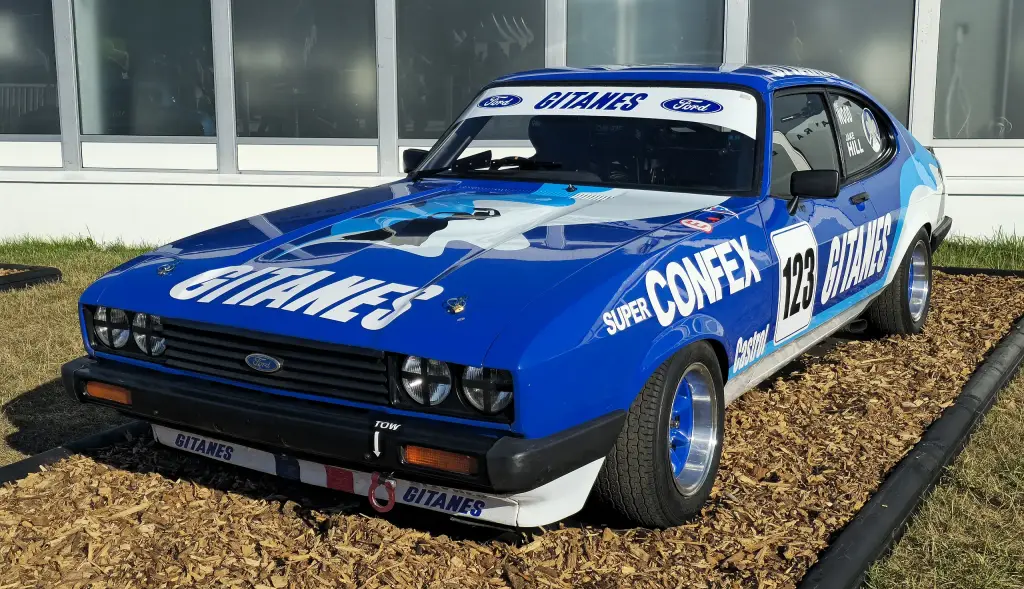
In September 1971 came the Capri RS2600, with a Weslake-developed 2,637 cc Cologne V6 on Kugelfischer fuel injection giving 150 PS, along with modified suspension, a close-ratio gearbox, lightened panels, ventilated discs and aluminium wheels; it reached 100 km/h in 7.7 seconds and became the basis of the Group 2 racer. Dieter Glemser won the 1971 European Touring Car Championship in an RS2600 and Jochen Mass did the same in 1972. Ford also built limited editions: the Vista Orange Special of 1971, based on the 1600 GT and 2000 GT and limited to 1,200 cars, brought a boot spoiler and rear window slats straight from the Mustang, and the GTXLR closed the Mk I run.
Two more generations
The Capri Mk I was followed by the Mk II and then the Mk III, which carried the same fastback idea forward with updated bodies and engines to the end of production in 1986. The car was sold in Australia from May 1969 and in North America from April 1970 through Lincoln-Mercury dealers, where it carried no Ford badge and was advertised as “the sexy European”; South Africa got its own Perana version with a 302 cu in Windsor V8. Nearly 1.9 million Capris were sold in all. Ford never replaced the car directly, but the second-generation Probe took over its role when it reached Europe in 1994.
Design and features
- Mustang recipe: a long bonnet, a fastback roof and Cortina mechanicals underneath.
- Wide engine range: from 1.3-litre fours to the 3.0 Essex and 2.6 Cologne V6s.
- Racing pedigree: the RS2600 won the European Touring Car Championship in 1971 and 1972.
- Special editions: from the 1,200 Vista Orange cars to the GTXLR.
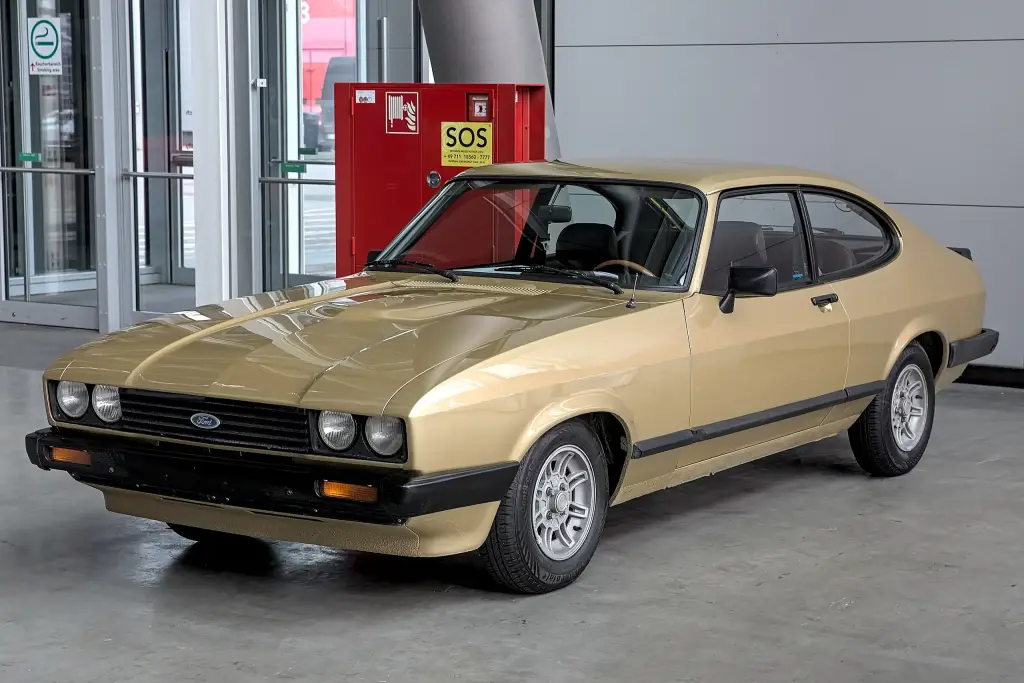
Ford Capri versions
- Capri Mk I (1969–1974): the original, with the 2300 GT and 3000 GT at the top.
- RS2600 (1971): fuel-injected homologation special with 150 PS.
- Vista Orange Special (1971): 1,200 cars with Mustang-style boot spoiler and window slats.
- GTXLR Special: one of the last limited Mk I editions.
- Capri Mk II and Mk III: the later generations, built until 1986.
- Perana: South African version with a 302 cu in V8.
The Capri was built on Cortina mechanicals and shared its fastback idea with the Mustang. More Ford vehicles are in the Ford collection.
Video: Ford Capri
Video by PS Profis on YouTube.
Sources
- Ford Capri, English Wikipedia: generations, engines, racing, specials