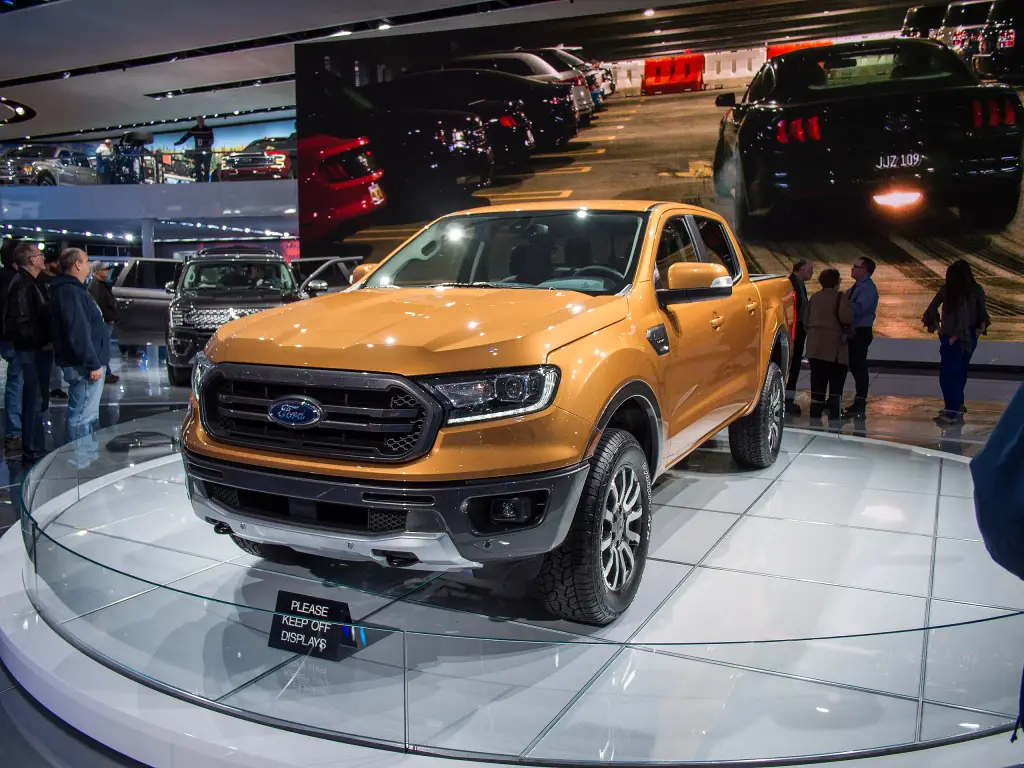
The Ford Ranger is a range of pickup trucks manufactured and marketed by Ford in North and South America. Introduced in early 1982 for the 1983 model year as a replacement for the Mazda-sourced Ford Courier, it is now in its fifth generation.
Ford Ranger at a glance
| Maker | Ford, Louisville, Edison and Twin Cities plants |
|---|---|
| Introduced | early 1982, for 1983 |
| Replaced | Ford Courier |
| Class | compact pickup |
| Rivals | Chevrolet S-10, then Chevrolet Colorado |
| Best seller | compact truck in the United States, 1987–2004 |
| Fleet gap | withdrawn in North America 2012–2018 |
| Return | fourth generation for the 2019 model year |
| South American production | Ford of Argentina, General Pacheco, 1998–2011 |
| Final 2012 truck | the last vehicle built at Twin Cities Assembly |
This page is based on English Wikipedia only.
History of the Ford Ranger
The Courier before it
For the 1972 model year Ford introduced the Ford Courier, the first compact pickup it sold, by partnering with Mazda to market the Mazda B1800 in North America. That partnership, the first of several between the two companies, cut Ford’s risk in an unfamiliar segment and gave Mazda badly needed funds. The Courier shared its cab and chassis with the Mazda but adapted F-Series design cues, with twin round headlamps, a silver grille and FORD lettering on the bonnet, and from 1977 it was redesigned with a larger cab and a new bed and tailgate. It was built alongside the Mazda B-Series in Hiroshima from 1972 to 1982 and imported as a chassis-cab to avoid the 25 per cent Chicken Tax on imported trucks, with the beds shipped separately and fitted in the United States.
The Ranger takes over
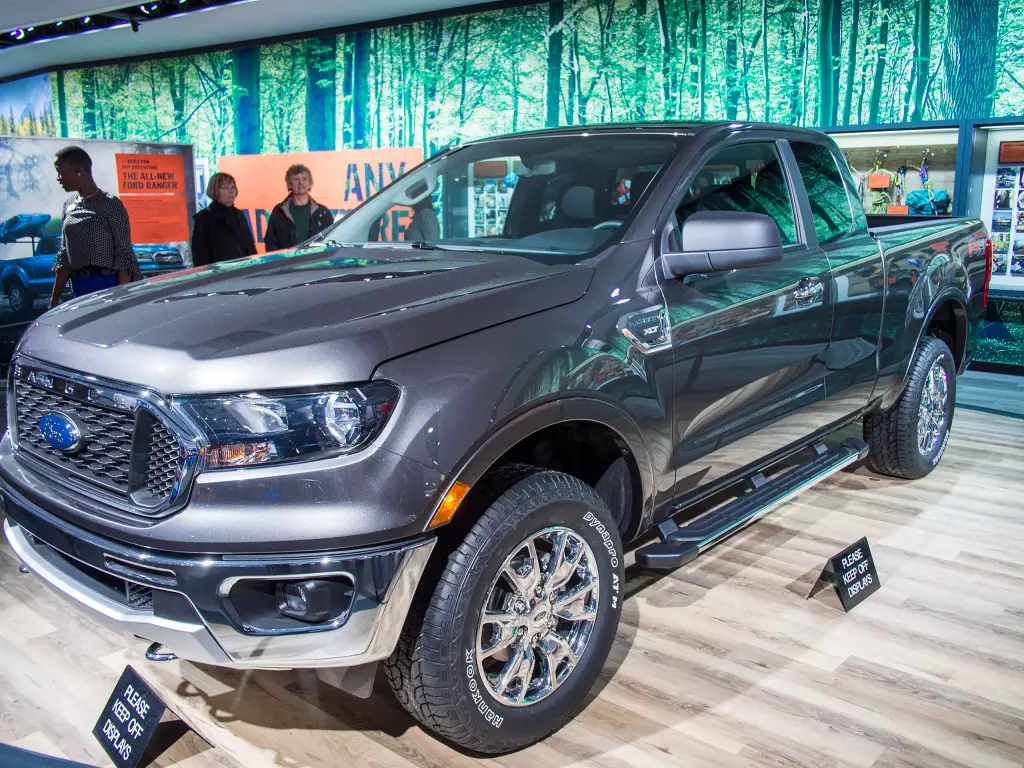
The Ranger arrived in early 1982 for the 1983 model year as the Courier’s replacement and was sold across the Americas. Throughout its life it was a close rival to the Chevrolet S-10 and its Chevrolet Colorado successor, and it was the best-selling compact truck in the United States from 1987 to 2004. The first three generations were built at Louisville in Kentucky, Edison in New Jersey and Twin Cities in Saint Paul, Minnesota, and the final 2012 Ranger was the last vehicle produced at the St. Paul plant. Ford of Argentina built the Ranger at General Pacheco from 1998 to 2011, replacing it with the global Ranger T6 for 2012.
Retired and brought back
From 2012 to 2018 the Ranger was withdrawn from North America while Ford concentrated on its full-size F-Series. For the 2019 model year a fourth North American generation arrived after a seven-year gap: the first mid-size Ranger there, derived from the globally marketed Ford Ranger and revised to meet North American requirements, and built at Wayne Stamping and Assembly in Michigan.
Design and features
- Courier replacement: replaced Ford’s first compact pickup, the Mazda-based Courier.
- Class leader: the best-selling compact truck in the United States for 17 years.
- Three American plants: Louisville, Edison and Twin Cities assembly.
- Global link: the 2019 truck is derived from the worldwide Ranger.
Ford Ranger versions
- Ford Courier (1972–1982): the Mazda-based predecessor.
- Ranger first generation (1983): the replacement truck.
- Argentine Ranger (1998–2011): built at General Pacheco for South America.
- Ranger (2019): the returning fourth North American generation.
The Ranger replaced the Mazda-based Courier and sits below the F-Series in Ford’s truck range; its name also appears on the Australian Falcon-era utes. More Ford vehicles are in the Ford collection.
Sources
- Ford Ranger (Americas), English Wikipedia: Courier background, Ranger launch, plants, return